
The other day at the grocery store I picked up a package of chicken breasts. Before dropping the package into my shopping cart, my eye noticed something a bit off about the coloring. Normally a flesh uniform pink, this package contained breasts with small white striping
I looked through the other packages and a few other pieces contained the stripes. Carefully looking through the packages of raw chicken breast meat, I found the package without striping and went along with my shopping.
According to a study published in the Italian Journal of Animal Science back in 2013, white striping is categorized as a muscle disorder mostly found in modern hybrid birds.
Unlike the past, where chicken would grow to be about three or four pounds, today’s industry standards have halved the time it takes to grow a chicken to six pounds. While scientists still do not have a conclusive answer to why the chickens are suffering from this muscle disorder, it’s clear that is has something to do with the new farm techniques we didn’t use over fifty years ago.
Americans are eating chicken like nobody’s business. On average Americans consume over 91 pounds of the bird per year, thus making it essential that farmers and companies produce bigger chickens faster then ever.
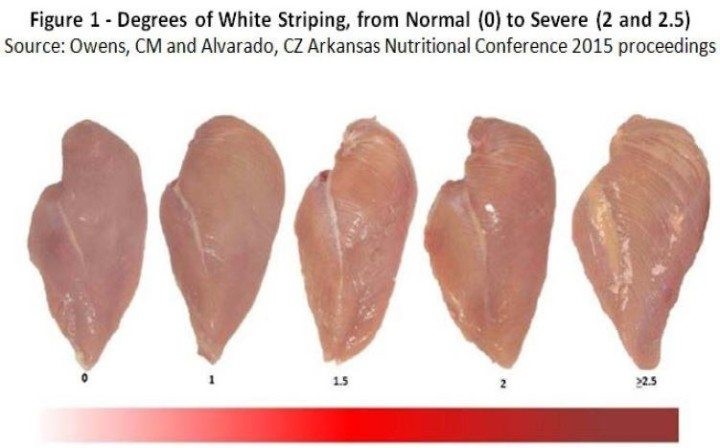
The condition, which ups fat content in chickens to 224 percent, means that the extra fat in your chicken is more than usual, making the chicken breast average out more fat and calories than its non-striped counterparts. And while the white lines aren’t bad for you and doesn’t pose any food safety concerns, the meat quality itself isn’t as tasty as their non-striped counterparts.
Not only does the white striping effect how the chicken meat reacts to marinades, the appearance of the white stripes are turning customers off. In a study conducted by the University of Arkansas and Texas A&M, 50 percent of consumers stated that they wouldn’t buy chicken with noticeable white striping. And I’m totally with them.
The National Chicken Council says there is nothing to worry about regarding the taste of your chicken, however if you are looking for high quality chicken without the woody breast and extra fat, we highly suggest looking through the packages before purchasing. Or you could cut out factory farming and buy your chicken from local sources which grow chickens to normal weight.
