
- SWBNO’s $300 million West Power Complex came online in December 2025 after Steve Nelson, then general superintendent, oversaw its design and construction.
- During Tropical Storm Arthur, protective settings on the static frequency changers proved too sensitive, knocking seven drainage pump stations offline.
- SWBNO is now working with Entergy, the equipment manufacturer, and an outside consultant to determine whether a design error caused the failure.
- JP Morrell has publicly attacked Randy Hayman’s salary and performance but has stayed silent on Nelson’s oversight of the flawed project.
- The council that wants more control over SWBNO under Act 938 still depends on Hayman’s expertise to fix what Nelson’s team built.
- SWBNO isn’t optional infrastructure — without working water, sewerage, and drainage systems, New Orleans doesn’t function, and that reality justifies paying for real leadership.
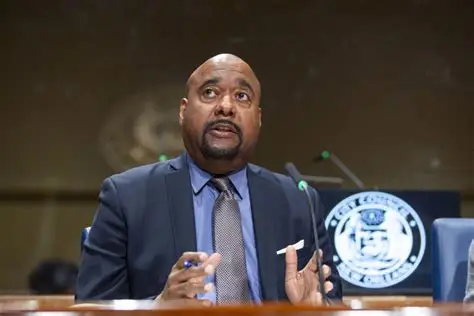
Randy Hayman didn’t build the Power Complex. He inherited it. That distinction matters, and it’s the one JP Morrell keeps skipping past.
New Orleans spent $300 million on a West Power Complex designed to finally give SWBNO’s ancient drainage pumps a reliable source of electricity. The project came online in December 2025. It uses static frequency changers to convert Entergy’s modern 60-Hz power into the 25-Hz power the city’s century-old pumps still require. Think of them as converters. That’s exactly what the engineers call them.
Steve Nelson ran that project. As SWBNO general superintendent, Nelson stood in front of cameras in the summer of 2025 and promised the first frequency changer would be running by mid-July. It wasn’t. He pushed the timeline into August. Then hurricane season came and went without full functionality. Nelson has since moved on. He now serves as Deputy CAO and Director of Public Works under Mayor Helena Moreno, a promotion, not a demotion, despite presiding over a project that still isn’t fully working.
The Converter Problem Nobody Caught in Time
Tropical Storm Arthur exposed the flaw in July 2026. Voltage from Entergy’s grid sagged to 72% during the storm. SWBNO’s equipment was configured to shut off at anything below 80%. Seven drainage pump stations and three potable water pumps went dark. Lakeview flooded. City officials later admitted the protective settings were “too sensitive,” a polite way of saying someone specified the wrong tolerance for a piece of critical infrastructure Entergy itself said sees routine voltage sags.
SWBNO now says it’s working with Entergy, the equipment manufacturer, and an independent consultant to sort out whether the fault sits with the engineer who spec’d the system or the designer who built it to those specs. Either way, that review points backward, to the design and commissioning phase Nelson supervised. The Power Complex was built to expect voltage swings between 90% and 110% of normal. Nobody on the project team apparently asked Entergy what its actual grid behavior looks like before locking in that assumption. That’s not a manufacturing defect. That’s a coordination failure at the top of the project.
Councilwoman Aimee McCarron asked the obvious question at a council hearing: how does a $300 million project get built without real coordination between SWBNO and Entergy on power quality standards? Nobody had a clean answer. Kaitlin Tymrak, the current general superintendent, wasn’t running the project when the design decisions were made. Nelson was.
Who Was Actually in Charge
RELATED: Randy Hayman can fix the SWB — but only if New Orleans stops resetting the processEvery SWBNO press release during construction credited Nelson as the point person on the Power Complex. He announced the timelines. He explained the technology to reporters. He answered for the delays. The previous SWB administration, the one Nelson served under, missed the tolerance mismatch before commissioning the system. That’s the same administration council members now say left Hayman a mess to clean up.
Hayman didn’t arrive at SWBNO until after the Power Complex design was locked in. He inherited a system built on assumptions nobody stress-tested against Entergy’s real-world grid behavior. He’s the one who stood before the council after Tropical Storm Arthur and absorbed the blame for a design decision made before he ever walked through the door.
JP Morrell’s Selective Memory
RELATED:: Flush or Fall: New Orleans’ Water System Is Dying, and Both Moreno and Landry Have Run Out of ExcusesJP Morrell has made Hayman’s roughly $500,000 salary a centerpiece of his public criticism. He’s compared Hayman’s performance to an LSU football coach’s win-loss record. He’s pushed ordinances to review combining the executive director and general superintendent jobs. He’s questioned whether the executive director position needs to exist at all.
Not once in any of that criticism has Morrell mentioned Steve Nelson by name in connection with the Power Complex’s design flaw. That silence is loud. Nelson supervised the project from the ground up. He announced the missed deadlines himself. He’s the one who should be answering for a converter system built without properly accounting for how Entergy’s grid actually behaves. Instead, Morrell and SWBNO’s own public statements point at “the equipment manufacturer” and an outside “engineer,” as if the city bears no responsibility for verifying what it paid $300 million to receive.
That’s the irony sitting at the center of this fight. The same council pushing for more control over SWBNO under Act 938 is leaning on Hayman’s technical judgment to explain, defend, and fix a system his predecessor’s team designed. If Hayman is so unqualified that Morrell wants to eliminate his job, why is the council relying on him to walk them through the engineering failure? He can’t be both the problem and the only person capable of solving it.
The City Is Responsible, Not Just the Vendor
Blaming a manufacturer or a design engineer is easy. It’s also incomplete. SWBNO signed off on the specifications. SWBNO accepted the finished system. SWBNO commissioned the Power Complex under Nelson’s leadership without independently confirming it could handle the voltage sags Entergy told the council are common. When a contractor hands over flawed work, the city that hired them still owns the outcome. That’s true whether we’re talking about a pothole repair or a $300 million power plant.
Hayman said it plainly at a recent council meeting: he needs more than eleven months to fix problems decades in the making. He’s right. But part of fixing those problems means naming who created them. Nelson ran the Power Complex. The previous SWBNO administration missed the converter mismatch before flipping the switch. Hayman is the one doing the unglamorous work of catching it, adjusting the thresholds, and explaining it to a council that would rather score points off his salary than examine its own former general superintendent’s record.
SWBNO Isn’t Just Another City Department
Strip away the politics for a moment. No SWBNO means no working toilets. No SWBNO means no safe drinking water after a heavy rain. No SWBNO means a power grid that trips every time the wind picks up, leaving pump stations dead and streets underwater. Without water, sewerage, and drainage functioning correctly, there is no New Orleans. Full stop.
That’s the standard Morrell should be applying when he complains about executive pay. Reporting has put Hayman’s salary at roughly $500,000; some council figures have cited numbers closer to $400,000 depending on how the total compensation is measured. Either way, weigh that number against what’s actually at stake. A functioning SWBNO isn’t a nice-to-have city service. It’s the infrastructure every other part of city life depends on. Tourism depends on it. Housing depends on it. Public health depends on it. Insurance rates depend on it. If SWBNO fails, none of the rest of it matters.
Compare that to what New Orleans pays elsewhere without a second thought. Nobody blinks at seven-figure coaching salaries or executive pay at agencies with a fraction of SWBNO’s responsibility. Yet Morrell wants to eliminate the executive director job entirely over a rate that reflects the scale of what Hayman actually manages: a century-old water system, an aging sewerage network, and a drainage grid now tangled up in a $300 million power complex his predecessor’s team got wrong. A city this dependent on one utility should pay for leadership capable of running it correctly, not the cheapest option available.
Praise Where It’s Due
Hayman deserves credit for steady, public accountability during a crisis he didn’t create. He’s shown up to council meetings, absorbed hostile questioning, and kept the utility functioning while a third-party review sorts out exactly where the converter design went wrong. Nelson, meanwhile, got promoted to Deputy CAO. If JP Morrell wants to talk about who’s actually accountable at SWBNO, that promotion is a good place to start.
New Orleans doesn’t need more selective outrage aimed at whoever’s easiest to criticize this week. It needs a council willing to ask hard questions of everyone who touched the Power Complex, including the man who ran it before Hayman ever got the job.
Jeff Thomas is the publisher of Black Source Media and one of New Orleans’ most direct voices on civic affairs, economic justice, and Louisiana politics. He writes from the intersection of experience and accountability — as a licensed general contractor, a tech company founder and executive with over 30 years’ experience, and a businessman who has worked across the city’s civic, media, and construction ecosystems for decades. His column covers Louisiana politics, infrastructure accountability, and the forces shaping Black community life in New Orleans and across the state.
