New Orleans’ Unpaid Judgment List: Who Actually Gets Paid First?
TL;DR
The New Orleans unpaid judgment list contains millions of dollars the city owes people who already won their cases in court, including judgments dating back decades. In 2024, the City Council ordered the city to pay the oldest debts first and clear the backlog by 2027. But the public still cannot see the complete list. Now attorneys and judgment holders are asking a simple question: Is everybody really being paid in the order the law requires?
Key Points
A 2022 judgment ordered $75.3 million paid to roughly 5,000 Gordon Plaza and Press Park residents.
An August 2024 ordinance requires New Orleans to pay its judgment backlog oldest-first and clear it by 2027.
The city itself refers to an official “Unpaid Judgment List,” but the complete list is not publicly available.
Some newer obligations have moved quickly while older judgment holders continue waiting.
A New Orleans attorney tells BSM he believes his client’s judgment was skipped for a politically connected claim.
Publishing the payment order would allow everyone to see whether the city is following its own rules.
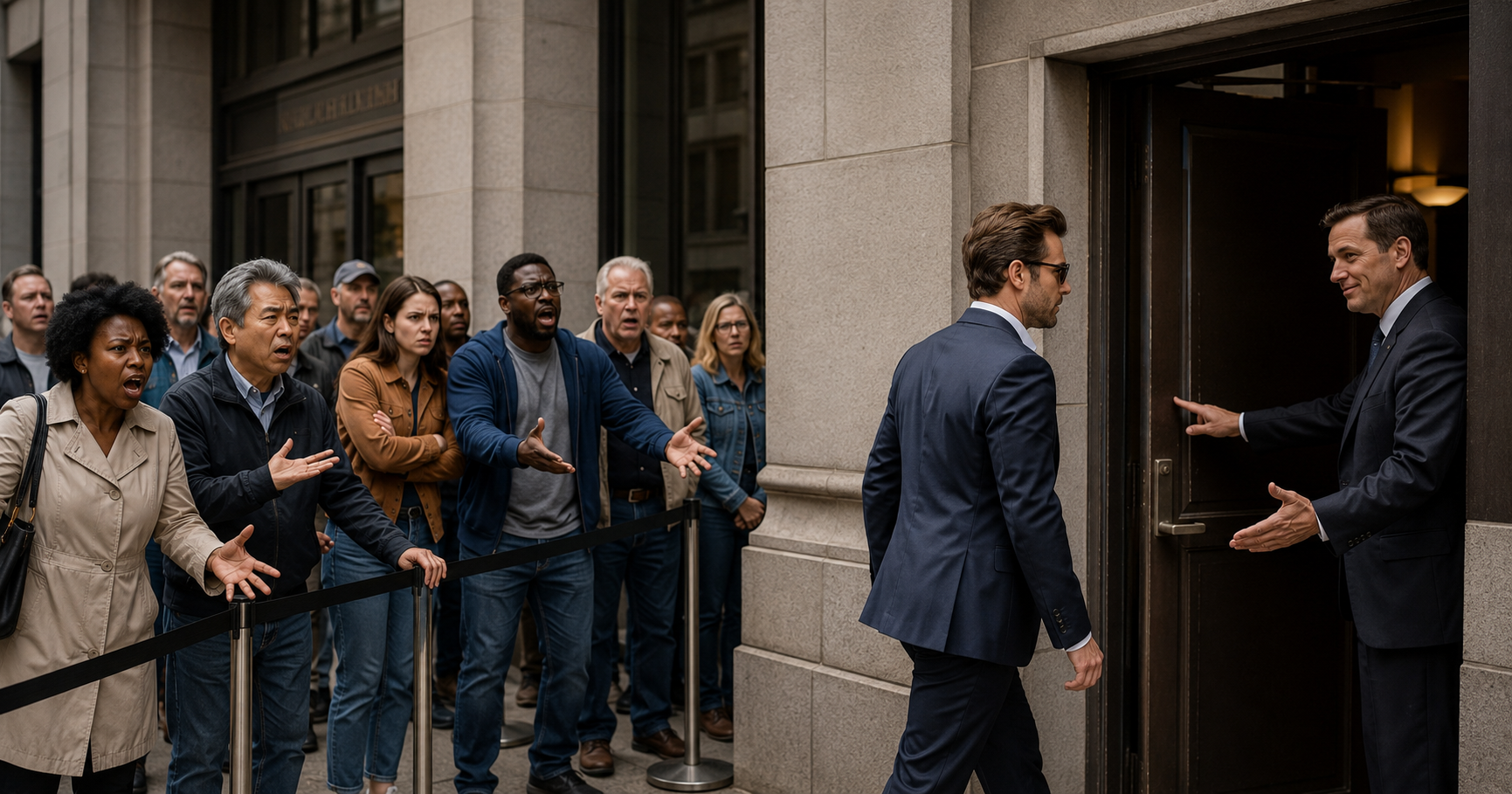
The New Orleans unpaid judgment list is one of the strangest lines you can stand in. You can sue the city, win your case, have a judge say New Orleans owes you money and still spend years waiting for the check. Some people on that line have been waiting so long that their cases date back to the Clinton administration.
If you win a lawsuit against the City of New Orleans, congratulations. Now learn to swim. The line stretches so far back it feels like it runs past the Rigolets and halfway into the Gulf of Mexico, where old judgments go to disappear quietly.
That sounds like a joke. Unfortunately, the truth is worse. For decades, people have won court cases against the city and then discovered that winning and getting paid are two entirely different things.
A Debt the City Has Owed Since Clinton Was President
Some judgments still sitting unpaid date back to 1996. Louisiana law makes that possible because government debt does not work like ordinary debt. A government can lose in court, owe you money and still decline to appropriate the funds necessary to pay you.
By 2024, the city’s unpaid judgment backlog had climbed past $30 million. Then two enormous class-action judgments pushed the potential obligation much higher.
One involved Gordon Plaza and Press Park. A 2022 judgment found that the city, the Housing Authority of New Orleans and the Orleans Parish School Board owed $75.3 million to roughly 5,000 residents connected to two historically Black neighborhoods built on a former landfill.
To put it plainly, that $75.3 million still has not been paid. Four years after the judgment, residents are still waiting.
The Council Actually Tried to Fix This
To its credit, the City Council recognized the absurdity. In August 2024, members passed an ordinance authored by then-Councilmember Joe Giarrusso. He now serves as Mayor Helena Moreno’s Chief Administrative Officer.
The ordinance ordered the city to begin paying its oldest judgments and clear the backlog by 2027. It also required written payment offers to people still owed money.
Notice the city’s own language: “the City’s current Unpaid Judgment List.” The government itself is telling us that a specific list exists.
If the city has an official list determining who gets paid first, the people standing in that line should be allowed to see it.
Where Is the New Orleans Unpaid Judgment List?
We looked for it. The complete list is not sitting on the city’s open-data portal where an ordinary taxpayer can easily examine it. We could not find a public document that lets every judgment holder see where they stand, who is ahead of them and who has already been paid.
That matters because the ordinance does not simply promise that everybody will eventually get something. It establishes an order. The oldest debts are supposed to be paid first.
You cannot independently verify an oldest-first system when the public cannot see the list establishing the order.
Black Source Media is asking the city to publish the current New Orleans unpaid judgment list along with every payout made since the 2024 ordinance took effect. Show the name, judgment date, amount and payment date.
If everything is being paid exactly as required, publishing that information should remove suspicion instead of creating it.
George White Waited 21 Years
George White spent 21 years chasing more than $1 million the city owed his consulting firm after a judge ruled in his favor in 2005. He finally got paid in October 2024, shortly after Giarrusso’s ordinance passed.
White’s case appears to fit the oldest-first principle. His judgment really was old.
Gordon Plaza is different. Its judgment dates to 2022, so a strict oldest-first system could legitimately place it behind cases dating to the 1990s and early 2000s.
But residents and attorneys started asking harder questions after watching other obligations move much faster. In May 2026, the city settled a long-running dispute with the Orleans Parish School Board over tax collection fees.
Gordon Plaza attorneys noticed the contrast. Their federal lawsuit argues that when residents holding older court victories remain unpaid while politically important obligations move quickly, people are left wondering whether leverage matters more than order.
Attorney Suzette Bagneris has said she is not asking a court to magically produce a check. She wants the city to demonstrate that it is following its own policies and paying claims according to the list.
This is not just about whether people get paid. It is about whether everybody is standing in the same line.
Line skipping at City Hall shows how privilege and back-door access can leave ordinary people angry and shut out.
“I Believe My Client Got Skipped”
Gordon Plaza is not the only place where BSM heard concerns. A New Orleans attorney experienced with judgment claims told us, on condition that neither he nor his client be identified, that he believes his client’s smaller judgment was passed over for a much larger claim represented by a politically connected lawyer.
The attorney said he is unwilling to make the accusation publicly because his firm does business with the city and he fears damaging that relationship. He also acknowledged that without access to the complete payment information, proving favoritism from outside City Hall is difficult.
That is precisely the point.
A transparent system should not require lawyers to whisper about who got moved ahead of whom. If the payment order were public, nobody would need political gossip, speculation or anonymous accusations. They could look at the list and see what happened.
The Money Has Not Always Gone Out the Door
New Orleans has been down this road before. Years before the 2024 ordinance, the city was already setting aside approximately $2 million annually for judgments.
Yet payments did not always match the money available. In 2020, the city paid only $500 from that fund. In 2021, it paid $1.5 million. In 2022, only $146,000 went out while judgment holders continued waiting.
That history is why simply saying “the Council passed a law” cannot end the conversation. New Orleans has had money and policies before. The question is what happens after everybody leaves the Council chamber.
An unpaid judgment involving residents of Black neighborhoods built on a former landfill raises many of the same questions. Who controls the process? Who has the information? And who has enough power to demand an answer?
The New Orleans Unpaid Judgment List Should Be Public
Publish the list.
The city has already named it. Put the New Orleans unpaid judgment list online and update it regularly. Publish every payment made under the 2024 ordinance with the judgment date, payment date and amount.
Then answer the question directly: Has anyone been paid outside the order required by the ordinance? If so, explain why.
Gordon Plaza deserves the same clarity. Where exactly does its $75.3 million judgment sit in the payment order, and what is the realistic timeline for satisfying it before the 2027 deadline?
New Orleans actually has an opportunity to get this right. The Council wrote an oldest-first rule into law. The administration says it intends to fund the backlog. Nobody has to invent a new process.
The city simply needs to show us that the process it already promised is the process it is actually following.
Until City Hall shows the list, people waiting for their money have every right to wonder whether the line runs by date — or by who knows the person opening the side door.
Jeff Thomas is the founder and publisher of Black Source Media, covering New Orleans civic accountability, city government and the systems that decide who in this city actually gets what they’re owed.
“`
Jeff Thomas
Publisher — Black Source Media
Jeff Thomas
Publisher • Opinion Columnist • New Orleans
Jeff Thomas is the publisher of Black Source Media and one of New Orleans’ most direct voices on civic affairs, economic justice, and Louisiana politics. He writes from the intersection of experience and accountability — as a licensed general contractor,a tech company founder and executive with over 30 years experience, and a businessman who has worked across the city’s civic, media, and construction ecosystems for decades.
His Sunday column covers Louisiana legislative politics, insurance discrimination, housing policy, and the forces shaping Black community life in New Orleans and across the state. Thomas writes in the tradition of Black journalists who hold power accountable without apology — building arguments from data, delivering verdicts from evidence, and speaking to Black New Orleans with the directness the moment demands.
He is also the principal of EA Inspection Services, LLC, a government inspection services company. Black Source Media is his platform for the civic conversation New Orleans has needed and too rarely had.
Selected Articles by Jeff Thomas
Black Neighborhoods Pay the Highest Insurance Rates in Louisiana. Here’s What They Don’t Want You to Know.
They Didn’t Yell the N-Word. They Went to Law School, Bided Their Time, and Rewrote the Constitution Instead.
Vappie vs. Morrell: Why Does Justice Look Different in New Orleans?
The State Has the Money. New Orleans East Just Needs Them to Use It.The Failure of Mitch Landrieu
2 thoughts on “New Orleans Unpaid Judgment List: Who Gets Paid First?”
The oldest judgements should not only be paid first but with interest. My clients judgement is eroding by the day and has been since before 2000. Yet rather than paying interest on the judgement (which is more than the judgement principal itself, the City is only offering principal and they have yet to do that. All while the City is making interest on its reserves. New judgements have not eroded and there is not much interest owed. However, judgements that are 20 years old should be paid with interest. The interest the City is getting is on the backs of people on the list for over 20 years.



The oldest judgements should not only be paid first but with interest. My clients judgement is eroding by the day and has been since before 2000. Yet rather than paying interest on the judgement (which is more than the judgement principal itself, the City is only offering principal and they have yet to do that. All while the City is making interest on its reserves. New judgements have not eroded and there is not much interest owed. However, judgements that are 20 years old should be paid with interest. The interest the City is getting is on the backs of people on the list for over 20 years.
This is terrible. My cousin died last year and the city never paid her lawsuit. What happens to that money? She has 2 children. Do they get the money?