
Civic Affairs / Infrastructure
The Truth About Fixing Broken Systems — And Why Randy Hayman Deserves Time to Finish the Job
Randy Hayman brings proven leadership to SWBNO. The city finally hired results, not promises. Less than a year in, the noise has started around Randy Hayman and the SWB. That’s predictable. It’s also dangerous — because it misunderstands what fixing a system like this actually requires. Year one reveals problems. Year two fixes them. And finally year three is where results become visible. If New Orleans interrupts that cycle now, it doesn’t accelerate progress. It resets it. And this city cannot afford another reset.
The critics are loud. The pressure is real. The noise has started right on schedule. But broken systems don’t get fixed by impatience — and New Orleans cannot afford another reset.
Let’s stop pretending this is a normal situation.
It is not.
The Sewerage and Water Board was not handed to Randy E. Hayman in good condition. It was handed to him in distress — operationally, financially, and structurally. Decades of deferred maintenance. A governance structure that has historically made execution slow. A public that has every reason to be skeptical and very little patience left.
And now, less than a year in, the noise has started.
Criticism. Doubt. Second-guessing.
That’s predictable. Anyone who has watched this city long enough knew it was coming. But predictable doesn’t mean harmless. Because this particular noise — at this particular moment — could cost New Orleans something it can’t afford to lose: the runway a proven leader needs to actually finish the job.
“Broken systems don’t need new faces. They need disciplined leadership, time, and the space to execute.”
— Oliver Thomas Former New Orleans City Councilman
You Don’t Fix This in a Year
Here is what people who have never fixed a broken system do not understand: the early phase often looks worse, not better.
Problems get exposed that were previously hidden. Weaknesses get identified that were previously ignored. Costs become clearer. Accountability increases. The chaos that was always there suddenly becomes visible — because for the first time, someone is actually looking.
That is not failure. That is the beginning of real work.
You cannot walk into a system with aging infrastructure, financial pressure, governance complexity, and decades of public distrust — and turn it around in twelve months. That is not how systems work. Anyone telling you otherwise is either selling something or has never actually fixed anything.
The critics demanding visible results right now are measuring the wrong thing at the wrong time. They are watching the construction zone and calling it destruction. They are seeing the scaffolding and calling it collapse.
How Change Actually Works in Complex Systems
- Year One: Assessment, exposure, and stabilization — problems become visible
- Year Two: Structure, process, and execution — fixes begin compounding
- Then Year Three: Results become measurable and visible to the public
Interrupt this cycle and you don’t accelerate progress. You reset it to zero.
The Reality We Cannot Ignore
The SWB’s bond rating was downgraded to BBB+ with a negative outlook — and that did not happen because of one person. That reflects years of accumulated stress: infrastructure strain, financial imbalance, operational inefficiencies that predate Hayman’s arrival by decades.
The people calling for accountability are not wrong to demand it. Accountability is exactly right. But accountability means measuring the right things — not just the things that make for a good headline.
Is the system becoming more organized? Is accountability inside the agency increasing? Are problems being identified clearly and documented honestly? Is there a plan being executed with discipline? Those are the correct indicators of progress in year one. Not perfection. Not a water main that stopped breaking. And not a press conference with a glossy rendering.
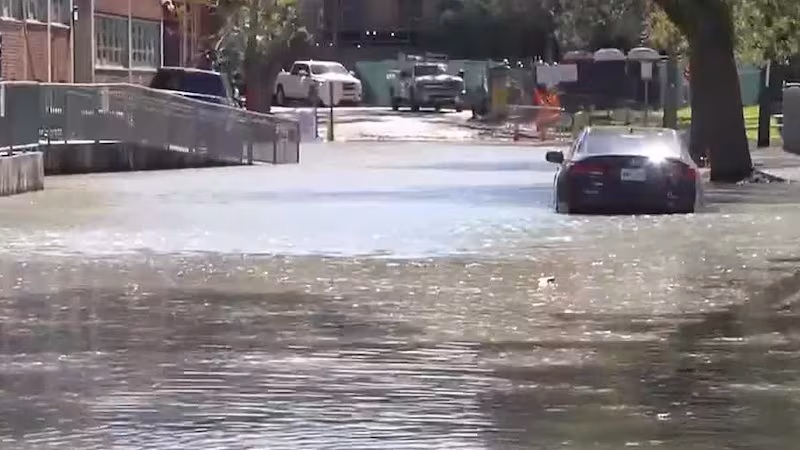
Real progress in a broken system is quiet. It happens in procurement decisions, in staffing changes, in regulatory filings, in capital project timelines. It rarely makes the evening news until years later — when the system works and nobody remembers why it didn’t.
Even as S&P downgraded the SWB, it pointed to Randy Hayman’s experience as a stabilizing factor—part of the solution, not the problem.
Why Hayman Is Still the Right Leader
Let’s be honest about something the noise tends to obscure: Randy Hayman is not learning this job.
He already ran a system serving over 1.6 million people, with thousands of miles of infrastructure, a multi-billion-dollar capital program, and more than 2,000 employees. He managed federal funding at scale. And he navigated regulatory environments. Mr. Hayman delivered measurable infrastructure outcomes in a major American city. He left that city with stronger finances, cleaner water, and a department that multiple mayors fought to keep him running.
This job requires proof, not potential. And this city, of all cities, recognizes the difference—because it has already paid the price for betting on potential.
Hayman brought proof with him when he came to New Orleans. The question is not whether he has what it takes. The question is whether New Orleans has what it takes to let a proven leader work.
Related: Randy Hayman is the Right Man for the SWB
The Risk of Getting This Wrong Again
New Orleans has a history of doing something costly at exactly the wrong moment: replacing leadership before systems are fixed. Changing direction before progress compounds. Getting impatient in year one, starting over in year two, and wondering in year five why nothing ever changes.
That cycle does not produce results. It produces the illusion of accountability while guaranteeing stagnation.
Every time this city resets leadership in the middle of a complex fix, the next person inherits the same broken system — plus the institutional knowledge that just walked out the door, plus the demoralized staff who watched it happen, plus the public trust that erodes a little more each time.
We cannot keep paying that price. The infrastructure does not survive infinite resets.
Finish the Race
The critics are loud right now. The pressure is fierce. That is the nature of this moment in this city, and it was always going to happen. You cannot step into a broken system, start making the hard decisions, and expect silence. The noise is not evidence that something is wrong. The noise is evidence that something is happening.
What this city owes Randy Hayman — and more importantly, what it owes itself — is the discipline to stay the course long enough to see the outcome. Not blind patience. Not unconditional deference. Disciplined, informed patience grounded in the understanding of how complex systems actually get fixed.
He was built for this. He chose this city. Most importantly, he is doing this work.
The question is no longer whether he can finish the job.
The question is whether this city will let him.

Why is the mayor criticizing the Swb. She is the president of the board. Crazy
Wild what happened in the Canal. Never ever heard about that before. Crazy. How do you fix that?
There’s been so much dysfunction with the Sewerage & Water Board. Sadly, for years many of its Directors were rewarded for political servitude. Dr. Khorban was the only Director I remember who was an actual Engineer. 60-100 years of neglect doesn’t get addressed over night. It will take a lot of time, money and patience to start seeing progress.
It will take decades to put a dent in the thousands of miles of outdated pipes. Once they get to the finish line, it’ll be time to circle back and initiate the maintenance phase. For an entity that’s still struggling with billing and collection issues, I’m feeling a little leery about trusting them with BILLIONS of dollars ear-marked for street repairs and maintenance. Heck, when a street floods, it takes them days to find a shutoff valve.
Hopefully, they have a plan that they can sell to the public. The biggest sell will be asking the public to shell out hard-earned money to pay for it.
We don’t hear from this guy. When do we get to know him. I have never heard him speak.
Points well taken, SWBNO has become a political football and council oversight is not the answer. There should be, have been efforts to raise revenue to address the agency’s deep-rooted neglect. For any progress to be made, there needs to be a significant effort to increase funding (drastically I might add), explore new technologies to replace infrastructure. Recognize that none of this happened overnight, nor is there a “quick fix”. Randy Hayman is a highly regarded utility professional and should be given the opportunity to succeed.
Spot on, Mr. Eric! Sadly, the revenue train has left the station. We’re now experiencing what Professional Franchises deal with when it comes time to pay star players, “YESTERDAY’S PRICE IS NOT TODAY’S PRICE!”
Isn’t Veolia still managing SWB sewerage?
Weren’t they in charge at H Katrina when they dumped raw sewerage into the M River?
Is there a federal consent decree in operation for the sewerage system?