New Orleans Utility Shutoffs Need a 90-Degree Heat Rule
TL;DR
New Orleans already has protection against some electric shutoffs during extreme heat. Entergy New Orleans does not disconnect residential customers when the forecast reaches 100 degrees or when a National Weather Service heat advisory is active. That is a good start, but New Orleans utility shutoffs should stop at 90 degrees during dangerous summer heat. The City Council should also keep the protection in place throughout prolonged heat emergencies instead of switching it on and off with individual advisories.
Key Points
Entergy New Orleans already suspends some residential disconnections during extreme heat.
New Orleans utility shutoffs should stop automatically when temperatures reach 90 degrees.
The current 100-degree trigger does not reflect the danger created by high humidity and prolonged heat.
Heat protections should remain in effect throughout sustained heat emergencies.
About 22.6% of New Orleans residents live below the poverty line.
Older, inefficient housing makes cooling more expensive for many low-income households.
Mayor Helena Moreno should push the issue publicly while the City Council uses its regulatory authority over Entergy.
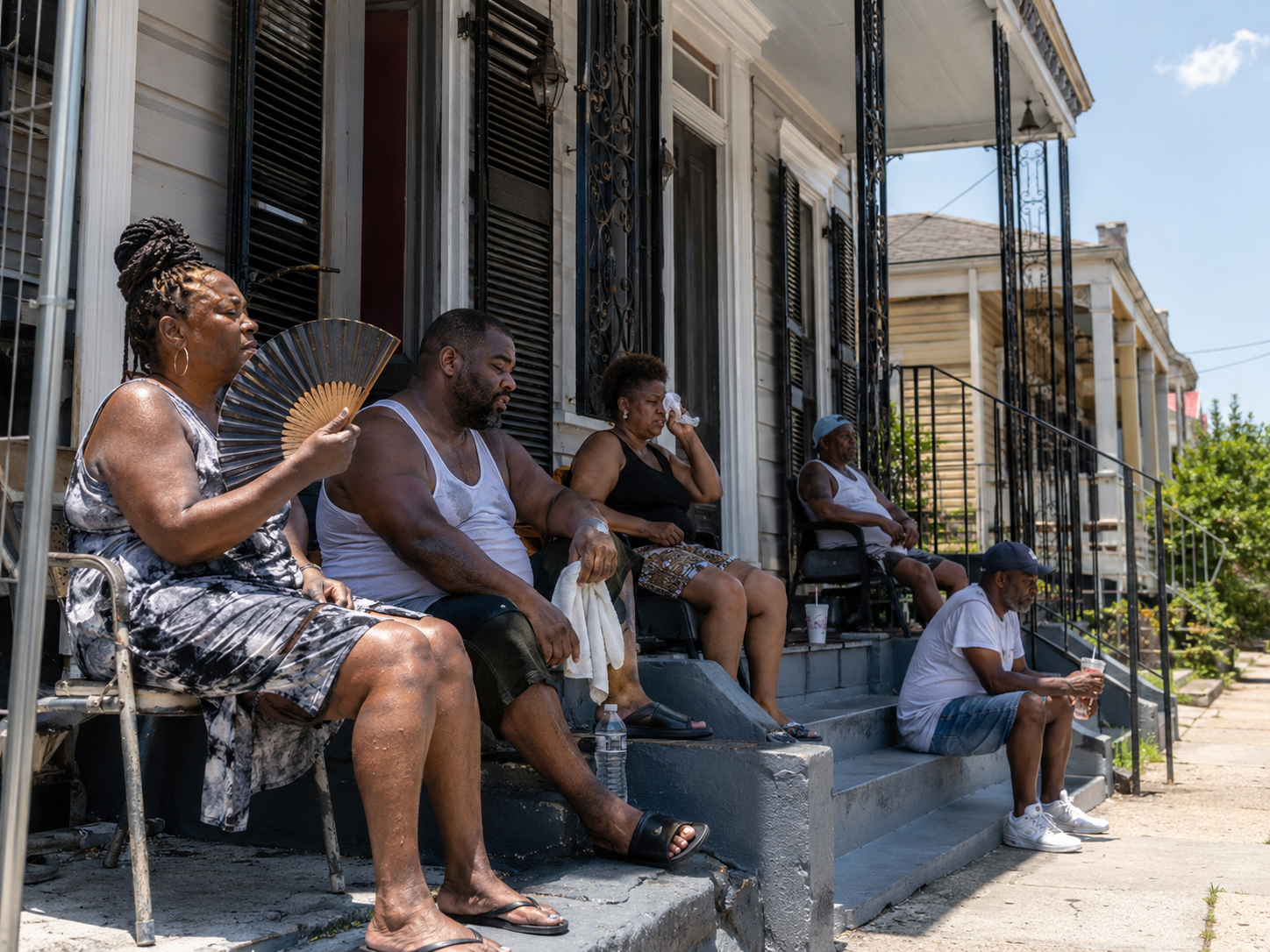
Anybody who has stepped outside lately already knows New Orleans is dealing with dangerous summer heat. New Orleans utility shutoffs become more than a billing issue when temperatures stay in the 90s, humidity pushes the heat index even higher, and homes remain hot long after the sun goes down.
This is especially serious for people who cannot simply turn the thermostat down and forget about the electric bill. Extreme heat becomes dangerous when residents cannot escape it, particularly inside older homes that absorb heat all day and barely cool overnight.
That is why the city’s current policy deserves another look.
How New Orleans Utility Shutoffs Work During Extreme Heat
Entergy New Orleans deserves credit for having a heat-related protection already in place. The utility does not disconnect residential customers for nonpayment when the forecasted high reaches 100 degrees or when a National Weather Service heat advisory is active.
That matters because the policy already recognizes something important: taking away electricity during dangerous heat can put people’s health at risk.
The problem is the threshold. Waiting until the actual temperature reaches 100 degrees before automatic protection kicks in does not match the reality of a New Orleans summer.
In New Orleans, a 95-degree day is not a mild day simply because the thermometer failed to reach 100.
Lower the Shutoff Trigger to 90 Degrees
The City Council should lower the automatic shutoff threshold from 100 degrees to 90 degrees. New Orleans spends much of the summer above 90, but temperature alone does not tell the whole story. Our humidity pushes the heat index higher while roofs, walls, sidewalks and streets absorb heat for hours.
A forecast high of 92, 94 or 96 degrees can produce dangerous conditions, especially for older adults and people with chronic medical problems. Yet under a 100-degree rule, those households could lose electricity unless a separate heat advisory happens to be active.
New Orleans utility shutoffs should also remain suspended during a sustained heat emergency. If the city has endured dangerous heat for six straight days, a brief gap between official advisories should not suddenly make it acceptable to disconnect someone’s electricity.
The protection should follow the actual emergency, not the wording of the latest weather bulletin.
Extreme summer heat puts added pressure on New Orleans residents who may struggle to afford adequate home cooling.
Poor Families Experience Heat Differently
Public officials regularly tell people to stay inside, stay hydrated and use air conditioning. That is sound advice, but it assumes everyone can afford to follow it.
About 22.6% of New Orleans residents live below the poverty line. Many of these households already make difficult monthly choices involving food, rent, medicine, transportation and utility bills. During a long heat wave, an air conditioner may run almost nonstop and create a bill a family simply cannot absorb.
Housing makes the problem worse. Much of New Orleans has older housing stock with inefficient windows, limited insulation, aging roofs and outdated cooling systems. Renters often have little control over any of those conditions.
That means some families with the least money can end up spending the most just to keep their homes tolerably cool. Their air conditioners work harder, their electric bills rise faster, and their homes may still feel dangerously hot by mid-afternoon.
For some New Orleans families, “stay inside in the air conditioning” is not simple advice. It is an expense they are struggling to afford.
New Orleans Utility Shutoffs Are a Public-Health Issue
Louisiana has already recorded heat-related deaths this summer, and older residents have been particularly vulnerable. Recent state data also shows that many heat deaths occur inside residences, not just outdoors.
That changes what a disconnected electric meter means during extreme heat. In a home with an elderly resident, an infant, or someone dealing with heart disease, diabetes or respiratory problems, losing air conditioning can quickly become a medical emergency.
People also do not always recognize heat illness early enough. Confusion, dizziness, weakness, nausea and headaches can appear before the situation becomes critical. Someone living alone may be in real trouble before anyone realizes what is happening.
Dr. Jennifer Avegno Should Be Everywhere Right Now
This is exactly the kind of public-health emergency where Dr. Jennifer Avegno should have a highly visible role. New Orleanians already know her as someone who can explain complicated health risks in plain language.
She should be on television and radio explaining heat exhaustion, heat stroke, medication risks, hydration and the danger of nighttime temperatures that remain high. Seniors and caregivers especially need clear guidance about when symptoms require medical help.
A webpage is not enough. People watching television need to hear it. Drivers need to hear it on the radio. Churches, senior programs and neighborhood organizations should have information they can distribute and use during wellness checks.
Cooling Centers Are Important — But Home Matters More
But cooling centers are an emergency backup. They cannot replace a safe home. An elderly resident should not have to catch a bus every afternoon just to find air conditioning. A parent with young children should not have to spend half the day in a recreation center because running the air conditioner at home has become unaffordable.
The best cooling center for most New Orleanians should be their own living room.
Moreno Should Lead. The Council Should Act.
Mayor Helena Moreno should publicly call on Entergy New Orleans to strengthen the existing policy. The automatic temperature trigger should fall from 100 degrees to 90 degrees, and residential disconnections should remain suspended throughout sustained periods of dangerous heat.
The City Council has regulatory authority over Entergy New Orleans, so that is where the permanent policy change must occur. Customers would still owe their bills. Once the heat emergency ends, reasonable payment arrangements could resume.
Nobody is asking Entergy to provide free electricity. This is about deciding when collecting a delinquent bill becomes less important than protecting someone’s health.
New Orleans already understands this principle during hurricanes, floods and freezes. Extreme heat deserves the same seriousness. In a city with significant poverty, aging housing and weeks of dangerous summer weather, electricity becomes part of the public-health infrastructure.
A 100-degree trigger is too high. Lower it to 90. Keep the protection in place throughout prolonged heat emergencies. Then make sure every New Orleanian knows the protection exists before somebody discovers it too late.
You can collect the bill later. You cannot collect a life later.
Langston Price covers New Orleans institutional policy and civic infrastructure for Black Source Media, focused on how city government mechanisms actually function — and where they fall short — for the residents who depend on them most.
“`
Langston Price
Economic & Political Analyst — Black Source Media
Langston Price
Economic Analyst • Political Strategist • Sunday Contributor
Langston Price is an economic and political analyst whose Sunday columns for Black Source Media bring data-driven rigor to the questions that matter most for Black Louisiana. He writes at the intersection of economic analysis and political strategy — translating complex legislative, legal, and market forces into plain language that reveals who benefits, who loses, and why.
His analysis of Louisiana’s congressional redistricting in the wake of Louisiana v. Callais — examining the 5-1 vs. 6-0 map scenarios and their political consequences for Black communities in New Orleans and Baton Rouge — established Black Source Media as one of the most credible analytical voices on the 2026 redistricting fight in the state.
Price writes in a tradition that combines academic depth with lived experience, producing work that neither oversimplifies for accessibility nor obscures in jargon. His analysis is for Black Louisianans who want to understand the system as it actually operates — not as it is officially explained.
Selected Articles by Langston Price
Louisiana Redistricting After Callais: Will Black Voters in New Orleans and Baton Rouge Get the Memphis Treatment?
View All Articles by Langston Price at Black Source Media
Langston Price publishes every Sunday at blacksourcemedia.com