
TL;DR
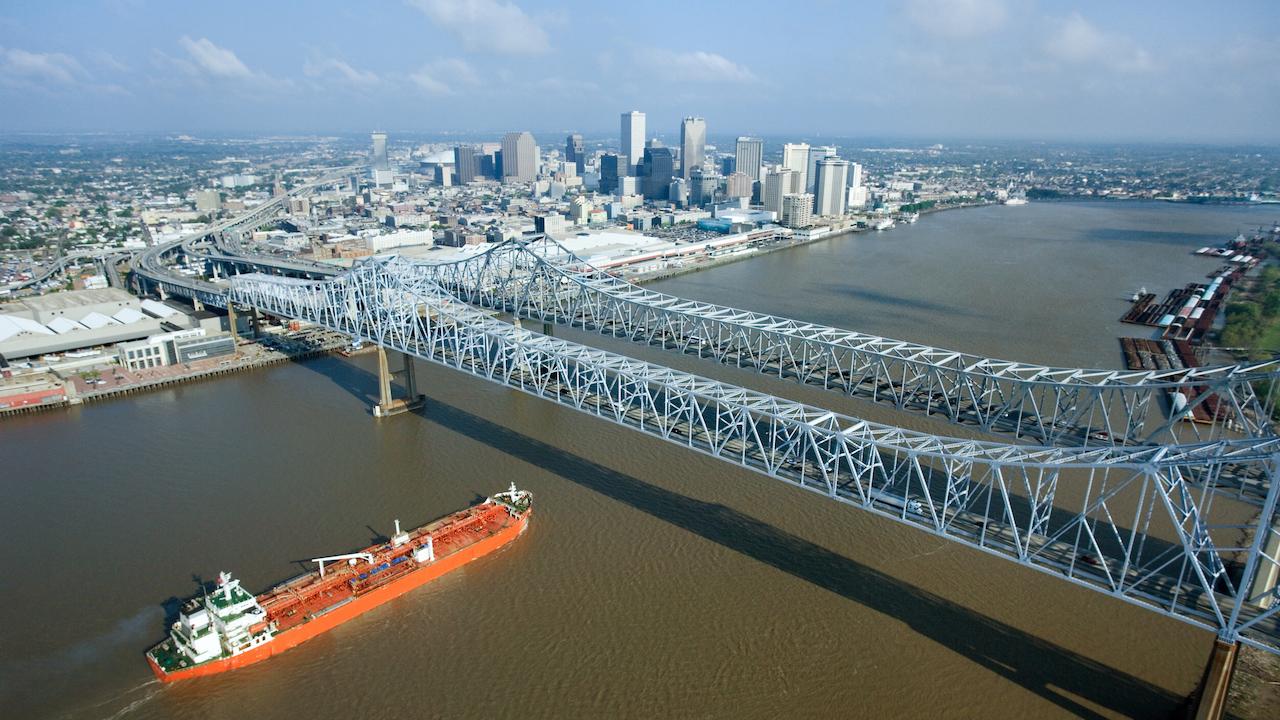
A tanker that had just passed under the Crescent City Connection lost control Friday and capsized a docked riverboat. Everyone survived. Investigators have not established the cause. But in 2025, federal investigators listed both spans among bridges with no current vessel-strike assessment. The public has not seen what Louisiana did about it.
Key Points
- The Atlantic Asphalt struck the docked American Heritage at about 12:30 p.m. on Nov. 13. Thirty-two people were hospitalized, none critically.
- The Coast Guard says the tanker appeared to lose steering moments after passing under the bridge.
- In March 2025, the NTSB listed both Crescent City Connection spans among 68 bridges lacking a current vessel-strike assessment.
- Louisiana’s transportation department said then that it would review its bridges right away.
- No public evidence reviewed for this article shows the bridge was at risk of collapse on Friday.
Before we evaluate a rescue, we need to look at what the event actually tested. On Friday, Nov. 13, New Orleans tested its emergency response, and the response passed. Crescent City Connection bridge safety was never tested at all. That is the part of this story the city should not skip.
At about 12:30 p.m., the tanker Atlantic Asphalt struck the riverboat American Heritage as it sat docked at the Port of New Orleans. The riverboat capsized. Thirty-two people went to hospitals, none with critical injuries, and officials say everyone aboard is accounted for. Firefighters, harbor police and crews from nearby vessels pulled people out of the river.
The rescue deserves recognition. It should not end the conversation.
What We Know About Friday
The tanker was headed upriver and had just passed under the Crescent City Connection when it veered toward the riverfront. A river pilot was at the controls. The crew dropped the port-side anchor, and it did not stop the ship.
Coast Guard Capt. Melanie Burnham said the tanker appeared to have lost steering. She also said investigators do not yet know why. The National Transportation Safety Board and the Coast Guard are both investigating. Their work will separate mechanical failure from human and operational factors, and until they report, assigning blame would be premature.
By Saturday morning the river had reopened to one-way traffic inside a 500-foot safety zone.
The Bridge Was Already on a Federal List
Here is the data point that turns a hypothetical into a records request. On March 26, 2024, the container ship Dali struck Baltimore’s Francis Scott Key Bridge, and the bridge collapsed. A year later, the NTSB named 68 bridges in 19 states whose owners had no current assessment of what a vessel strike would do to them. Eight are in Louisiana. Both spans of the Crescent City Connection are on the list.
That listing does not mean the bridge is likely to fall. The board described the risk as unknown, which is a different finding. Louisiana’s Department of Transportation and Development answered at the time that protections were already in place, including pier fenders, vessel tracking and advance warning systems. A department spokesman also said crews would begin reviewing the bridges right away.
That was 20 months ago. [VERIFY BEFORE PUBLISHING: Ask DOTD whether the vessel-strike assessment for both CCC spans is complete and whether it will release it. If DOTD has published one, replace the next sentence with its findings.] The public has not been shown the result.
What a Strike Would Depend On
No responsible analyst can predict from the riverbank how the bridge would respond to a hit. The answer depends on engineering factors:
- The ship’s speed and direction.
- The location and angle of impact.
- The strength and layout of the bridge piers.
- The protective structures around them.
- Water depth, current and the ship’s momentum.
Baltimore’s bridge and ours differ in design, condition and exposure, so their risks cannot be assumed equal. The appropriate response is not alarm, and not reassurance, but a current engineering assessment.
The stakes justify the paperwork. Two spans carry the region’s traffic between the East Bank and the West Bank. A long closure would disrupt commutes, emergency response and freight for weeks.
Six Questions on Crescent City Connection Bridge Safety
The transportation department, the Coast Guard and the other responsible agencies should be prepared to answer these.
- Has DOTD completed the assessment the NTSB requested in 2025 for both spans, and will it release the results?
- Did that assessment use the size and type of ships on the river today?
- What protects the most exposed piers?
- What is the procedure when a large ship loses steering or power near the bridge?
- Can authorities stop bridge traffic quickly if a ship is on a collision course?
- Which lessons from Baltimore are now part of Louisiana’s bridge planning?
These are questions, and none of them alleges a regulatory failure. The answers should exist in documents, and documents can be released. Gov. Jeff Landry said Friday that any needed safety adjustments on the river will be made. A released assessment would be a sound place to start.
The Same Traffic That Feeds the City
The Mississippi River is the reason the port exists, along with much of the regional economy. That commercial traffic also demands serious safety systems. Friday’s collision closed about three miles of river and suspended ferry service for hours. One ship did that.
A larger accident would cost more than a damaged hull. Think of waterway closures, stalled freight, environmental cleanup and lost days for workers and businesses. For more on how state decisions land on this city, see [related BSM coverage].
A Disaster Avoided Is Still a Lesson
Transportation safety exists to prevent the failure, and a strong response afterward is the backup plan. Investigators will determine why the Atlantic Asphalt hit the American Heritage. State officials should use that investigation to check what stands between a disabled ship and a bridge pier.
Friday showed that New Orleans can pull people out of the river. Whether it can keep a disabled ship off a bridge is a separate question, and the answer belongs in an engineering report the public can read.

Related reading at BSM: New Orleans Is Losing Louisiana. The 2026 Session Just Made It Official.
About the Author
Langston Price writes about public policy, infrastructure and government accountability for Black Source Media.
Sources
- WDSU: What we know after cruise ship struck by tanker in New Orleans (updated Nov. 14, 2026)
- WDSU: All accounted for after tanker collides with cruise ship (Nov. 13, 2026)
- CNN: Tanker “lost control” and hit cruise ship in New Orleans (Nov. 13, 2026)
- The Maritime Executive: Tanker Hits Riverboat on New Orleans Waterfront
- Marine Insight: River cruise ship capsizes after tanker strikes it in New Orleans
- CBS News: NTSB recommends 68 bridges be evaluated for risk of collapse (March 2025)
- Louisiana Illuminator: Louisiana says it’s moving to address bridges vulnerable to vessel strikes
- WWL Radio: CCC, Huey Long among Louisiana bridges in NTSB collapse report
Don’t Miss the Next One
Black Source Media lands in your inbox every Sunday and Wednesday with the New Orleans and Louisiana stories other outlets won’t tell straight. Sign up free.
