
by Kara Johnson
The truth about bitters is a long and sorted “tail”. Originally used for its healing powers, bitters were elixars made by so-called physicians to cure common ailments such as poor digestion and poor circulation. They were a combination of various herbs, roots, bark and spices preserved in alcohol and tasted bitter or sour, thus the name. It’s hard to trace their exact origin, but a few facts about bitters stand up. As far back as the ancient Egyptians, herbs and spices were preserved in wine for consumption for medicinal purposes. The term bitters began appearing in the early 1700s as patent medicines that were sipped straight. These cure-alls were hard to swallow. Those in need of the “magic” potions spent nearly 100 years holding their noses and gulping down what they hoped would ease their disease. Finally, in the 1800’s, someone got the bright idea to add liquor to the mix. Just like that, the cocktail was born!In 1803, The Farmer’s Cabinet, a periodical dedicated to agriculture, has the first known mention of a cocktail in reference to a drink. It was touted as being “excellent for the head.” The editor of the newspaper Balance and the Columbian Repository, in it’s 1806, May 13th edition, defined the cocktail recipe as “a stimulating liquor, composed of spirits of any kind, sugar, water, and bitters.”

Angostura Bitters were produced in 1824 in Venezuela for seasickness by German doctor, Johann Gottlieb Benjamin Siegert. Here in New Orleans, Hatian born Antoine Amidee Peychaud, a local pharmacist, started his own brand of bitters named after himself. He added liqueur, water and sugar and one of the first cocktails to be named in the Americas was created, The Sazerac. It is rumored that with this concoction, New Orleans became the birthplace of both jazz and the cocktail. Peychaud drank his tasty libation from a French egg cup, known as a “coquetier”, (pronounced cock-tay), that later evolved into the word cocktail. I would be less than honest if I didn’t disclose that there is more than one account of the origin of the cocktail. There’s also the dubious timeline. Peychaud bitters were not marketed until 1830. Remember, the first cocktail drink reference was in 1803, but I like this story, and I’m sticking to it.
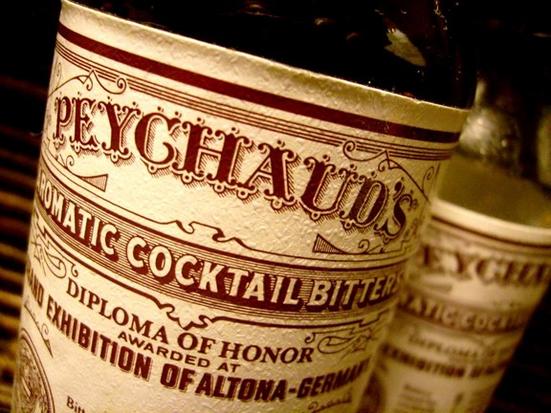
Now, some 2 centuries later, what’s old is new again, and there is a resurgence of bitters for drinking and even cooking, medicinal purposes, not so much. Mark Bitterman, author of the 2015 book Bitterman’s Field Guide to Bitters and Amari, described bitters as being to cocktails, what salt is to food. They offer another layer of flavor to add depth to whatever you’re drinking. Today, there are more than 500 kinds of bitters, but Angostura and Peychaud remain two of the most popular.

Below is the recipe for one of the very oldest, but still a goody, the Sazerac. Enjoy!
______________________
SAZERAC: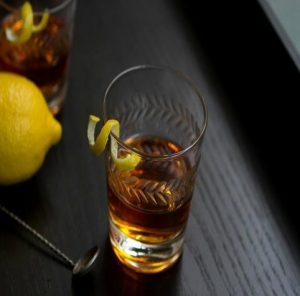
________________________
This is the connoisseur’s choice. One of the very first cocktails, it’s smooth, rich warmth is as captivating as it’s very cool history. This is a drink that when done correctly, always satisfies.
Ingredients
1 sugar cube
2 1/2 ounces whiskey — rye whisky
2 dashes Bitters — Peychaud’s bitters
1 dash Bitters — Angostura bitters
3 sprays of Herb Saint or absinthe
lemon peel
2 antique crystal glasses
Instructions:
The last time I sat at a bar in New Orleans and ordered a Sazerac (last night), the bartender set up two beautiful antique, cut crystal glasses for mixing. That’s how it’s supposed to be done. Average mixing glasses just won’t do. Next add a cube of sugar, then muddle it. Now put in several small ice cubes and the rye whiskey, the Peychaud’s bitters, and the Angostura bitters.
In the second glass, spray a few times with Herb Saint or add a couple of drops of absinthe and swirl it around, coating the inside of the glass. Be sure to pour out any excess. Stir the ingredients of the first glass and poor it into the second. A twist of lemon peel is used to garnish. (Note: Most bars in New Orleans use Herb Saint.)
I highly recommend Sazerac Rye (18 years old).
