
New Orleans is mourning the loss of Jerome Smith — a Freedom Rider, community warrior, culture keeper, institution builder and guardian to Black children. He co-founded Tambourine and Fan with fellow CORE member Rudy Lombard and encouraged city officials to build The Treme Community Center.
Smith died on April 21, 2026, and the Black community honored him that same day with a second line. And the following week with another second line, with pallbearers carrying a casket adorned with Smith’s images.
The Treme Community Center is operated by the New Orleans Recreation Development Commission ( NORDC). It offers a variety of activities, including year-round public programs spanning aquatics, fitness, sports, arts, and community engagement.
Run by the New Orleans Recreation Development Commission (NORDC), the center features an indoor pool, a dance studio, a music room, basketball courts, fitness and sports, arts, music & cultural enrichment, youth enrichment, and creative classes.
The Treme Community Center offers a safe environment for the historic Tambourine and Fan and youth organization to host and teach connection points among music, street culture, and social justice.
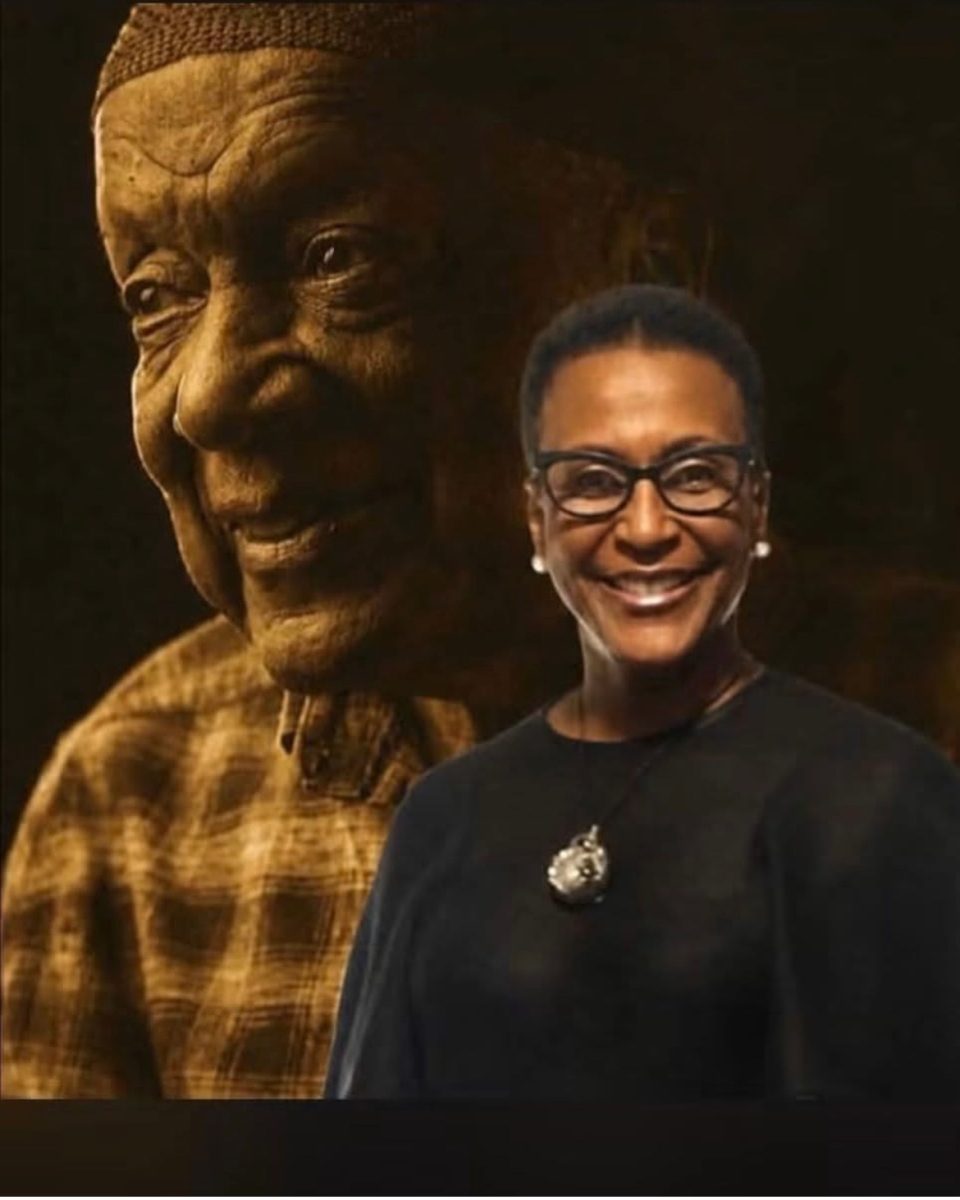
“Everything I did was for the children,” Smith said in interviews.
He knew that if he didn’t provide a safe space where children could learn about their culture and history, no one else would.
Smith was very supportive of the Masking Black Indian culture. Two of his sons were members of Tootie Montana’s Yellow Pocahontas Tribe. He also helped the “Bucket Men,” and other social and pleasure clubs and funded both.
Smith was a mentor to Fred J. Johnson, the president of The Black Men of Labor and executive director of the NDF (Neighbor Development Foundation). Johnson was 12 or 13 years old when he met Jerome Smith in 1968.
“He was a staunch supporter of Chief Allison ‘Tootie’ Montana. Smith made sure the Yellow Pocahontas Tribe had all the feathers, ribbons, and materials needed to make Indian suits. Johnson, a member of the Yellow Pocahontas, recalls Smith giving money to members of the tribe to purchase the needed adornment for their suits. Smith’s sons Juden and Jerome Jr. were in the Yellow Pocahontas.
“He gave me $120.00 for my suit. He must have spent at least a thousand dollars because he wanted Tootie to have at least 20 tribesmen.” The city honored Jerome Smith two weeks before his death. “You have to give people their flowers while they’re living,” Johnson affirms.
Don Hubbard, a close friend of Jerome and a CORE member, said, “His contribution to the city is that he forced the city to look at young people; he forced them to respect young people. He forced the city council and the mayor’s office to respect young people and what they were all about.”
Smith and his fellow CORE members risked their lives to make segregationists follow the law. It was seven years after the Brown v. Board of Education decision outlawing segregation.
And Smith paid in blood to desegregate bus terminals, lunch counters, public places, and forced Whites Only and Colored Only signs to fall. He was determined to secure freedom and civil and voting rights for Black Americans.
Smith was not a symbolic activist. He was a man who absorbed the full brutality of the Jim Crow South. Translation: White men who didn’t want to give up the ghost of white privilege maimed and killed Black people to prevent them from exercising their constitutional rights.
That mentality was a manifestation of racism and the desire to maintain the status quo of having all the political power and access to money for themselves. Ironically, the same mentality exists today.
White Mobs beat and jailed Black people for attempting to end segregation and for helping people to register to vote. This while Black Americans paid taxes, just like them.
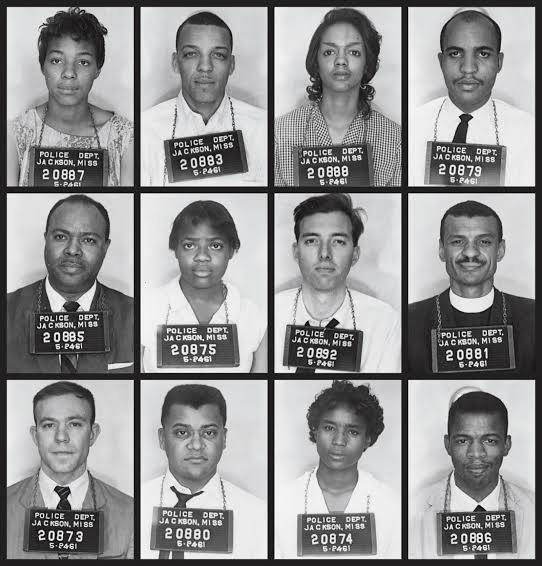
Twenty-two-year-old Jerome Smith, a CORE activist and former Southern University student and longshoreman, rode by Greyhound Bus from Montgomery, Alabama to Jackson, Mississippi on May 24, 1961, as part of a Freedom Ride. He was arrested the following day in Jackson.
He also rode a Greyhound Bus from New Orleans, Louisiana to McComb, Mississippi on November 29, 1961. He was jailed in Mississippi and Louisiana. Jerome Smith was viciously beaten with brass knuckles by a white mob in late 1961, when he and a group of activists arrived at a Greyhound bus terminal in McComb, Mississippi, to protest segregation. It was said that of all the Freedom Riders, Smith got the most beatings.
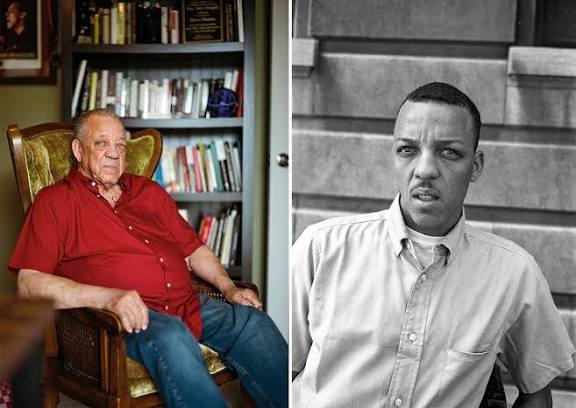
David J. Dennis Sr. was CORE’S Mississippi Field Secretary. “If it wasn’t for CORE member George Raymond intervening, Jerome would have been beaten to death.
The brutal beating on his head left him with severe injuries and lifelong headaches. He was considered by the Congress of Racial Equality (CORE) to be one of the most heavily beaten civil rights workers of that era. He carried trauma that never healed.
Smith and other CORE members risked their lives for equality and justice. Their families also lived under constant threat, too.
“My dad did a lot of good things,” says Farin Smith. She recalls teaching children at a summer camp her dad started and visiting Fontainebleau Park.
Farin says other people’s children were always in her home, and her dad traveled frequently, so she didn’t spend as much quality time with her father as she wanted. “That made me independent,” Farin adds.
Farin is overseeing her dad’s going home celebrations. She said, “Congressman Troy Carter sent a team” to help with the arrangements. Farin’s loss of her father is compounded by the loss of her mother six months ago.
In addition to Farin, Smith has two daughters, Kami Smith and Saidiah, and a son, Jerome Smith Jr. Smith was preceded in death by sons Juden, Tarik, and Taju Smith.
Related: 50th Anniversary of a Campus Tragedy
The Baldwin–Kennedy Meeting: The Day Jerome Smith Told the Truth No One Else Would
On May 24, 1963, James Baldwin assembled a delegation of Black intellectuals and artists to confront U.S. Attorney General Robert F. Kennedy about the mistreatment of Black Americans.
The room was stacked with powerful Americans: James Baldwin, Lorraine Hansberry, Harry Belafonte, Kenneth Clark, Lena Horne, Clarence Jones, June Shagaloff, Edwin C. Berry, David Baldwin, Rip Torn, and Jerome Smith, the only Freedom Rider present.
Kennedy brought Burke Marshall, a Department of Justice Attorney.
During a confrontation between Smith and Kennedy, then 24-year-old Freedom Rider Jerome Smith directly confronted Attorney General Robert F. Kennedy, stating he was part of the CORE Freedom Riders — the same campaign in which the Greyhound bus in Anniston, Alabama was firebombed by a white mob. Riders were beaten as they escaped the flames. Smith continued the work anyway, absorbing beatings, jailings, and threats that would have broken most men.
He told Kennedy, “I’ve seen you guys [from the Justice Department] stand around and take notes while we’re being beaten.”
Soon after, federal troopers were on the bus, while helicopters buzzed overhead
As a result of that meeting, Attorney General Robert F. Kennedy Sr. supported the Civil Rights Act of 1964 and the Voting Rights Act of 1965.
Jerome Smith helped move federal policy. That’s the part America forgets.
Why This Matters in 2026
Because the same forces Jerome fought — state violence, political indifference, white backlash, and government denial — are alive again. Democracy is shrinking. Black voters are targeted. History is being erased. And children are once again being taught lies.
Jerome Smith’s legacy is not a memorial. It’s a mandate.
He forced power to confront truth. He refused to sanitize suffering. He demanded accountability.
In 2026, the question is not whether we remember Jerome Smith. It’s whether we have the courage to do what he did.
