
TL;DR
Black voters are casting nearly a third of Louisiana’s early ballots, far more than in 2022, and anger over the Callais ruling is a big part of it. Julia Letlow is dodging debates. Some Cassidy and Fleming Republicans may not show up at all. Jamie Davis is still the underdog, but if this turnout holds, Louisiana could shock the world on Nov. 3.
Key Points
- Black voters cast about 32% of Louisiana’s early ballots in the first four days, up from roughly 24% in the 2022 midterm.
- More than 95,000 Black voters cast ballots in four days, nearly matching the 98,008 who voted early during all of 2022.
- The surge follows Louisiana v. Callais, which eliminated one of the state’s two majority-Black congressional districts.
- Letlow has skipped Senate forums and faces questions about a Meta NDA and more than 200 late stock-trade disclosures.
- Letlow remains the favorite. Black turnout, Republican defections and crossover voters will decide whether Davis can pull an upset.
- Early voting ends Tuesday, Oct. 27. Election Day is Nov. 3.
Nobody in Baton Rouge saw this coming. Republicans hold every statewide office in Louisiana, and the smart money says Julia Letlow takes the U.S. Senate seat on Nov. 3 without breaking a sweat. Then early voting opened in the Louisiana Senate race, and Black voters started lining up.
Through the first four days, more than 95,000 Black Louisianans cast ballots, according to the Secretary of State’s office. During the entire early voting period in the 2022 midterm, the number was 98,008. This year came close to that in four days. Black voters now make up about 32% of the early vote; four years ago, it was about 24%.
John Couvillon, a pollster who mostly works for Republicans, told the Louisiana Illuminator that only one opening day of early voting since 2008 drew a bigger Black share. That was 2020, Trump against Biden, a presidential year. This is a midterm.
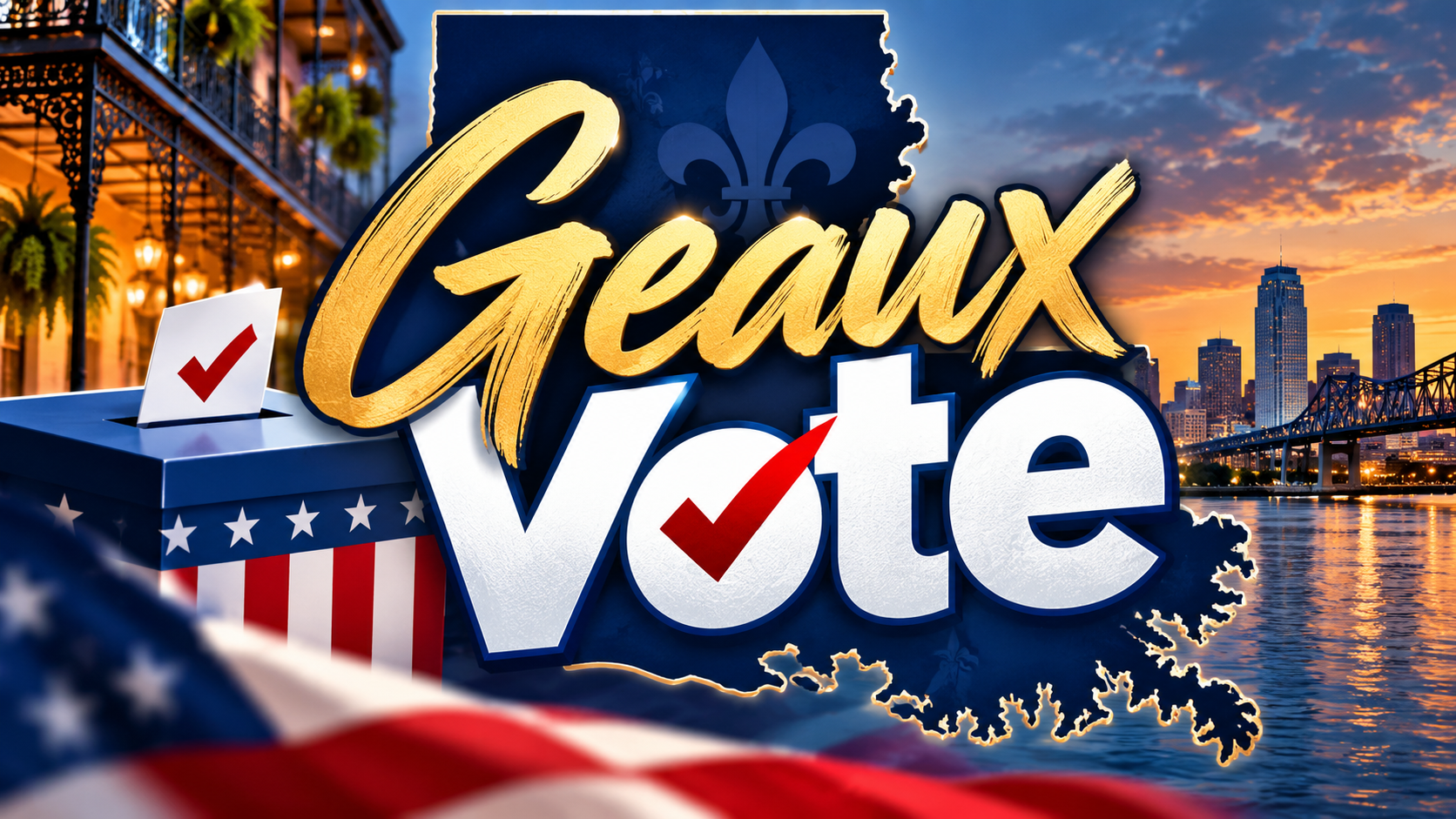
Callais Woke People Up
Couvillon has a theory about why: lingering anger over redistricting. He’s right.
In April, the U.S. Supreme Court decided Louisiana v. Callais and threw out the state’s second majority-Black congressional district. The Legislature redrew the map to help Republicans, and Cleo Fields isn’t running again. Black Louisiana had two seats in Congress it could count on. Now it has one.
People felt that. They also did the math a lot of politicians hoped they would skip. Senators confirm Supreme Court justices, and this Court has been busy. It gutted the Voting Rights Act’s preclearance requirement in Shelby County v. Holder back in 2013; this year, it took a congressional seat away from Black Louisiana. Plenty of Black voters now see the most activist Court in generations, and the Senate is the only place they get any say over who sits on it.
So a race that looked like a formality has turned personal. Black voters want more control over their own political future, and they’ve figured out where that control runs through. Elections have consequences. Louisiana is living them.
Where Is Julia Letlow?
Letlow is campaigning like someone protecting a lead. She keeps public events to a minimum. She skipped the U.S. Senate candidate forum on Oct. 19, and during the Republican primary she wouldn’t agree to a televised debate and kept Louisiana reporters at arm’s length.
Put her on a debate stage and somebody asks about Meta. In June 2024, she signed a nondisclosure agreement with a Meta shell company that gave her a look at confidential plans for the Richland Parish data center. In the months that followed, she bought Meta and Nvidia stock, the Gulf States Newsroom reported. She also reported more than 200 trades after the STOCK Act’s 45-day deadline, some of them more than a year late.
Her campaign says a broker made those trades without her knowledge and that the NDA had nothing to do with them. She hasn’t been charged with anything. If the explanation is that solid, though, there’s no reason not to give it standing next to Jamie Davis.
A Republican Base That Isn’t Excited
Letlow got the nomination by taking out a sitting senator. With Trump in her corner, she knocked Bill Cassidy out in the May primary, and as of late summer Cassidy still hadn’t endorsed her. Many of his voters are moderates who stayed loyal after he voted to convict Trump in 2021. Some of them will stay home. A few may even vote for Davis.
John Fleming’s supporters have their own grudge. She beat the state treasurer 57% to 43% in a nasty June runoff, and plenty of his people are still disgusted with her. Disgusted voters don’t knock on doors.
Nothing further down the ballot helps her, either. None of Louisiana’s Republican members of Congress faces a real race this year, so there’s no hot contest dragging GOP voters to the polls. The one House race with any heat helps the other side. In the 1st District, special education teacher Lauren Jewett is taking on Steve Scalise, and she’s giving Democrats on the Northshore and in suburban New Orleans a reason to show up. Those voters lean toward Davis.
The Polls, Such as They Are
There’s been one public poll. In July, Public Policy Polling had Letlow at 41% and Davis at 37%, with 22% undecided. Davis’s campaign released it, so it deserves some salt. It was also taken before the Meta story broke. Davis now says his internal numbers have him four points back.
Forecasters still favor Letlow, and national Democrats haven’t spent a dime on Davis. He is not the favorite. Anyone calling this race over hasn’t looked at the early vote.
The Math Davis Has to Do
Black turnout can’t win this by itself. Say Black voters end up at 33% of the electorate and Davis takes 90% of them. That’s about 30 points. He’d still need a little over 30% of everyone else to reach 50.
That’s a tall order in Louisiana, where no Democrat has won a Senate race since Mary Landrieu in 2008. It isn’t impossible. The extra votes have to come from independents and moderate Republicans, especially the Cassidy voters who still show up, and from anybody tired of what they pay for health care and insurance.
Davis has to make that case about people’s bills, not about Donald Trump. Trump’s endorsement is a big asset for Letlow with Republicans. It also means she carries whatever voters think of him this fall, good or bad.
Waiting 150 Years
Louisiana has never elected a Black U.S. senator. In 1873, the Legislature chose P.B.S. Pinchback, the state’s Black Reconstruction-era governor, for the Senate; the Senate refused to seat him. More than 150 years have passed since. (For more on how the state’s political map has been reshaped, read The Black Vote in Louisiana Is Being Engineered Out of Existence.)
History won’t carry Davis to Washington. Votes will.
What to Watch Before Nov. 3
The first thing to watch is whether the Black share holds near a third when early voting closes Tuesday, Oct. 27. After that, keep an eye on Jefferson Parish and the Baton Rouge suburbs, where crossover votes would show up first. Then look at turnout in Cassidy and Fleming country. If those voters sit on their hands, the math changes in a hurry.
Louisiana Could Shock the World
Every prediction about this race assumes Black Louisiana will undervote the way it usually does in a midterm. So far, it isn’t. Add a front-runner who won’t debate and a Republican base that’s split and flat, and Louisiana could shock the world on Nov. 3.
Even if Davis comes up short, the message is out. Republicans can’t count on Black voters staying home after what Callais did, and Democrats can’t count on Black voters to carry them without earning it.
Black Louisiana lost a seat in April. Now it’s answering at the polls.

About the Author
Jeff Thomas is the founder and publisher of Black Source Media and the owner of WBOK 1230 AM in New Orleans. He is also CEO of Fenix AI and leads Total Computer Solutions and Services, a New Orleans IT firm that has served government agencies for 30 years. He writes about New Orleans and Louisiana politics, power and accountability.
Sources
- WBRZ: Early voting data shows surge in Black turnout across Louisiana
- Louisiana Illuminator: Black voter turnout higher than normal for first day of early voting (Oct. 22, 2026)
- Louisiana Radio Network: Black early voting turnout highest in recent history (Oct. 22, 2026)
- WAFB: Early voting numbers up among Black voters (Oct. 25, 2026)
- WAFB: Letlow declines Senate forum as Davis touts grassroots support (Oct. 19, 2026)
- Louisiana Illuminator / Gulf States Newsroom: Letlow bought Meta stock after signing an NDA (Aug. 11, 2026)
- The Advocate: Letlow and Davis barnstorm the state
- WWNO: Poll shows 4-point difference between Letlow and Davis (Aug. 19, 2026)
- Verite News: Can Jamie Davis run a competitive Louisiana U.S. Senate campaign? (Sept. 8, 2026)
- WRKF: June 27 runoff results
Don’t Miss the Next One
Black Source Media lands in your inbox every Sunday and Wednesday with the New Orleans and Louisiana stories other outlets won’t tell straight. Sign up free.
