

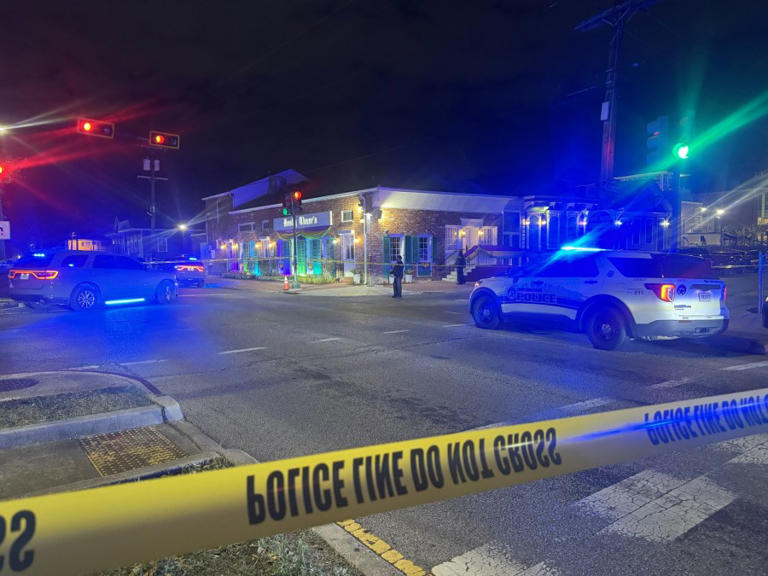
A shooting occurred inside Dooky Chase Restaurant in New Orleans last week, shocking the city and violating one of the most historically significant sites of the Civil Rights Movement just days before Martin Luther King Jr. Day.
TL;DR — Why This Matters
- A shooting inside Dooky Chase is not “just another incident”
- Dooky Chase is sacred ground in New Orleans and Civil Rights history
- Reverence for Black institutions must be taught
- Unaddressed trauma fuels extreme violence
- Protecting history requires education, not silence
- The timing before MLK Day deepens the harm
I was shocked.
I was horrified.
Sadly, I was left aghast.
Not because violence occurred in New Orleans. Sadly, that is no longer rare.
But because this violence happened inside Dooky Chase.
That matters.
Shooting Inside Dooky Chase Violates a Historic Civil Rights Landmark
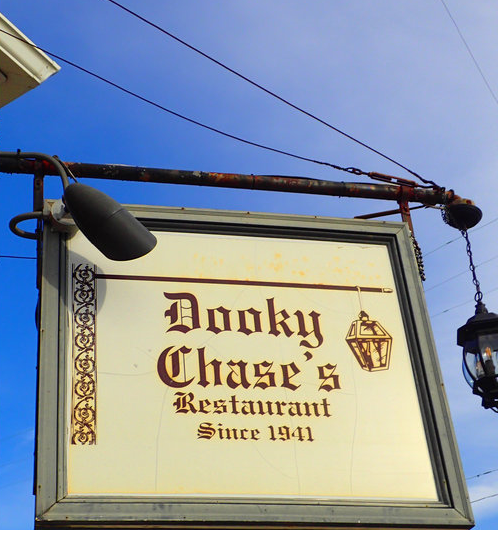
Dooky Chase is not just a restaurant. It is sacred ground in Black American history.
During the Civil Rights Movement, Dooky Chase served as a strategic meeting place for leaders who could not safely gather elsewhere. Organizing connected to the Montgomery Bus Boycott passed through its doors. Dr. Martin Luther King Jr. was a frequent visitor.
Leaders associated with Dooky Chase include:
- Dr. Martin Luther King Jr.
- Rev. Avery Alexander
- Dutch Morial
- Thurgood Marshall
- James Baldwin
- A.P. Tureaud
Cultural icons also passed through:
- Duke Ellington
- Ray Charles
In more recent times:
- Barack Obama
- Beyoncé
But Dooky Chase’s importance is not just celebrity.
Its importance is that the Civil Rights Movement itself passed through that space.
Some places absorb history so deeply that they become sacred, whether or not anyone formally declares them so.
Why Dooky Chase Holds National Civil Rights Significance
Dooky Chase was one of the few places where Black leaders could meet, eat, and plan without fear during segregation. It functioned as a sanctuary for ideas that reshaped the nation.
That is why violence inside that space feels like more than a crime. And it was a horrific crime. One man chased another through the streets and gunned him down in the restaurant’s foyer. With diners inside.
Yes, more than a crime. This feels like a violation of memory. It is the loss of our humanity.
A Personal Lesson in Reverence Learned From My Mother
When I was a child, my late mother—a devout Catholic—had a ritual.
Every time we passed a Catholic church, she would stop talking and make the sign of the cross. She said a silent prayer. She acknowledged its presence.
And, she believed it was disrespectful not to.
I did not understand it then. I thought it was outdated. Sometimes I talked louder on purpose, mocking what I viewed as a silly gesture unworthy of modern times.
She never budged. In fact, she warned me that it was not funny. Outwardly angered, she thought she had somehow failed me as a mother.
Today, even though I do not make the sign of the cross, I still feel something when I pass a church. I recognize that it is not just another building.
What she was teaching me was not only about faith.
She was teaching me how to honor something greater than myself.
How to respect elders.
How to recognize institutions that deserve reverence.
That same reverence applies to Dooky Chase.
Violence in Sacred Spaces Reflects Deeper Social Failure
If our children truly understood our history, this atrocity would not have happened.
Absent severe mental illness, no one who understands what Dooky Chase represents would chase another human being and bring street violence into that space.
That is not simply ignorance.
That is something deeper and more dangerous.
Mental Health, Trauma, and the Roots of Extreme Violence
New Orleans licensed clinical social worker Victor Sims has long explained that acts like this often stem from a combination of unresolved trauma, chronic exposure to violence, emotional dysregulation, and a distorted sense of threat.
From a clinical perspective, this behavior reflects hypervigilance, rage displacement, and impaired impulse control—patterns frequently observed in young Black men raised amid instability without adequate mental health intervention.
This is not an excuse.
It is an explanation.
BlackSourceMedia has previously examined why Black people kill each other in the streets. One conclusion is difficult but a real life issue for too many young black men: violence becomes normalized when history, identity, and self-worth are stripped away.
A person in this mental state cannot navigate the world successfully. They do not recognize institutions that deserve respect. They cannot distinguish a sacred space from ordinary space. They embody ignorance.
Unfortunately as we saw at Dooky’s, that ignorance endangers everyone. Three people who were just waiting to be seated at their table were struck by flying bullets. And the whole city looked on in horror as tourists were loaded on gurneys and rushed to the hospital. Trauma.
Why the Timing Before MLK Day Makes This Especially Jarring
This shooting occurred days before MLK Day, inside one of the most important institutions connected to Dr. King’s life.
Dr. King’s ties to New Orleans run deep. He frequented the restaurant whenever he visited New Orleans. Many joke that he visited New Orleans so much so he could eat the great food at Dooky’s. Mahalia Jackson—his favorite and most spiritually grounding singer—was from here. He often called her simply to hear her sing. During the “I Have a Dream” speech, when the crowd grew restless, Mahalia stood near him and urged him to tell them about his dream.
Dooky Chase, Mahalia Jackson, and New Orleans are not footnotes in Dr. King’s story. They are pillars.
That is why this moment should unsettle us.
Related: MLK was Once Considered Radical
Teaching History Is Essential to Preventing Future Violence
We must do a better job teaching our children:
- Who they come from
- What spaces carry history
- Why reverence matters
- How to control rage before it controls them
This is not nostalgia.
It is survival.
Because if we do not teach our history ourselves, it will continue to be minimized, distorted, or erased.
And if we allow sacred Black institutions to be treated as ordinary backdrops for chaos, then we are complicit in losing them.
We love Dooky Chase