
Black Source Media — Sunday — Politics / Civil Rights — C.C. Campbell-Rock
Politics / Civil Rights / Voting Rights
The Supreme Court will rule by June 2026 on a case that could eliminate Louisiana’s second majority-Black congressional district. Moreover, it could destroy the last major legal tool Black voters use to fight discriminatory maps. This story starts in Louisiana. However, it belongs to every American.
By C.C. Campbell-Rock | Black Source Media | March 2026
Black voters in Louisiana — and across this nation — stand to lose political power if the U.S. Supreme Court sides with eleven white plaintiffs who challenged Congressman Cleo Fields’ congressional seat.
That is not hyperbole. No, that is not speculation. That is the reality of Louisiana v. Callais, a case now before the United States Supreme Court that has already chipped away at the Voting Rights Act.
A ruling for the plaintiffs would gut Section 2 of the Voting Rights Act — the primary tool voters of color use to challenge discriminatory maps in court. Furthermore, it would eliminate the legal foundation behind Louisiana’s second majority-Black district. As a result, states across the nation could redraw maps to silence Black voters for a generation.
This is not just a Louisiana fight. Instead, it marks a national turning point. To understand what is at stake, however, we must go back — all the way back — to understand the deliberate pattern that brought us here.
“The tools change. The goal does not.”
— C.C. Campbell-Rock
1866: When They Used Violence to Stop Black Political Power
📷
In 1866, Black delegates and white Republican allies tried to reconvene the Louisiana Constitutional Convention. Their goal was straightforward: secure Black suffrage and overturn the Black Codes. White supremacists — including ex-Confederates, New Orleans police, and local officials — responded not with debate but with mass violence. They stormed the Mechanics Institute, killing dozens of African Americans and injuring more than 150.
This was not random chaos. Rather, it delivered a deliberate message: Black political power would meet white political violence.
Thirty-two years later, however, Louisiana’s white political leadership no longer needed mobs. They had something more powerful. They had the law.
The 1898 Constitutional Convention existed for one purpose — and the delegates stated it publicly. Judge Thomas Jenkins Semmes, former Confederate official and president of the convention, declared:
“We came here to establish the supremacy of the white race.”
— Judge Thomas Jenkins Semmes, President, 1898 Louisiana Constitutional Convention
Semmes was not a fringe extremist. He represented the legal establishment. His dual role — Supreme Court justice and architect of the 1898 Constitution — reveals the truth: Louisiana built its legal and political systems together, deliberately, to exclude Black people from power. Through literacy tests, poll taxes, property requirements, and white-controlled registrars, Black voter registration collapsed from more than 130,000 to fewer than 1,500.
179 Years: How the Chisom Case Finally Broke the Wall
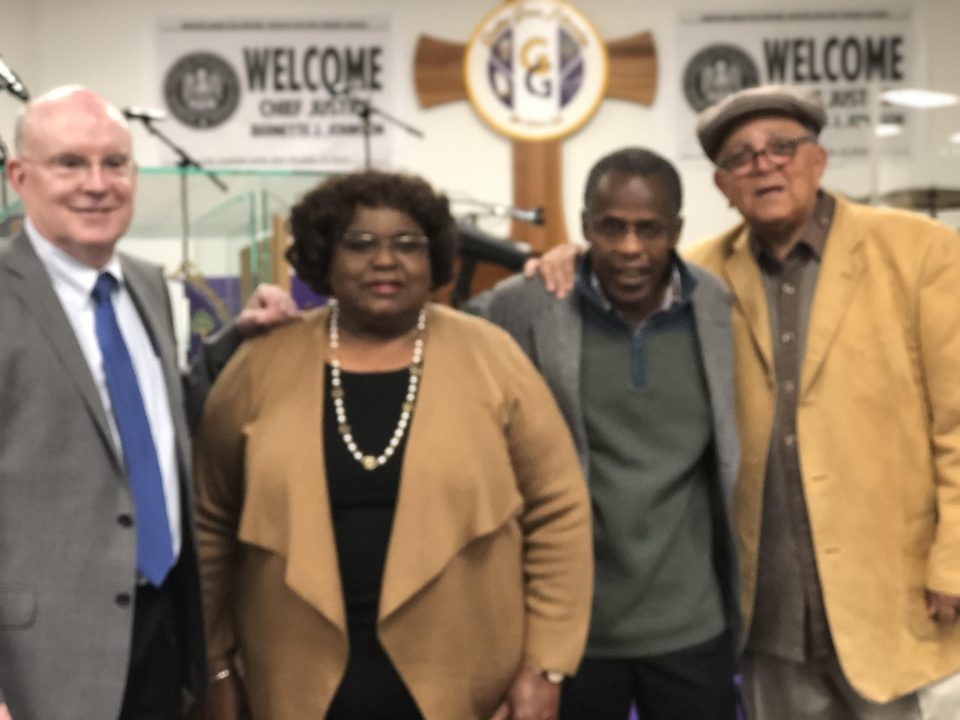
Louisiana founded its Supreme Court in 1813. For 179 years afterward, no Black justice sat on it. Judicial districts were drawn specifically to guarantee white-majority electorates and white-only representation. That outcome did not happen by accident.
Eventually, however, Chisom v. Roemer broke that wall. In 1991, the U.S. Supreme Court ruled that Section 2 of the Voting Rights Act covers judicial elections. Because of that ruling, a consent decree created the First Supreme Court District — a remedy that finally allowed Black voters to elect a justice who understood their community.
In 1992, Associate Justice Revius O. Ortique became the first Black justice in the Court’s 179-year history. Then in 1994, Bernette J. Johnson won election to the Louisiana Supreme Court. After that, in 2012 — following a lawsuit against fellow associate justices who tried to block her — she became its first-ever Black Chief Justice.
I participated in that fight directly. As a member of the Louisiana Voter Education Project Advisory Board — an affiliate of John Lewis’s Voter Education Project — I helped produce the first redistricting map that included compact districts where Black residents could elect someone who shared their experience. Because of that work, nine Black state senators and 21 Black state representatives won election.
Related: Voting Rights Act Under Attack
Attorney Ron Wilson, lead counsel in the Chisom litigation, described the stakes plainly:
“When we filed the Chisom lawsuit, we weren’t asking for special treatment — we were asking for equal treatment under the law. Louisiana’s judicial and political systems had been engineered for generations to shut Black voters out. The Voting Rights Act was the only tool strong enough to break that wall. If Section 2 is weakened or eliminated, we risk returning to the very conditions that made Chisom necessary in the first place.”
— Attorney Ron Wilson, Lead Counsel, Chisom v. Roemer
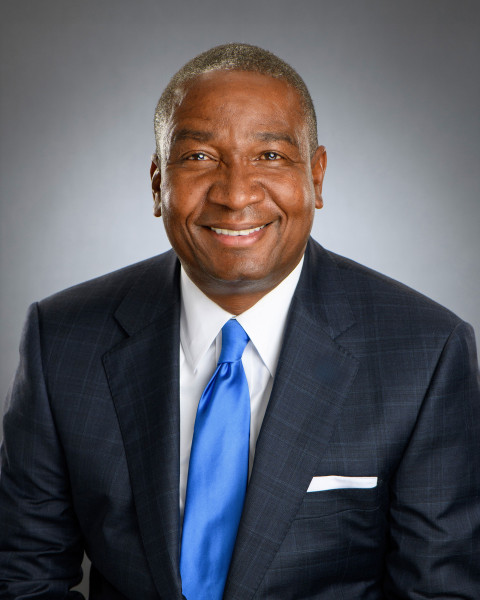
1995: The First Time They Stripped Cleo Fields’ Seat
In 1992, Fields won election to Louisiana’s 4th Congressional District — the first majority-Black district the state had seen since Reconstruction. The Voting Rights Act made that victory possible.
Three years later, however, the Supreme Court struck down his district. The Court used the same logic that plaintiffs now revive in Louisiana v. Callais: the argument that drawing a district to remedy racial discrimination is itself unconstitutional.
Fields did not lose because he failed his constituents. Instead, he lost because the system was deliberately redesigned to prevent Black voters from winning. Today, that same playbook is back in use.
Louisiana v. Callais: The Newest Attempt to Silence Black Voters
📷 Image suggestion: LDF Executive Director Janai Nelson speaking after arguing Louisiana v. Callais before the U.S. Supreme Court. Photo credit: Attorney Ben Crump Facebook post. Insert here.
Currently, eleven white plaintiffs argue that Louisiana’s second majority-Black congressional district — the seat Fields now holds — represents a “racial gerrymander.” Governor Jeff Landry actively supports their position.
| If the Supreme Court Rules for the Plaintiffs, Four Things Happen Louisiana reverts to a 5-to-1 white-majority congressional map — even though the state’s population is nearly half BlackSection 2 of the Voting Rights Act faces effective elimination nationwideStates across the country gain new freedom to redraw maps that silence Black voters indefinitelyThe legal foundation of Chisom — and every majority-minority district built under the VRA — collapses |
Moreover, voting rights expert Carl Galmon — who testified before Congress in 2006 that Louisiana violated the VRA hundreds of times, and who serves as a lifetime board member of the National Voting Rights Museum in Selma — notes that the gerrymandering problem reaches beyond Fields’ district. “A gerrymandered district is an elongated district,” Galmon explains. “Districts should be compact.” He argues that if state lines ran east to west instead, Louisiana could support three Black members of Congress.
The 160-year pattern, therefore, is not hard to read:
| A Pattern That Has Never Changed 1866: White supremacists use violence to halt Black political power1898: White lawmakers use law to eliminate Black political power1813–1992: The judiciary excludes Black representation for 179 straight years1995: Federal courts dismantle Black political power2026: Callais attempts to prevent Black political power from ever taking lasting root |
The Louisiana Voting Rights Act: Baton Rouge Fights Back
📷 Image suggestion: State Senator Royce Duplessis and ACLU Executive Director Alanah Odoms on the steps of the Louisiana State Capitol during the LAVRA press conference. Photo: Courtesy MSN. Insert here.
Last Wednesday, however, the fight returned to Baton Rouge. The Power Coalition for Equity and Justice, the NAACP Legal Defense Fund, the ACLU, and hundreds of citizens gathered on the steps of the Louisiana State Capitol to announce support for State Senator Royce Duplessis’ SB 365 — the Louisiana State Voting Rights Act (LAVRA).
Duplessis delivered a clear message:
“Sixty years after the federal Voting Rights Act transformed American democracy, the protections that once expanded participation and representation are being steadily weakened. I am proud to introduce the Louisiana State Voting Rights Act to ensure our state has strong, modern safeguards that protect every voter and every community.”
State Senator Royce Duplessis, Author of SB 365
Ideas to Consider
Meanwhile, ACLU Executive Director Alanah Odoms — arriving fresh from Selma and the 61st anniversary of Bloody Sunday — reminded the crowd that the Civil Rights Movement began in Louisiana, with the 1953 Baton Rouge Bus Boycott.
“As Louisiana goes, so goes the South,” she said. “As the nation goes, so goes Louisiana.”
In addition, Janai Nelson, President and Director-Counsel of the Legal Defense Fund — who argued the defense in Louisiana v. Callais before the Supreme Court — put the stakes plainly:
“Discrimination has run rampant in Louisiana elections for far too long. The Louisiana Voting Rights Act will provide many of the urgently needed protections that will help safeguard Black voters from attempts to weaken or silence their voices.”
— Janai Nelson, President and Director-Counsel, NAACP Legal Defense Fund
Although the odds of LAVRA passing a Republican-dominated legislature remain low, the fight matters regardless. Retired Chief Justice Bernette J. Johnson — who spent her career at the center of this battle — said it plainly:
“The Chisom case was never about one seat on the Louisiana Supreme Court. It was about whether Black citizens would ever have a fair chance to participate in the justice system that governs their lives. Voting rights are the foundation of every other right we hold. When you weaken those protections, you weaken democracy itself.”
— Retired Chief Justice Bernette J. Johnson
The Threat Hiding in Baton Rouge
Furthermore, a separate assault on Black judicial representation advances quietly inside the state legislature. HB 270 and SB 241 would eliminate 14 civil and criminal court judgeships in Orleans Parish. Supporters call it “efficiency.” However, not one of the legislators who proposed these bills lives in New Orleans. Not one has produced a supporting study. In reality, four white Republicans want to “streamline” the courts of the state’s largest and most Black city. That is what the assault looks like when it bypasses the Supreme Court entirely.
Carl Galmon, who has fought this battle longer than almost anyone alive, put what is at stake in terms that need no translation:
“When you look at Louisiana’s history, you see a pattern: every time Black voters begin to gain political ground, the rules change. That’s why the Voting Rights Act is not optional for us — it’s essential. Without federal protections, Louisiana has shown repeatedly that it will fall back on the same tactics that kept Black citizens out of the political process for generations. We cannot afford to go backward.”
— Carl Galmon, Testimony before the U.S. House Judiciary Committee, 2006
We Have the Receipts. We Have the Will.
Black people have always fought for the right to vote. Moreover, they have always won — even when the wins came slowly, painfully, and at enormous cost. We carry the receipts. We carry the history. And, as Shirley Chisholm declared, we remain unbought and unbossed.
Consequently, we will not step aside. We will not stay silent. And we will not allow any court, any governor, or any legislature to turn back the clock on American democracy.
The Supreme Court’s ruling is expected in June 2026. Therefore, between now and then, every Black voter, every civil rights organization, and every elected official who claims to believe in democracy carries a clear responsibility.
Honor it.
C.C. Campbell-Rock is a veteran journalist and civil rights advocate who writes for Black Source Media and the Louisiana Weekly. She is a former member of the Louisiana Voter Education Project Advisory Board, an affiliate of John Lewis’s Voter Education Project. — Photo credits: Attorney Bill Quigley, Chief Justice Bernette J. Johnson, and Lead Counsel Ron Wilson at Voting Rights Conference sponsored by Ron Chisom (C.C. Campbell-Rock); LDF Executive Director Janai Nelson after arguing Louisiana v. Callais (Ben Crump Facebook); State Senator Royce Duplessis and ACLU Executive Director Alanah Odoms at Louisiana Capitol (MSN); Congressman Cleo Fields (Fields’ Facebook).

Thanks for this history. My hope and prayers are that we, who believe in democracy will come out to vote in November like we did for Obama. Let us show how strong we are. Nothing can stop us.