
From P.B.S. Pinchback in 1873 to Cleo Fields in 2026, Louisiana has been here before: Black voters elect a Black representative, and the white power structure takes the seat away. C.C. Campbell-Rock traces 150 years of the same pattern — and names what comes next.
The Supreme Court’s 6-3 ruling in Louisiana v. Callais eliminated the state’s second majority-Black congressional district. Eleven white voters claimed the district discriminated against them. The Court agreed — and in doing so, gutted Section 2 of the Voting Rights Act.
Furthermore, this is not a new story. Louisiana has been stripping Black political power for 150 years — from the Senate’s refusal to seat P.B.S. Pinchback in 1873 to the dismantling of Cleo Fields’ district in the 1990s to today. Moreover, Louisiana is not alone. Alabama, Georgia, Texas, Florida, and the Carolinas are all doing the same thing as part of a coordinated national rollback of Black political representation.
Additionally, when minorities across all racial groups are counted together, they comprise 48% of Louisiana’s population — yet control only one of six congressional seats. The math is not accidental. It is engineered.
- The Supreme Court ruled 6-3 in Louisiana v. Callais, eliminating the second majority-Black congressional district — citing racial sorting as unconstitutional
- Cleo Fields, the district’s congressman, said it plainly: “In order to be in this Congressional seat, I would have to be white — and I can’t be that.”
- P.B.S. Pinchback was lawfully elected to the U.S. Senate in 1873 — and refused his seat. The pattern is 150 years old.
- Justice Kagan’s dissent warns the ruling “turns the Voting Rights Act against itself” and makes compliance “all but impossible”
- Justice Alito has opposed the Voting Rights Act since his Reagan administration memos in the 1980s — this ruling is the culmination of a 40-year project
- Minorities combined represent 48% of Louisiana’s population — yet will control just one of six congressional seats
- Six Southern states are simultaneously executing the same redistricting rollback — Alabama, Georgia, Texas, Florida, North Carolina, and South Carolina
Reconstruction in Louisiana: The First Time They Took Our Seats
P.B.S. Pinchback — Elected, Credentialed, Refused
Louisiana’s first Black lieutenant governor, Oscar J. Dunn, took office in 1868. The state’s first Black congressman, Charles E. Nash, served from 1875 to 1877. However, the most telling story — the one that mirrors today’s moment with chilling precision — is the case of P.B.S. Pinchback, elected by the Louisiana Legislature to the U.S. Senate in 1873.
Pinchback arrived in Washington with lawful credentials. He had the votes. He had the seat. What he lacked was white approval.
On March 3, 1873, Senator Allen G. Thurman of Ohio stood on the Senate floor and declared that seating Pinchback would “ratify a usurpation.” Others claimed Louisiana’s election was “tainted by fraud and violence.” The Senate refused to seat him. Moreover, Pinchback’s response still stings today. The Senate’s action, he said, “nullified the will of the people of Louisiana” and would “cripple the cause of equal rights in the South.” He was right then. His words describe exactly what is happening now.
Cleo Fields: The Modern Echo of an Old Pattern
More than a century later, Louisiana elected Cleo Fields to Congress in 1993. Two years later, the Supreme Court dismantled his district. Now, in 2026, the Court has done it again. Additionally, Fields himself is once again the man watching his seat disappear.
At a Baton Rouge press conference, Fields cut through the legal jargon with one devastating sentence:
“In order to be in this Congressional seat, I would have to be white — and I can’t be that.”
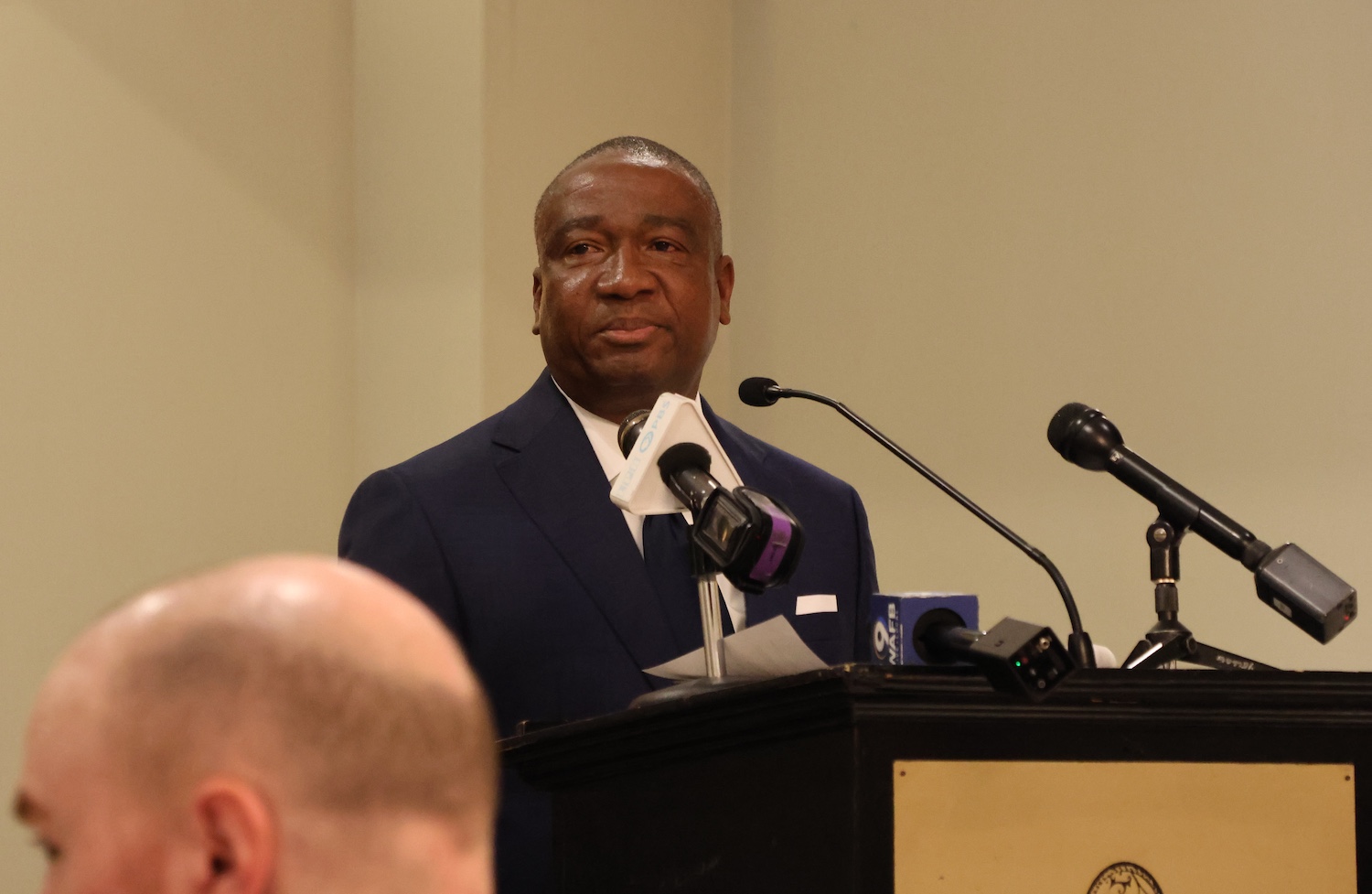
The truth does not get plainer than that. Furthermore, the pattern does not get more predictable: Black voters organize, Black voters elect, and the system finds a mechanism to undo it. Consequently, this ruling is not an outlier. It is the standard operating procedure — interrupted briefly by the Voting Rights Act and now restored.
“Every time Black voters in the South gain ground, there is a backlash.”
— Rev. William BarberWhat the Court Did in Louisiana v. Callais
Eleven White Voters Claimed Discrimination — The Court Agreed
In Louisiana v. Callais, eleven white voters claimed that creating a second majority-Black district discriminated against them. Justice Samuel Alito, writing for the majority, argued that Louisiana’s map “sorted voters into districts predominantly on the basis of race” and that such sorting “cannot be justified” under Section 2 of the VRA.
Civil rights advocates argue this reasoning rewrites the VRA to protect white voters from remedies designed to correct discrimination against Black voters. Moreover, it produces a result that is logically incoherent: the original racial gerrymander — designed to disperse and dilute Black voting power — is now beyond legal challenge. The remedy drawn to correct it, however, is unconstitutional. The house built by discrimination stands. The door built to let Black voters in is ordered shut.
Alito’s 40-Year Project
On MSNBC, journalist Nikole Hannah-Jones placed the ruling in its full historical context, noting that “Alito has been hostile to the Voting Rights Act since the 1980s. This ruling is not new — it is the culmination of a career-long project.” Furthermore, Ali Velshi added that Alito’s early Justice Department memos argued against strengthening the VRA, saying he has been trying to weaken it “since before he was a judge.”
Additionally, Louisiana ACLU Executive Director Alanah Odoms told CNN the Court “threw a Molotov cocktail into the heart of the Voting Rights Act.” NAACP LDF President Janai Nelson called the ruling “a devastating blow.” Marc Morial said it “cements discrimination.” Moreover, Princeton Professor Eddie Glaude Jr. named the motive plainly on MSNBC: “There are people who want this nation to be ruled by whites. That’s why the Voting Rights Act is being gutted.”
Justice Kagan’s Warning: The VRA Has Been Turned Against Itself
Justice Elena Kagan’s dissent centers on one fundamental point: the majority has rewritten Section 2 so drastically that it can no longer function. Congress designed Section 2 as a results-based protection — a tool to remedy the real-world effects of racially polarized voting and vote dilution. Consequently, by insisting that states may not consider race even when racial discrimination is the very problem being addressed, the Court has made compliance with Section 2 “all but impossible.”
Furthermore, Kagan warns that the majority’s logic “hollows out what remains of Section 2” and “turns the Voting Rights Act against itself.” In plain terms, the Court has taken a law meant to protect Black voters and reinterpreted it in a way that prevents Black voters from ever using it again. As Black Source Media’s Jeff Thomas previously pointed out, this is not the end of the VRA on paper — but it is the end of how it has worked in practice.
“The majority turns the Voting Rights Act against itself — forbidding the very race-conscious remedies the law requires.”
— Justice Elena Kagan, dissenting, Louisiana v. CallaisLouisiana’s Gerrymandered Reality — The Math Is Engineered
83% White Republican Control in a State That Is 43% Minority
Louisiana has six congressional seats. Five are drawn to elect white Republicans. The now-eliminated majority-Black district was the single exception. That means 83% of Louisiana’s seats are controlled by white Republicans, even though white residents are only 57% of the population.
Moreover, civil rights advocate Carl Galmon — a lifelong SCLC member and voting rights expert who testified before Congress in 2006 — points to a figure that the mainstream coverage consistently misses. “Everybody thinks Voting Rights issues are Black and White,” Galmon says, “but there are other minorities in Louisiana who are not being served.” When Latino, Asian, Native American, and Middle Eastern residents are counted alongside Black residents, minorities comprise 48% of Louisiana’s population. Nevertheless, they control just one of six congressional seats.
Galmon was one of several Louisianans who redrew the maps that enabled Ernest N. Dutch Morial to become New Orleans’ first Black mayor. Furthermore, he testified before a Congressional committee that from 1991 to 2006, Louisiana violated the Voting Rights Act 146 times. Additionally, he maintains that Louisiana has the most gerrymandered district of at least nine Southern states — and that the north-to-south orientation of district lines is specifically engineered to favor white Republicans. “If district lines were drawn from east to west,” Galmon says, “we could elect at least three minorities to the U.S. Congress.”
The Specific Gerrymanders That Make It Work
The engineering is not subtle. District 5 in Northeast Louisiana is drawn to pack Black voters into a single corridor while preserving white Republican control in surrounding areas. District 4, represented by House Speaker Mike Johnson, is drawn to ensure a white Republican majority despite significant Black population centers in Shreveport and Bossier City. Consequently, the map is not a reflection of Louisiana’s population — it is a mechanism for overriding it.
Galmon points to a path forward, however. “If we had a multiethnic coalition of Louisiana voters, we could elect candidates of our choice,” he says, pointing to the multiracial coalition Senator Raphael Warnock assembled in Georgia. “That’s how he won his Senate seat. We need to do the same in Louisiana.”
Other States Are Executing the Same Playbook
A Coordinated National Rollback of Black Political Power
Louisiana is not acting alone. According to the Brennan Center for Justice and court records from multiple federal districts, six Southern states are simultaneously rolling back Black and minority political representation:
- Alabama — resisted a second Black district despite direct court orders following Allen v. Milligan
- Georgia — weakened Black voting strength in metro Atlanta; federal court case ongoing
- Texas — erased Latino and Black opportunity districts; DOJ filed suit
- Florida — dismantled North Florida’s majority-Black district under Gov. DeSantis
- North Carolina — maps weaken Black and Native American voters; Brennan Center monitoring
- South Carolina — Supreme Court upheld a map previously ruled a racial gerrymander
Furthermore, today’s ruling in Louisiana v. Callais gives every one of these states additional legal cover. Consequently, the fight over Louisiana’s congressional map is inseparable from the fight over Black political representation across the entire South.
What President Johnson Told Us — And What We Owe His Words
When President Lyndon B. Johnson signed the Voting Rights Act on August 6, 1965, with Dr. Martin Luther King Jr. standing behind him, he said: “Millions of Americans are denied the right to vote because of their color. This wrong must be corrected.”
The wrong has returned. Moreover, it has returned wearing the language of constitutional principle rather than the language of explicit racial terror. Nevertheless, the result is the same: Black voters organize, Black voters elect, and the system takes the seat back.
What the Fight Looks Like Now
The Legal and Political Battles Already Underway
Despite the ruling, several challenges are already being mounted. Civil rights groups are preparing new Section 2 lawsuits targeting the Legislature’s next map. Additionally, the federal district court has signaled it will scrutinize any map that ignores racially polarized voting. Furthermore, national voting rights groups are preparing amicus briefs to challenge any map that dilutes Black voting strength. Advocacy organizations are mobilizing voters to attend redistricting hearings and demand transparency in the process.
- Contact the NAACP Legal Defense Fund to support the ongoing legal challenge
- Register and stay registered at vote.gov — the ruling eliminated a legal tool, not your vote
- Attend Louisiana redistricting hearings when the Legislature begins the new map process — show up in person
- Contact the Power Coalition for Equity and Justice, Louisiana’s lead voting rights advocacy organization
- Build the multiethnic coalition Carl Galmon describes — Black, Latino, Asian, Native American, and Arab American voters together represent nearly half this state
The Long Arc of This Moment
Louisiana’s history is filled with moments when Black political progress was met with swift resistance — from the 1898 disenfranchisement constitution to the Senate’s refusal to seat Pinchback in 1873 to the dismantling of Fields’ district in the 1990s to today. Furthermore, in each of those moments, Black Louisiana was told the fight was over. In each of those moments, Black Louisiana kept fighting anyway.
Alanah Odoms closed her remarks with a message that Pinchback, Nash, Dunn, Fields, and every Black Louisianan who has watched their political power stolen and partially restored could have spoken:
“This fight is not over — it is just beginning.”
— Alanah Odoms, Executive Director, ACLU of LouisianaAdditionally, Cleo Fields closed with the same clarity he has always brought to this:
“We have never stopped fighting — and we won’t stop now.”
— Rep. Cleo Fields, April 29, 2026Campbell
Rock
C.C. Campbell-Rock — Civil Rights & Investigative Journalist, Black Source Media
C.C. Campbell-Rock is an investigative journalist and civil rights correspondent whose work covers voting rights, racial justice, and political power in Louisiana and across the South. Her reporting draws on decades of relationships with civil rights leaders, legal advocates, and community organizers. She writes for Black Source Media and Think504.
Sources & Further Reading
Wikipedia: Louisiana v. Callais — Full Case History and Summary
NAACP Legal Defense Fund: Louisiana v. Callais — Case Overview
Brennan Center for Justice: Voting Laws Roundup — State-by-State Tracker
LBJ Signs the Voting Rights Act, August 6, 1965 — Video
Rep. Cleo Fields Press Conference — Baton Rouge, April 29, 2026
Alanah Odoms on CNN: “Molotov cocktail into the heart of the Voting Rights Act”
Editor’s Note — Sources for States’ Actions: U.S. Supreme Court rulings in Allen v. Milligan and Alexander v. South Carolina; federal district court decisions in Alpha Phi Alpha Fraternity v. Raffensperger (Georgia) and LULAC v. Abbott (Texas); DOJ filings in Alabama and Texas; reporting from the Atlanta Journal-Constitution, Texas Tribune, ProPublica, Miami Herald, WRAL, and the Brennan Center for Justice.

CC nailed it. Most Whites are racist in Louisiana
Yes she does, always! I really find it funny that the U.S. is the only Democratic-based country that allows IT’S POLITICIANS TO CHOOSE THEIR VOTERS instead of VOTERS CHOOSING THEIR POLITICIANS! Let that sink in. Talk about fundamentally wrong!
Can’t stress how important it is for us to show up and get back control of Congress. Impeaching our current President is only part of the equation. Many of these Conservative SCOTUS judges need to go too.
I believe voters will do the right thing and bring about much-needed change this fall. Keep the Faith!
Sir/Madam
Since the Governor wants to play dirty politics in Gerrymandering the state, why not run side-by-side pictures of (1) a picture of the state Gerrymandered and (2) a picture of whites smiling and pointing to bodies of Blacks they have just hung for trying to vote. The caption could read “This was how we whites controlled the Black vote then, this is how we control the Black vote now”.