

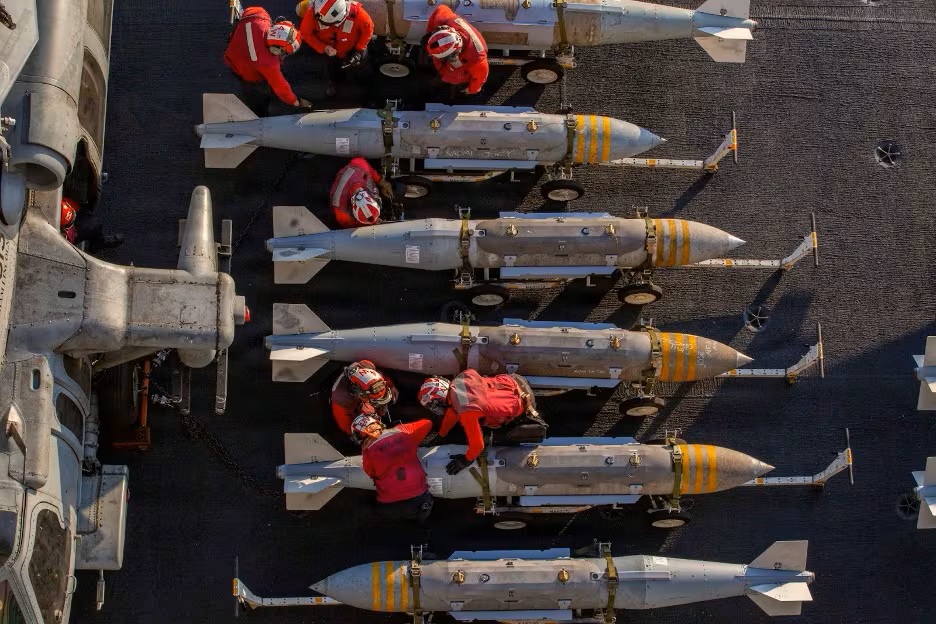
Nine days in. Seven American soldiers dead. The Strait of Hormuz effectively closed. Russia feeding Iran intelligence. And Trump demanding unconditional surrender from a nation of 90 million people. If this isn’t World War III yet — it’s the clearest preview of it we’ve ever seen.
By Jeff Thomas | BlackSourceMedia.com | March 8, 2026
Nine days ago, the United States and Israel launched a coordinated air campaign against Iran called “Operation Epic Fury.”
The name should tell you something.
Since February 28, US forces have struck more than 3,000 targets inside Iran. Supreme Leader Ali Khamenei is dead — assassinated in the opening hours of the war. His wife, his daughter, his son-in-law, his grandchild — all killed in the same strike. The US has sunk Iranian warships. B-2 bombers have dropped penetrator bombs on deeply buried missile launchers. And as of this morning, at least 1,332 Iranians are dead — 181 of them children.
And Donald Trump is on Truth Social demanding Iran’s “unconditional surrender.”
This is not a limited strike. This is not a targeted operation. Yes, this is a full-scale war — the largest US military campaign in the Middle East since the 2003 invasion of Iraq.
The question is whether the world understands what is actually happening here. Because if you’re watching mainstream coverage and thinking this is just another Middle East conflict that will stay contained, you are missing the story.
The War Didn’t Start Nine Days Ago
Before we get to the world war question, let’s establish something the cable news anchors keep skipping over.
This didn’t start on February 28. This has been building for 73 years.
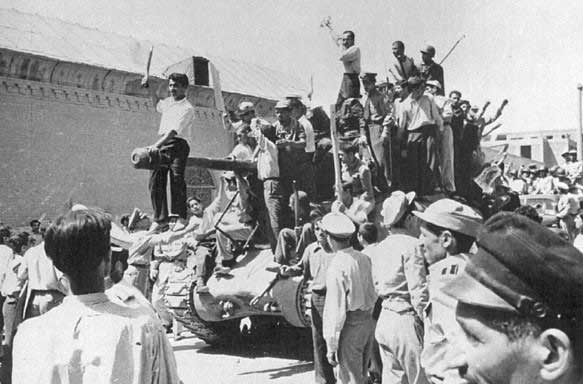
In 1953, the United States and Britain backed a CIA-engineered coup that overthrew Iran’s democratically elected Prime Minister, Mohammad Mosaddegh. His crime? He nationalized Iran’s oil industry — meaning he tried to make sure Iranian oil money went to Iranian people rather than British and American energy companies. The coup reinstalled the Shah, a pro-Western monarch whose authoritarian rule lasted until the 1979 Islamic Revolution.
What came out of 1979 was not just regime change. It was 45 years of US-Iranian proxy warfare — sanctions, assassinations, nuclear standoffs, cyber attacks, and competing military operations from Lebanon to Yemen to Iraq.
The January protests that killed thousands. The massive US military buildup in February that Trump himself called an “armada” heading to the Middle East. The three rounds of nuclear negotiations that ended just days before the bombs fell.
None of this appeared from nowhere. Every military conflict has a history. Understanding that history is the difference between analysis and propaganda.
Day Nine: Here Is What Is Actually Happening Right Now
Let’s be precise about the current battlefield, because the scope of this war is larger than most Americans realize.
Inside Iran
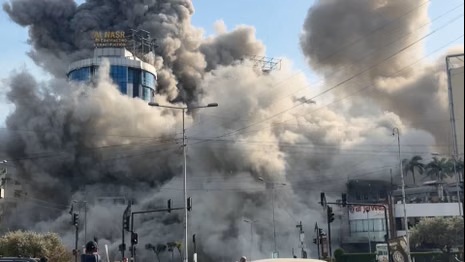
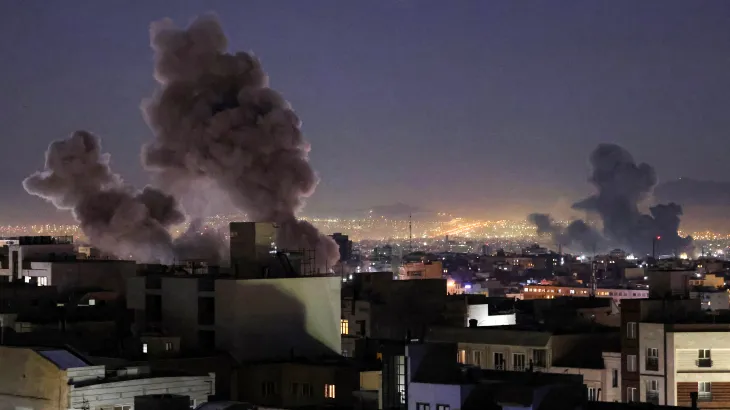
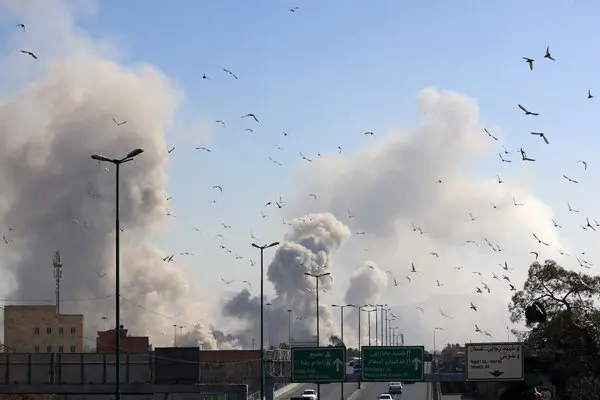
US and Israeli strikes have hit Tehran, Isfahan, Qom, Karaj, and Kermanshah. Civilian areas, residential buildings, a girls’ primary school in Minab that killed approximately 165 children and staff on the first day of the war — a strike Human Rights Watch says should be investigated as a war crime. Oil storage depots and refining facilities were struck for the first time this weekend. The US has hit Iran’s navy, its ballistic missile infrastructure, its IRGC command centers, and its political leadership.
Across the Gulf
Iran has responded by striking American military assets in Saudi Arabia, Kuwait, Qatar, and the UAE. Kuwait’s airport fuel storage was hit. A government building in Kuwait City was struck by a drone. Bahrain’s water desalination plant was targeted. The UAE intercepted nine ballistic missiles and over 100 drones in a single day. Bahrain has intercepted 84 missiles and 147 drones since the war began. This is not a conflict contained to Iran.
At Sea
Iran effectively closed the Strait of Hormuz — the narrow waterway through which roughly 20 percent of the world’s oil supply passes. Trump claims the US has “wiped out” Iran’s navy, but Iranian forces have explicitly warned they will target any US or Israeli ships attempting to pass through. Oil prices surged 27 percent in the first week — the biggest weekly gain since COVID-19.
Leadership confirmed — and it’s a message:
Iran just answered the leadership question, and the answer should send a chill down Washington’s spine. The Assembly of Experts has officially named Mojtaba Khamenei — the 56-year-old son of the slain Supreme Leader — as Iran’s new supreme leader, pushed through under heavy pressure from the Islamic Revolutionary Guards Corps. He is the first example of hereditary succession in Iran since the overthrow of the Pahlavi monarchy in 1979 — the very monarchy the Islamic Revolution was built to destroy.
His selection signals that hardline factions retain control and that Iran has little intention of negotiating its way out of this war. Trump said publicly that Mojtaba was “unacceptable” to him. The clerics chose him anyway. A nation that names a defiant new supreme leader in the middle of an active bombing campaign — specifically to send a message to Washington — is not a nation on the verge of surrender.
The Russia Variable: This Is the Part That Should Terrify You
Here is what barely made the headlines.
Multiple intelligence sources confirmed this week that Russia is actively providing Iran with intelligence about the locations and movements of American troops, ships, and aircraft.
Read that again.
Russia — a nuclear power — is feeding real-time military intelligence to a country that is actively trying to kill American service members.
Seven Americans are dead so far in this war. A seventh died just this morning from injuries sustained in the March 1 attack on US troops in Saudi Arabia. Those dignified transfers at Dover Air Force Base that Trump and Vance attended this weekend? Russia may have had a hand in facilitating the attacks that killed those soldiers.
And when reporters asked Trump about it directly, he said:
“What a stupid question that is to be asking at this time.”
That’s not a denial. That’s a deflection.
Defense Secretary Hegseth told 60 Minutes the administration is “tracking everything.” The White House press secretary said Russia’s intelligence sharing “clearly isn’t making a difference.”
Maybe not militarily. But strategically? It is enormous. It means the two nuclear powers that define the post-Cold War order are now operating on opposite sides of an active shooting war. Russia is not just sympathizing with Iran — it is materially supporting an adversary actively attacking American troops.
China’s Calculated Silence
While Russia is playing covert offense, China is playing a longer game.
China’s foreign minister Wang Yi called the war “a war that should never have happened” and demanded an immediate stop to military operations. China and Russia jointly called for an emergency UN Security Council session.
But beyond rhetoric, Beijing has done very little. And that tells you more than the speeches do.
China gets roughly 13 percent of its total seaborne crude imports from Iran. The Strait of Hormuz is critical infrastructure for China’s entire energy economy. Crude from the Gulf region accounts for about a third of China’s total demand. Every day the strait is effectively closed is a day China’s energy security is under pressure.
And yet Xi Jinping is still preparing to host Donald Trump in Beijing later this month.
That tells you exactly where China’s priorities are. Beijing wants the US bogged down in the Middle East. It benefits from rising oil prices squeezing Western economies. It benefits from American military resources consumed in Iran. But it will not risk the US-China trade relationship or the upcoming summit for Tehran’s sake.
What China is doing is watching. Calculating. Waiting to see whether a weakened Iran becomes even more economically dependent on Beijing — which suits Chinese interests perfectly. A fair-weather friend. Long on words, short on risk.
Related: America Bombs Iran
Is This Already a World War?
The question gets asked constantly. Let’s answer it with precision instead of noise.
By the classical definition — multiple major powers fighting each other directly across several regions simultaneously — no. We are not there yet. The great powers are not yet shooting at each other directly.
But here is what we do have, as of March 8, 2026:
- An active US-Israeli air war against Iran, nine days in with no exit strategy visible.
- Iranian counterattacks striking five Gulf nations simultaneously.
- Russia actively providing military intelligence to help Iran target American troops.
- China banning rare earth exports critical to US weapons manufacturing.
- Iranian drones — the same weapons supplied to Russia for Ukraine — now being used against US forces in the Gulf.
- The US turning to Ukraine for drone warfare expertise, because Ukraine learned to fight these exact weapons in Russia’s war.
Two major wars — Ukraine and Iran — are no longer separate. They share weapons, intelligence, and strategic logic.
What we have is a multi-theater, multi-power confrontation with overlapping alliances, shared weapons systems, active intelligence warfare between nuclear states, and a US president demanding the unconditional surrender of a nation of 90 million people.
If this isn’t a world war yet, it is the most advanced preview of one in modern history.
Why Iran Is Not Iraq — And Why That Lesson Should Have Been Learned by Now
Some voices are still saying the US can wrap this up quickly. That Iran will fold. That the regime will collapse under military pressure.
Those voices are wrong, and the evidence is already in front of us.
Iran has a population of more than 85 million people. It has mountainous terrain that makes ground invasion a logistical nightmare. It has a sophisticated ballistic missile program — over 500 ballistic and naval missiles and nearly 2,000 drones launched in just nine days. And it has a network of regional allies from Hezbollah in Lebanon to proxy militias across the region.
More critically: Iran does not need to defeat the United States militarily to win strategically. It only needs to make this war too costly to continue.
The US National Intelligence Council itself released a report this week finding that a large-scale US-led assault is “unlikely to topple” the Iranian government, and that the country’s fragmented opposition taking control is “unlikely.”
That is not the analysis of a government about to surrender.
Afghanistan demonstrated this principle at devastating cost. So did Iraq. So did Vietnam. The world’s most powerful military can destroy infrastructure, kill leaders, and dominate airspace — but it cannot manufacture a political outcome from the outside that a population will accept.
Iran’s Foreign Minister put it plainly:
“Your plan for a clean, rapid military victory failed. Your Plan B will be an even bigger failure.”
Iran’s Foreign Minister Abbas Araghchi
The Economic War Nobody Is Watching
While the bombs get the headlines, the economic war may be the more consequential story for everyday Americans.
Oil is up 27 percent in a week. Gas prices are at their highest in nearly a year. The Strait of Hormuz — through which a fifth of the world’s oil supply normally passes — is functionally closed.
China has banned the export of rare earth elements for military use. Those elements are critical for missiles, fighter jets, and virtually every advanced weapons system the US fields. The longer this war goes, the harder it becomes for Washington to replenish its weapons stocks.
Russia is seeing a massive surge in demand for its oil as Iran’s supply disappears from markets. Every day this war continues is another day Russia’s treasury fills up.
For ordinary Americans, the consequences are already showing up at the gas pump. If this conflict extends another month, the economic ripple effects — inflation, market volatility, rising energy costs — will reach every household in this country, regardless of where you stand politically on the war itself.
The Five Tripwires to World War III
The war has not gone global yet. Here is exactly what would change that.
Tripwire One: Russia Goes Active
Moscow providing real-time troop positions to Iran is one category. Russia supplying advanced air defense systems that directly shoot down US aircraft is a fundamentally different level of involvement — one that risks direct US-Russia confrontation.
Tripwire Two: American Strikes Kill Russian Personnel in Iran
Russia has advisors and technical personnel inside Iran from their comprehensive strategic partnership signed in 2025. A US strike that kills Russian nationals creates pressure on Moscow to respond in ways that move beyond current proxy support.
Tripwire Three: A Strike That Triggers Israel’s Existential Calculus
Israel has made clear it will respond to existential threats with maximum force. An escalation ladder that draws Israel into direct ground combat, or that triggers Israeli consideration of its nuclear deterrent, changes the entire strategic landscape overnight.
Tripwire Four: China Moves on Taiwan
Beijing has always watched for a moment when Washington is strategically overextended. A two-front crisis — Iran and Taiwan simultaneously — is the scenario US military planners have feared most. The longer American assets and attention are consumed in the Gulf, the more attractive that window becomes.
Tripwire Five: Nuclear Miscalculation
The US has struck facilities in the vicinity of Iranian nuclear infrastructure. Any strike — accidental or deliberate — that Iran’s new leadership believes puts their nuclear program at existential risk creates pressure for options that rational actors would not otherwise consider. The UN nuclear watchdog says no nuclear facilities have been hit yet. “Yet” is doing a lot of work in that sentence.
What the History Books Will Say
One hundred years ago, the world watched a regional crisis in the Balkans ignite the first global war. The assassination of one archduke pulled alliance after alliance into a conflict that killed 20 million people. Nobody at the start of that summer in 1914 believed they were beginning a world war.
We are not in 1914. The weapons are different. The alliances are different. The communication is instantaneous. And the presence of nuclear weapons on multiple sides creates a deterrence dynamic that did not exist then.
But the pattern — interconnected conflicts, great power competition, proxy warfare escalating toward direct confrontation, economic pressure building globally — is recognizable to anyone who paid attention in history class.
What historians will examine, looking back at this moment, is the decision to launch Operation Epic Fury without a coherent theory of victory. The demand for unconditional surrender from a nation with 90 million people, ballistic missiles, regional proxy forces, and nuclear-armed patrons watching closely. The intelligence assessment from the US government’s own analysts saying regime change is unlikely. The economic disruption already rippling through global markets on Day Nine.
History is clear on this: wars without exit strategies don’t end cleanly. And the exit strategy here is not visible.
The Final Analysis
What we are watching is not World War III. Not yet.
But it is no longer just a regional conflict. That ship sailed around Day Three.
What we have is a multi-theater confrontation with global economic consequences, two nuclear powers on opposite sides, shared weapons systems linking Iran directly to Ukraine, and a US president who has staked out a maximalist position with no off-ramp in sight.
Seven Americans are dead. More than 1,300 Iranians are dead. Oil markets are in shock. The Strait of Hormuz is closed. And somewhere in Beijing, Xi Jinping is watching all of this — doing the math on Taiwan.
The difference between the beginning of a world war and a contained regional conflict with global spillover may come down to decisions made in the next 30 days — by Trump, by Iran’s incoming supreme leader, by Putin, and by Xi.
That is an uncomfortably small margin of error for a planet that spent 80 years trying to avoid exactly this moment.
The world is not yet on fire.
But somebody is holding a match.
Jeff Thomas is a contributing writer and geopolitical analyst at Black Source Media. Follow the conversation at BlackSourceMedia.com.