

Voltaire Warned Us: ICE’s Absurd Narrative and Louisiana’s Growing Constitutional Crisis
“Those who can make you believe absurdities can make you commit injustices.”
Back in 1765, Voltaire issued that timeless warning.
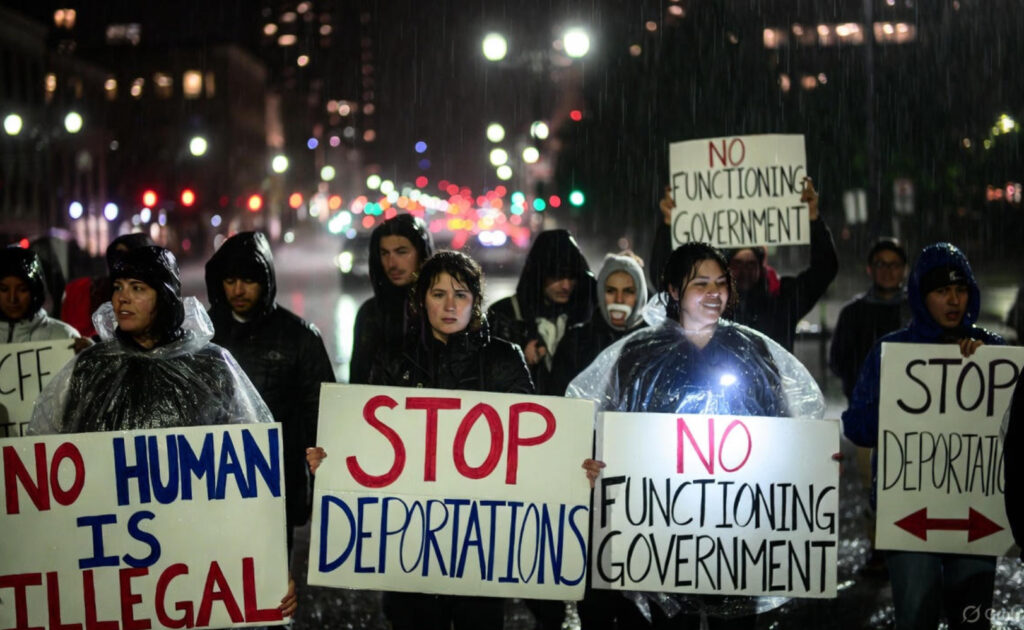
Louisiana is now living through that warning. ICE is operating under a narrative so fake and misleading that it has become dangerous. The agency claims it is in New Orleans to hunt “violent criminals,” yet its actions look nothing like a precision operation. Instead, ICE is running a dragnet, sweeping up housekeepers, drywall installers, restaurant workers, and day laborers—people with no connection to violence.
This is the absurdity.
The injustice follows.
The Myth That Justifies Abuse
ICE’s public script is simple: “We target the worst offenders.” “Rapists, murderers, previously deported people. The worst of the worst.”
But the facts undermine the claim. National data shows that most of the people detained have no violent history. Many have no criminal history at all. The arrests look broad, not selective. But they spread fear far beyond those ICE claims to pursue.
Yes. Get rid of the worst of the worst. We don’t need any rapists or robbers in New Orleans. No reasonable person objects to removing true violent offenders. The issue is the tactic. ICE is using the threat posed by a few individuals to justify the collective punishment of entire neighborhoods. It is the policy equivalent of dropping a bomb on a neighborhood because a violent gang of 25 people there sell drugs. You may stop 20 of the 25. But you destroy the lives of thousands who did nothing wrong.
That is not public safety.
It is state-sanctioned violence masquerading as law enforcement.
Constitutional Limits Exist for a Reason
The Constitution is designed to prevent abuses like these. The Fourth Amendment requires reasonable suspicion to stop someone, probable cause to search them, and a judge’s warrant to enter a home. ICE bypasses these requirements with administrative warrants—forms it signs itself. These documents do not meet constitutional standards and would never survive scrutiny in any criminal case at Tulane and Broad.
Yet the “violent criminal” myth creates political cover. It turns constitutional violations into acceptable practice. Voltaire warned us that once the public accepts an absurd claim, injustice becomes easier to commit—and easier to hide.
NOPD Understands the Law—and Refuses to Break It
New Orleans stands almost alone in Louisiana in insisting on constitutional enforcement. The New Orleans Police Department correctly notes that immigration violations are civil matters, not criminal offenses. Local police cannot detain people for civil violations. They cannot hold someone simply because ICE requests it. They cannot ignore centuries of constitutional doctrine because a federal agency claims urgency.
The City’s legal team went further and argued that parts of ACT 399—the new state law attempting to force local police to assist ICE—violate the Fourth Amendment. Unsurprisingly, the Attorney General wants NOPD to follow ICE’s orders anyway. This is shocking legal gymnastics from the state’s top legal authority. But NOPD still refuses because its duty is to the law, not to political theater.
Kenner Chose the Opposite Approach
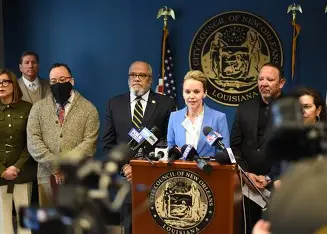
While New Orleans stands firm, Kenner moved in the opposite direction. Police Chief Keith Conley announced:
“If ICE asks for help, we’re going to help.”
No constitutional analysis. No distinction between civil and criminal law. And certainly no concern for that city’s large Hispanic population. That population context matters. Cooperation with ICE in Kenner will fall hardest on people who are not charged with any crime.
Local police are sworn to uphold the Constitution. They cannot suspend that oath based on ICE’s public-relations language.
The Anti-Commandeering Doctrine Makes ACT 399 Even More Problematic
There is another constitutional shield at play. The Tenth Amendment prohibits the federal government from commandeering local police to enforce federal programs. Supreme Court cases like Printz v. United States and Murphy v. NCAA make this clear. Immigration enforcement is a federal duty. The federal government cannot force NOPD to do it. And the state cannot accomplish through statute what the federal government is constitutionally barred from demanding.
ACT 399 tries to force local officers into federal immigration enforcement despite the Constitution’s explicit limits. New Orleans is not resisting federal power. It is refusing to break the law..
Mayor-elect Helena Moreno Is Demanding What ICE Fears Most: Transparency
Helena Moreno has taken a principled and disciplined approach. She is not opposing the removal of violent offenders. But she is opposing abuse. She asked ICE for:
- daily briefings
- clear targeting criteria
- documentation of warrants
- proof of lawful detentions
- protections for innocent people
- restrictions on raids near schools, hospitals, and churches
This is basic governance. It is what accountability looks like. It is also what ICE has resisted for years.
ACT 399 Tries to Criminalize Oversight
ACT 399 doesn’t stop at forcing police cooperation. It also makes it risky for residents to record, observe, or even stand near ICE operations. This is a direct attack on public oversight. A democracy cannot function if observing government action becomes a crime.
When a state tells you not to watch the government, it is the government—not the public—that is engaged in dangerous behavior.
The True Issue Is the Expansion of Unchecked Power
ICE wants the public to believe that broad raids equal public safety. In truth, the narrative gives ICE license to harm innocent people under the cover of a myth. NOPD sees this. Moreno sees this. Many residents see this.
Voltaire saw it too. When absurdity is accepted as truth, injustice becomes easier to justify and harder to challenge.
Louisiana must decide whether it will embrace fear or defend the Constitution. We can pursue real public safety without surrendering rights. We can remove violent offenders without treating entire communities as criminals. And we can insist on truth over rhetoric.
Because once absurdity becomes policy, injustice becomes the rule.