

Why Strategy—Not Spectacle—Is Driving America’s Next Moves
Let’s clear something up before the noise takes over.
Donald Trump is not acting like a madman chasing headlines or power for its own sake. What we are seeing—whether in Venezuela or now Greenland—is not spectacle. It is strategy. Not ego, but preparation. And certainly not madness, unless one believes America can afford a weaker economy, compromised defenses, and diminished influence on the world stage.
Key Points
| -U.S. interest in Greenland and Venezuela is about economic security and military readiness, not impulse or ego. –Rare earth minerals power modern weapons, technology, and daily life—and China controls nearly half the supply. -Any U.S. president would face pressure to secure access to these resources. –Governor Jeff Landry’s role signals Louisiana’s growing influence in serious national strategy. -This moment demands measured realism, not partisan caricatures. |
Many critics frame Trump’s interest in Greenland as reckless unilateralism. They argue it disrespects a NATO ally and strains international relations. That concern deserves to be taken seriously. Diplomacy matters. Alliances matter. Stability matters.
But so does reality.
And the reality is this: the global economy and modern military power run on resources America does not currently control.
Why Greenland Matters—Beyond the Headlines
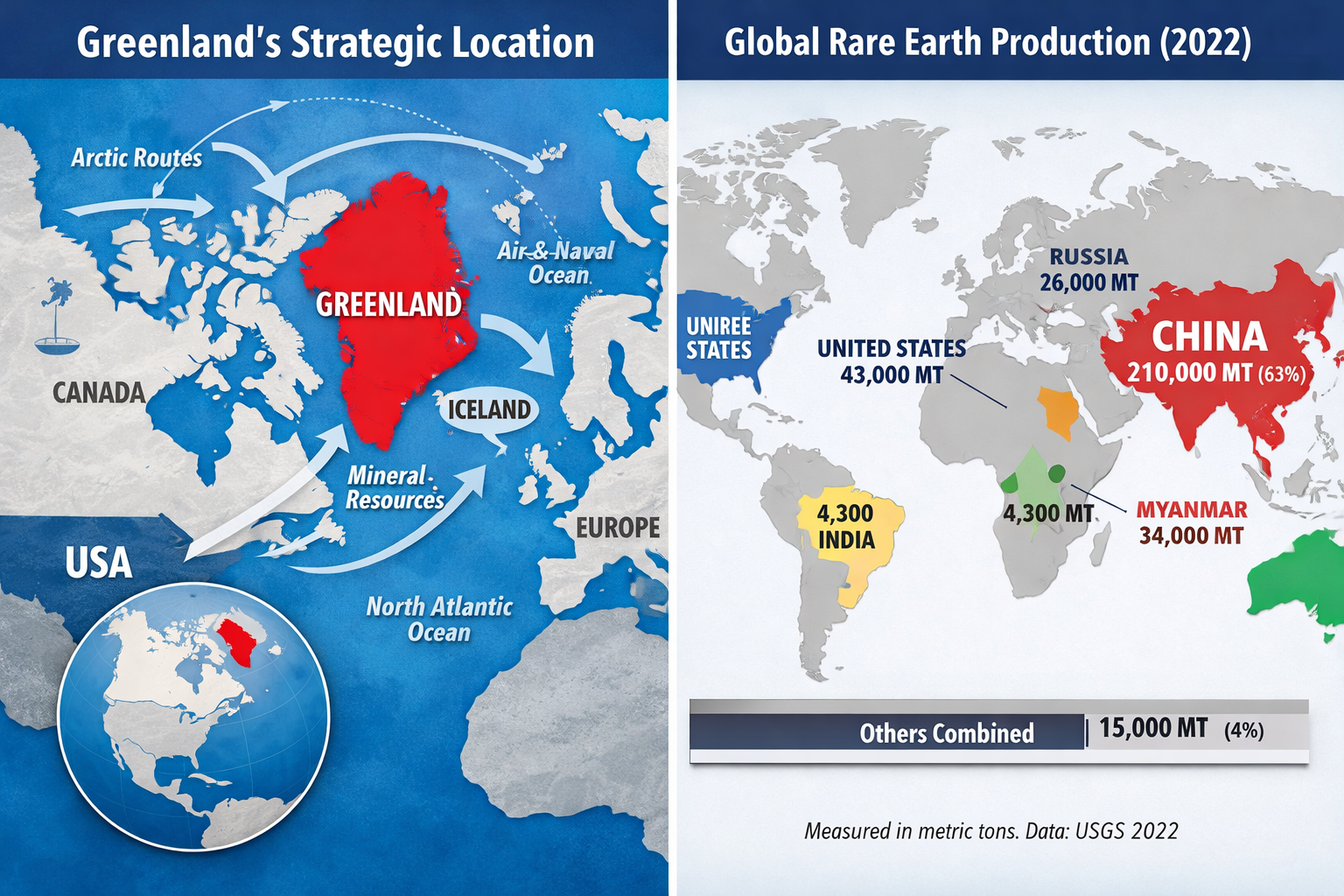
Greenland is not about land acquisition in the colonial sense. It is about access and leverage in a rapidly shifting global economy.
Greenland holds significant deposits of rare earth minerals—materials essential to:
- Advanced weapons systems
- Fighter jets, missile guidance, and radar
- Smartphones, computers, and televisions
- Electric vehicles and battery storage
- Renewable energy infrastructure
- China currently controls roughly 48% of global rare earth production and dominates refining capacity even beyond that number. The United States produces less than 15%, and much of that still depends on foreign processing.
Every modern weapons platform the U.S. deploys depends on these materials. So does everyday civilian life.
That is not ideology. That is supply chain math.
If America does not secure diversified access to these resources, it risks becoming strategically dependent on its primary geopolitical competitor. That is not a position any president—Democrat or Republican—can responsibly accept.
This Is Bigger Than Trump
Here is the part many people miss: this calculus would not disappear under a different president.
If Kamala Harris were in the Oval Office, she would face the same constraints. She might speak more diplomatically. She might work through multilateral frameworks. But the underlying pressure—to secure materials critical to national defense and economic stability—would remain exactly the same. Want even more proof that a Democrat would take bold action. Remember former President Barack Obama didn’t just capture Osama Bin Laden but he executed him and his entire staff.
Presidents do not get to opt out of reality.
Venezuela, Revisited—With Clear Eyes
We said it plainly before, and it still holds: Nicolás Maduro was a bad leader who presided over national collapse. Still that does not automatically justify U.S. intervention.
But it is also true that Venezuela’s move away from dollar-denominated oil sales, combined with its vast resource base, placed it squarely in the center of a broader economic confrontation between the U.S. and China. Maduro was selling oil and minerals directly to China. And accepting Chinese money not US dollars.
And one important issue matters here: many major oil companies believe Venezuelan oil is currently too expensive to extract profitably without significant government subsidies. That reality complicates the simplistic “oil grab” narrative. These moves are not quick wins. They are long-term positioning decisions.
And that same long-term thinking applies to Greenland.
The Louisiana Connection—and Why It Matters
This is where Louisiana enters the picture.
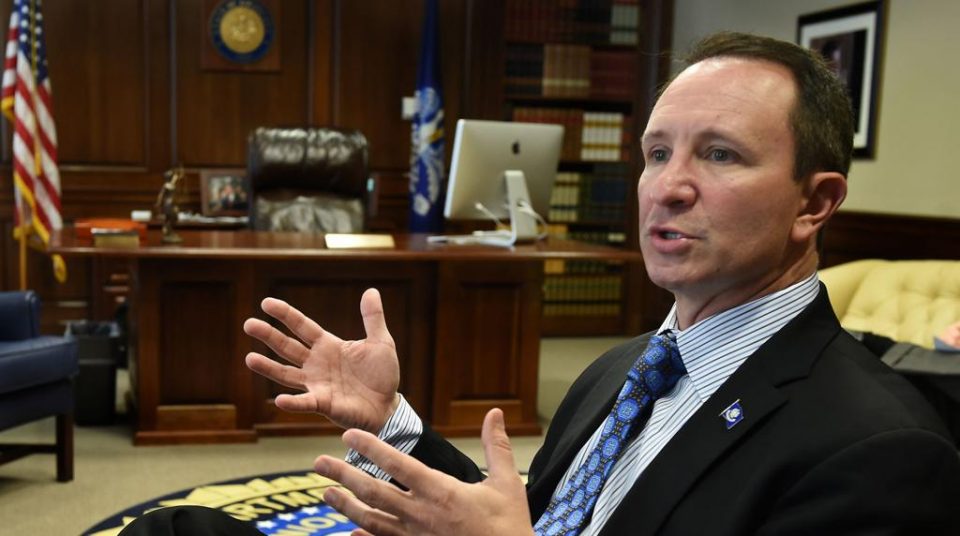
Governor Jeff Landry’s selection as a point person in these discussions is not accidental. It is strategic. This is a high-risk, high-stakes policy arena that demands discipline, legal sophistication, and political toughness.
Governor Jeff Landry is proving himself to be a disciplined and adaptable political leader—capable of playing the bulldog when necessary and the smooth operator when strategy demands it. His selection reflects growing confidence in his judgment on national matters and positions him as a Louisiana figure with expanding influence beyond the state.
That should be a source of pride, not derision.
Whether one agrees with Trump or not, being tapped for serious national responsibility is not symbolism. It is trust. And it places Louisiana at the table where consequential decisions are being shaped.
China Is the Real Variable
Strip away the personalities, and the picture sharpens.
China is not a theoretical threat. It is a disciplined, patient, state-driven competitor that understands supply chains better than slogans. It has spent decades securing access to critical minerals, ports, and infrastructure worldwide.
America responding to that reality is not aggression. It is adaptation.
Ignoring it would be negligence.
The Real Question Americans Should Ask
The debate should not be reduced to “Is Trump crazy?” That question is lazy and unproductive.
The real question is this:
Do Americans want a country that plans for long-term economic and military resilience, or one that reacts after leverage has already been lost?
You can oppose specific tactics. You can demand stronger diplomacy. And you can insist on respect for allies. All of that is fair.
But pretending these moves come from chaos rather than calculation is a mistake.
Related: US Venezuela Tension Heats Up
America is entering a period where economic strength, national security, and global influence are tightly bound together. Rare earths, energy, and supply chains are no longer background issues. They are the game.
Recognizing that reality does not require blind loyalty to any president. It requires maturity.
And if we want a stable future, a strong economy, and protected shores, we must be honest about the pressures shaping policy—whether we like the messenger or not.
That honesty is how serious nations survive changing times.
Don’t hate the player, hate the game.
The need for resources does not justify the method for trying to access them. This article is providing cover for the blatant violent colonial methods of the United States. You write as if countries around the world aren’t also in need of the same resources. Trade and diplomacy are viable options for a stable nation state.
You’ve also failed to account for U.S. sanctions when you mention the collapse of the Venezuelan economy. Your criteria for leadership is unclear and yet you say Maduro was a “bad” leader.
Landry’s role in the blatant disregard for NATO allies and disregard for international law does not signal anything in terms of increased importance of Louisiana. It simply signals that Landry is proving to be a reliable mouthpiece and weapon of a colonial power that is trying to bully other states for resources.
No one is pretending these moves aren’t calculated. They’ve been in the works over multiple administrations. And… they are also shortsighted in terms of the execution from this administration and lack of understanding of the declining power of the U.S. in this particular historical moment.