

By Jeff Thomas | March 2, 2025
TL;DR
Black Mardi Gras is not an alternative to Carnival—it is its cultural backbone. Forged through exclusion, Black New Orleanians built traditions rooted in community, artistry, and resistance. From Zulu Social Aid & Pleasure Club to the Mardi Gras Indians, from Skull & Bone Gangs to Second Lines, Black Mardi Gras centers participation, handmade excellence, and storytelling over spectacle.
Black Mardi Gras in New Orleans is more than a celebration. It is a living system of culture, history, and resilience—one that blends music, movement, and memory to affirm Black life in public space. It honors heritage while creating room for Black communities to lead, not merely appear.
Many visitors know the large parades—Endymion, Bacchus, and Rex. Black Mardi Gras offers something different and deeper. It is intimate, intergenerational, and fiercely handmade. It is where Carnival’s soul lives.
The Origins of Black Mardi Gras in New Orleans
In the late 19th and early 20th centuries, segregation barred African Americans from many established krewes and balls. Exclusion did not end celebration. It sparked innovation. Black New Orleanians created their own Mardi Gras—one that reflected their values, humor, and survival.
These traditions fused African, Creole, and Native American influences. Over time, they became essential to New Orleans itself, not as footnotes but as foundations.
Zulu Social Aid & Pleasure Club: A Black Mardi Gras Icon

Founded in 1909, Zulu Social Aid & Pleasure Club began as a satirical response to elite white krewes. Dockworkers and laborers donned grass skirts and spears, poking fun at exclusivity while building mutual aid and community pride.
The Coveted Zulu Coconut
Zulu’s hand-decorated coconuts are the most prized throws of Carnival. Each is unique, painted by hand, and earned through connection—not chance. Catching one signals luck, history, and respect for a tradition that never outsourced its meaning.
New Krewes
In recent years, Black-led Carnival culture in New Orleans has continued to evolve with the rise of vibrant new parades that reflect community pride and creativity on the city’s parade schedule. The Krewe of Oshun, founded in 1996 and named for the Yoruba goddess of love and intimacy, has grown from a smaller neighborhood krewe into a beloved Uptown tradition featuring handmade throws, peacock figures, mugs, and spirited marching groups — including bands and baby dolls — that celebrate artistry and accessibility in Carnival culture.
The Krewe of Nefertiti, established in 2018 as an all-women social aid and pleasure club, has brought Mardi Gras joy to New Orleans East, serving its own neighborhoods with vibrant costumes and community service while creating space for parade traditions outside the Uptown core. Its annual parade, infused with jewelry-themed throws and themed imagery, underscores a belief in celebration and service.
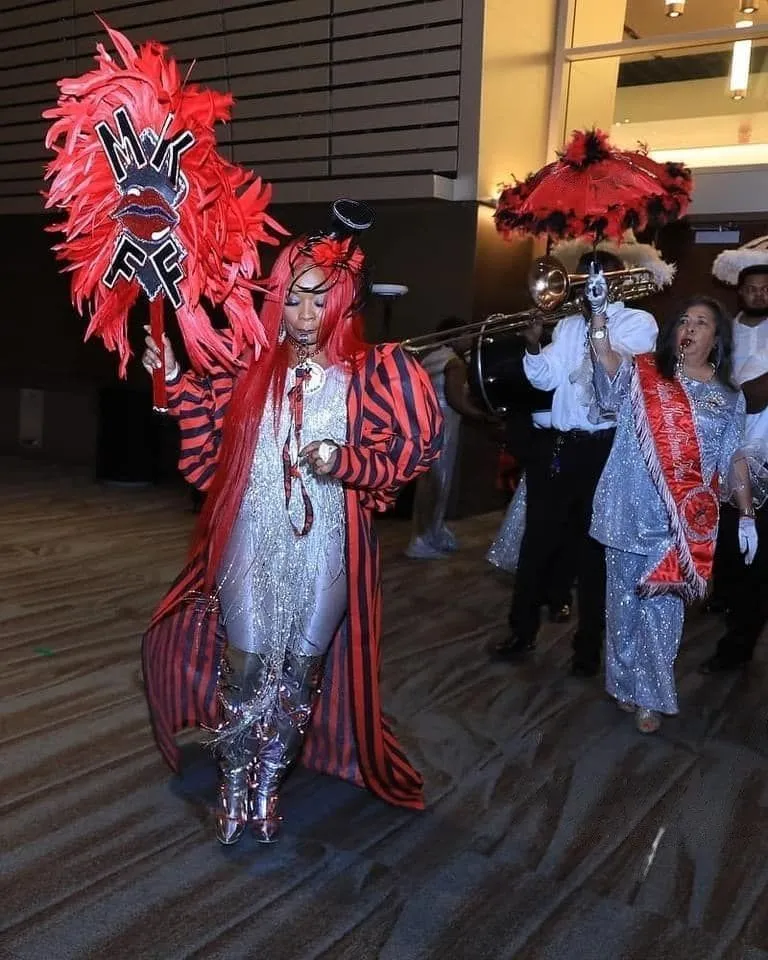
Similarly, the Mystic Krewe of Femme Fatale — the first krewe founded by Black women for Black women — has carved out its own following on the traditional Uptown route. Since 2013, Femme Fatale has grown into a high-energy parade with signature throws like bejeweled mirror compacts and strong participation from high school bands and dance groups, creating a sense of inclusion and cultural affirmation that continues to energize Carnival season
Mardi Gras Indians: The Warriors of Black Mardi Gras
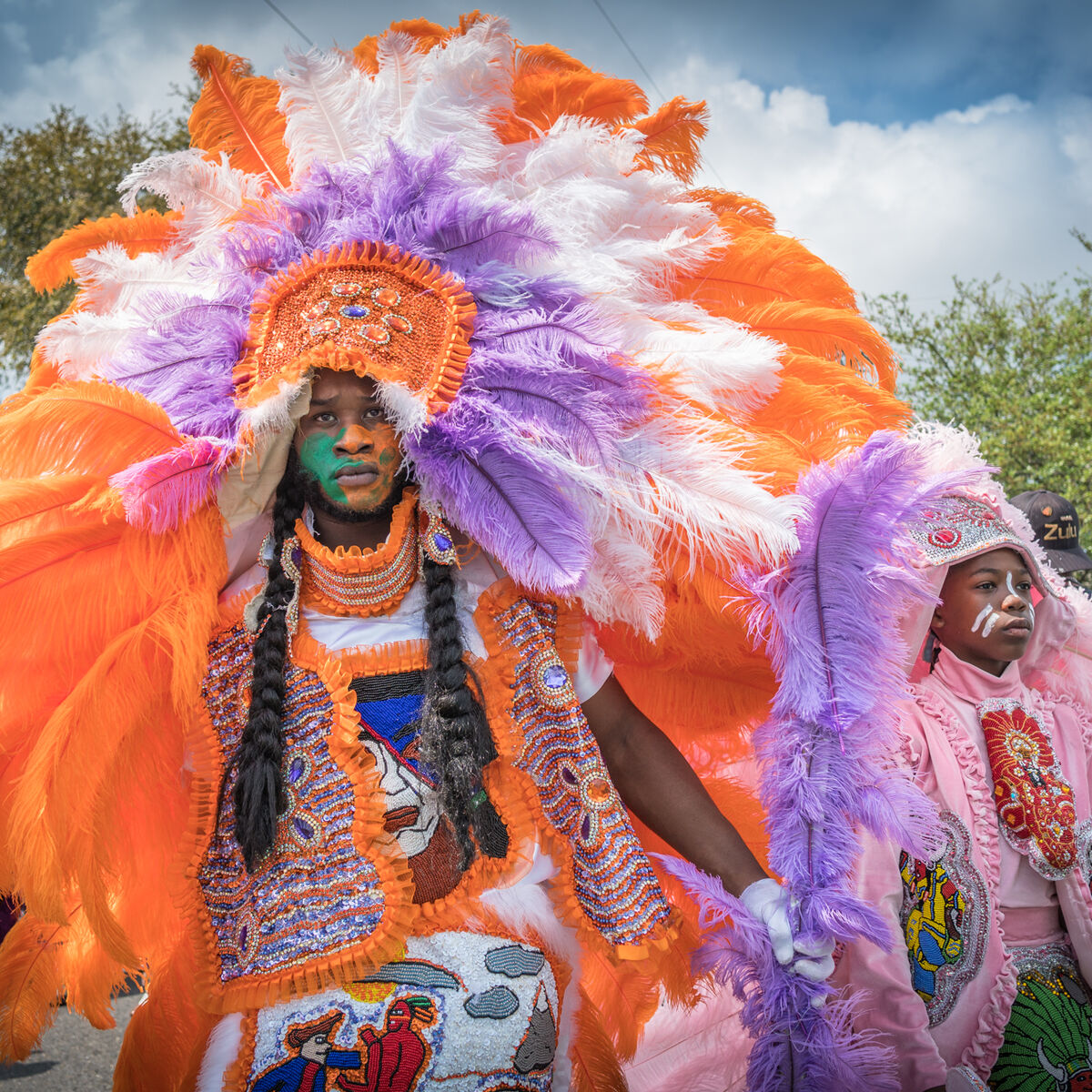
The Mardi Gras Indians trace their traditions to the late 19th century, honoring alliances between Black people and Native Americans who offered refuge during enslavement.
The Art of the Suit
Indian suits are sewn bead by bead, feather by feather, over months. Each design tells a story—of ancestry, pride, and artistry. On Mardi Gras Day, Super Sunday, and St. Joseph’s Night, the streets become galleries of living art.
Call-and-Response “Battles”
Indians do not parade. They roam. When tribes meet, Big Chiefs engage in call-and-response—song, dance, and suit display. These are not fights. They are ceremonial competitions celebrating craftsmanship and spirit.
Skull & Bone Gangs: Morning Warnings, Ancestral Wisdom
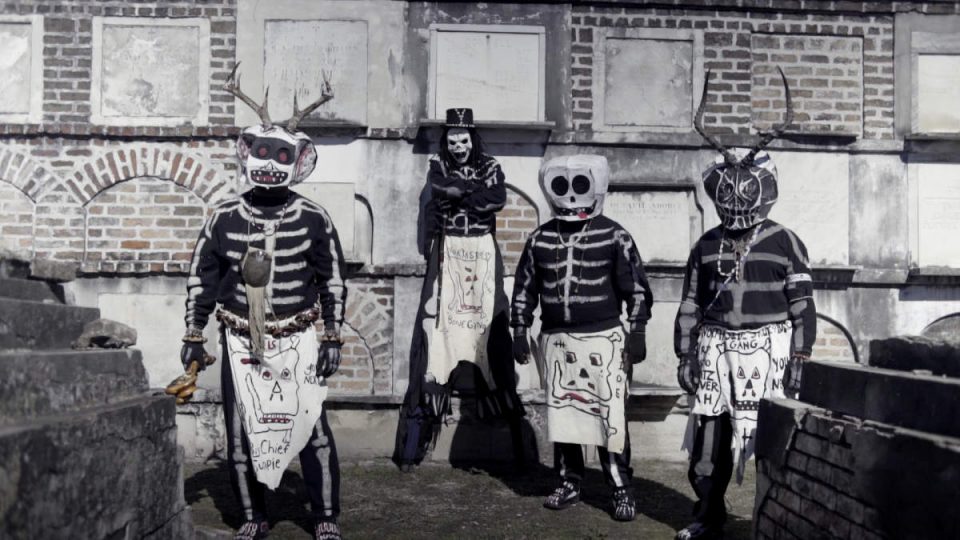
Before dawn in Treme, the North Side Skull and Bone Gang walks. Dressed in hand-painted skeleton suits, they knock on doors and declare, “You next!”
Rooted in African and Caribbean spiritual traditions, the message is clear: life is short. Live with purpose. In Black Mardi Gras, the sacred and the celebratory share the same street.
Second Lines: The Soundtrack of Black Mardi Gras
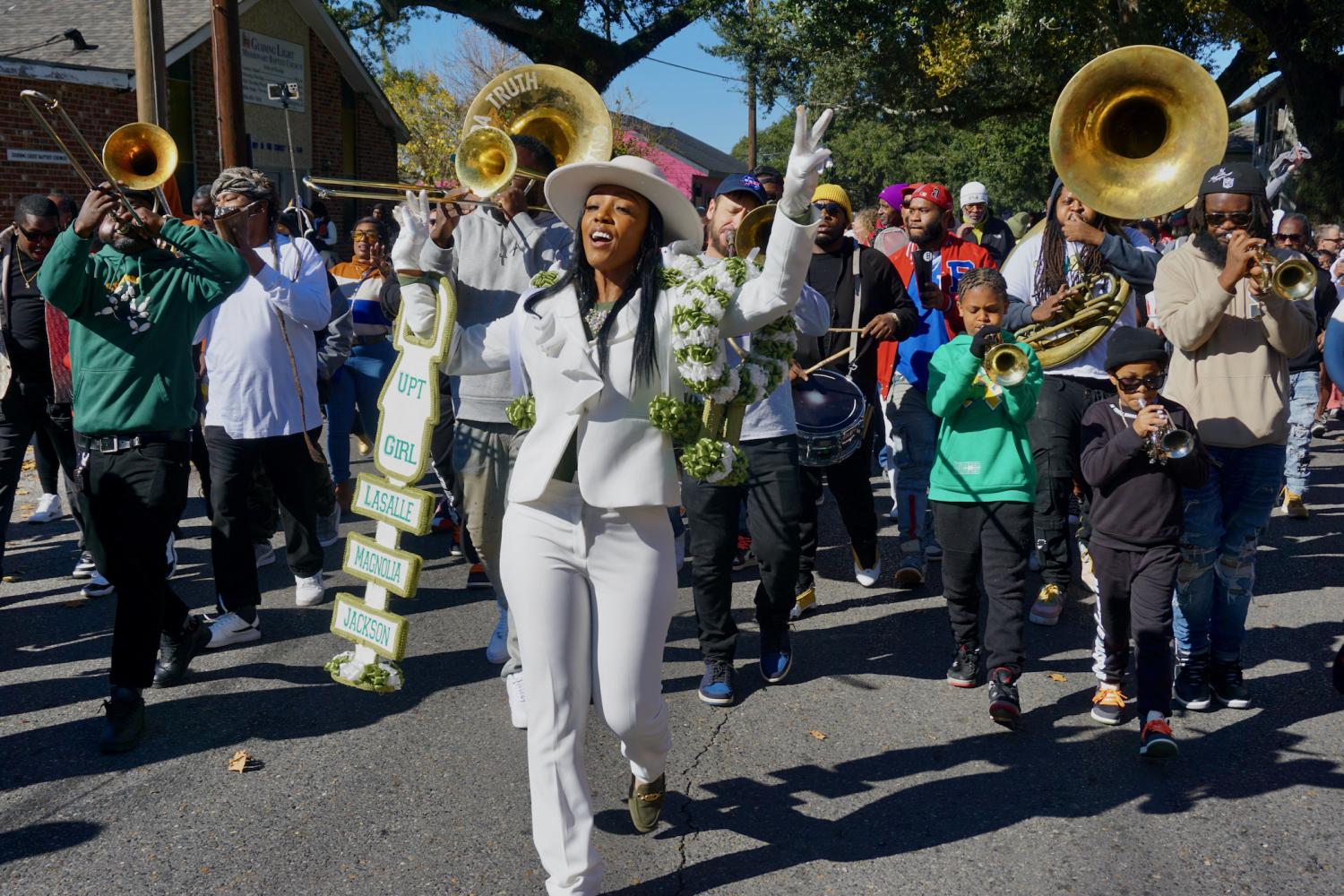
Music fuels Black Mardi Gras, and nothing captures it like the Second Line. These rolling parades feature brass bands, dancers, and handkerchiefs waving in rhythm.
The Energy
Second Lines grow from African and Creole funeral traditions—solemn beginnings that rise into joy. During Black Mardi Gras, neighborhoods move together. The city breathes to a live beat, not a recorded one.
How Black Mardi Gras Differs from Traditional Mardi Gras
Traditional Carnival often centers massive floats, celebrity riders, and commercialization. Black Mardi Gras prioritizes community, culture, and continuity.
Key Differences
- Participation over spectating: You join in. You don’t just watch.
- Handmade over mass-produced: Indian suits are stitched by hand—no shortcuts.
- Music over machinery: Live brass and chants replace pre-recorded tracks.
- Storytelling over spectacle: Every tradition carries history, resistance, and pride.
Why Black Mardi Gras Matters
Born from exclusion, Black Mardi Gras became one of New Orleans’ greatest gifts to itself. It proves resilience can be joyful, disciplined, and beautiful.
To experience Black Mardi Gras is to step into living history—catching a Zulu coconut, witnessing an Indian encounter, or dancing in a Second Line. When drums echo and feathers catch the sun, the message is unmistakable: New Orleans belongs to its people, and its people will always celebrate their culture—on their own terms.
Beautifully told!