
TL;DR
Next Thursday, our families will gather around the same table that holds our recipes and our stories. It also holds clues about our health. Since 2004, the U.S. Surgeon General has called Thanksgiving National Family History Day. This year, ask your elders what ran in the family, write it down and take it to your doctor. It’s one of the most loving things you can do for the people coming after you.
Key Points
- Most people have a family health history of at least one chronic disease, according to the CDC.
- If a parent, brother or sister has diabetes, your own risk goes up.
- Heart disease, high blood pressure and some cancers can run in families too.
- The age when a relative got sick matters as much as the illness itself.
- A free tool called My Family Health Portrait helps you organize what you learn.
- The VOICES of Black Women study is now open to women ages 20 to 60 nationwide, including here in Louisiana.
Picture the table next Thursday. The macaroni and cheese is in its usual spot. Somebody’s arguing about the potato salad. And there’s a chair that feels empty this year, even with someone sitting in it, because the person who used to sit there is gone. When we lose people, we keep their recipes and their sayings. Too often, we don’t keep their family health history.
That’s what I want us to change this Thanksgiving.
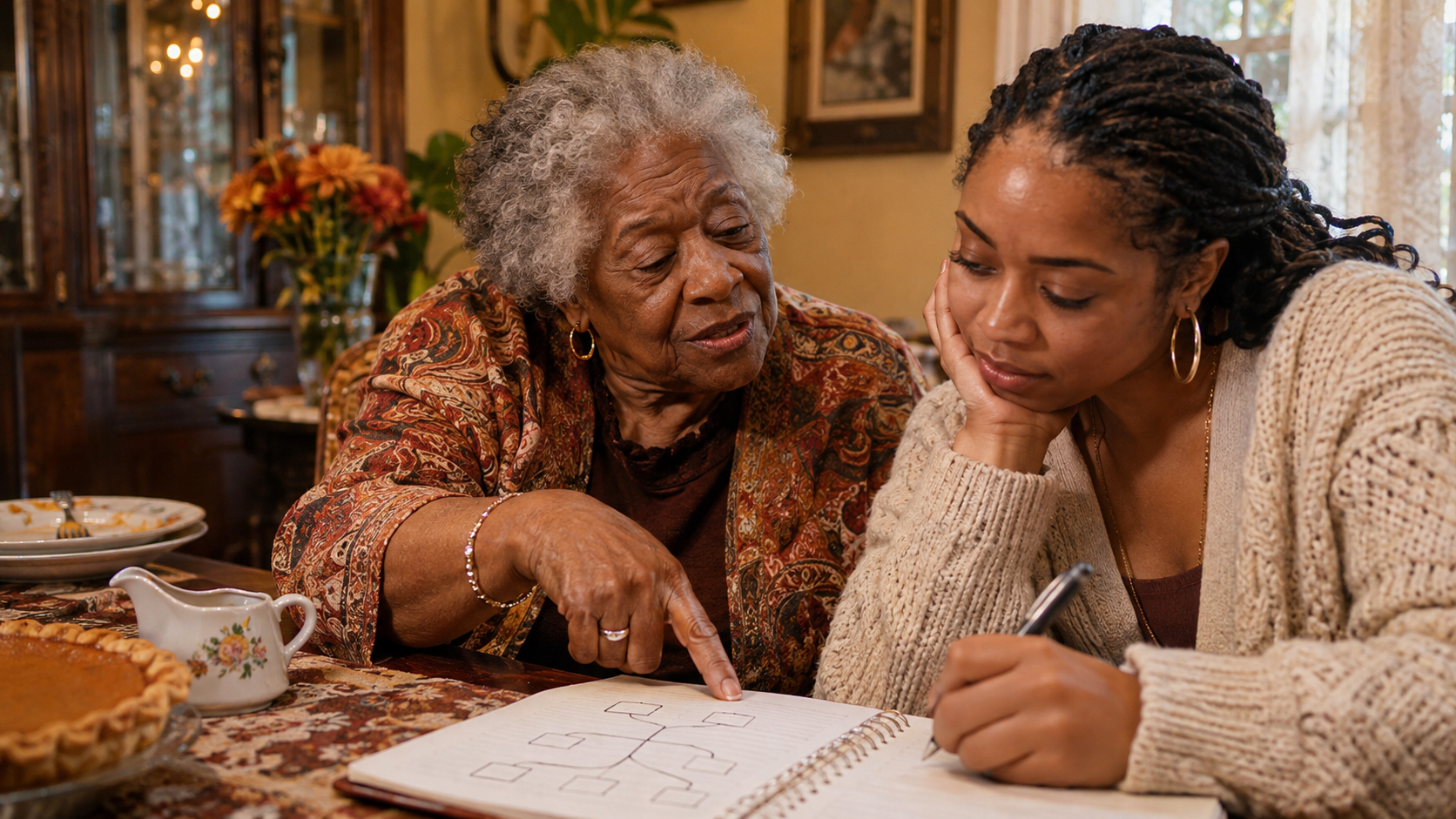
What Our Elders Didn’t Always Say
Many of us grew up hearing it in pieces. Grandpa “had sugar.” Auntie’s “pressure was up.” A cousin passed “from something with her heart,” and nobody said much more. Our elders kept a lot of things private, and they had their reasons. Some didn’t trust doctors. Others never got a clear diagnosis. Plenty just didn’t believe sickness was anybody’s business.
I understand that, and I honor it. But those quiet answers can leave our children guessing about their own bodies. The good news is that the people who hold those answers are often sitting right across from us at the holiday table.
Why Your Family Health History Matters
The CDC says plainly that if your family has a history of a chronic disease such as cancer, heart disease or diabetes, you are more likely to get that disease yourself. Most families have at least one.
That isn’t a reason to be afraid. It’s a reason to start screening earlier. When your doctor knows your mother had breast cancer at 45, or your father had a heart attack at 50, the plan for your care changes. You might get tested sooner and more often, or have a different conversation about what you eat and how you move.
Age matters as much as the illness. A grandfather with heart trouble at 85 tells your doctor one thing. Heart trouble in a brother at 35 tells them something else entirely.
The federal government has encouraged this conversation for a long time. Since 2004, the Surgeon General has declared Thanksgiving National Family Health History Day, because it’s the day so many families are in one room.
How to Start the Conversation
You don’t need a clipboard. You need a little patience and a good moment, maybe after the plates are cleared, or while you’re washing dishes with your mother or helping your uncle to the car.
Try openers like these:
- “Mama, what did Grandpa pass from? How old was he?”
- “Did anybody in our family have diabetes or high blood pressure young?”
- “I’m trying to take better care of myself. What should I be watching for?”
Ask about your parents, grandparents, brothers, sisters, aunts and uncles. Write down sickle cell trait too, if anyone carries it. If a relative doesn’t want to talk, let it go for now. You can come back to it at Christmas. Nobody should feel cornered at the dinner table.
Pick one person to write everything down, and share it with the rest of the family afterward. Your cousins need this information just as much as you do. If you have them, death certificates and old medical papers can fill in the gaps.
Write It Down and Keep It
The Surgeon General’s office and the National Human Genome Research Institute created a free tool called My Family Health Portrait to help families organize what they learn and print it for the doctor. A notebook works just as well. What matters is that it doesn’t live only in Grandma’s memory.
Before your next checkup, bring:
- The conditions that run in your family, and who had them.
- How old each person was when they were diagnosed or passed.
- Any screenings you’ve had and when.
- Your questions, written down so you don’t forget them in the exam room.
Even if you only know a little, the CDC says to share what you do know.
Our Stories Count in the Research, Too
There’s another way our families’ stories can help. The American Cancer Society’s VOICES of Black Women study wants to understand why so many of our women face cancer, and what keeps us well. In May, it broadened eligibility to women ages 20 to 60 anywhere in the country. That means sisters right here in Louisiana can join. The study is working toward 100,000 participants and will follow them for decades.
Our grandmothers didn’t get asked. Today’s daughters will benefit because we did.
The Most Loving Thing on the Table
Thanksgiving is about gratitude, and we have plenty to be thankful for. We’re thankful for the people who raised us and for the ones still here to fuss over the seasoning. This year, let’s also be thankful for what they can still teach us.
Pass the gravy. Then ask the question. The answer might protect someone you love for years to come.
Related reading at BSM: Black Women and Political Stress: How to Protect Your Health Right Now and Black Men’s Health: Are You Strong Enough to Fight Back?

About the Author
Denise Tureaud is Black Source Media’s wellness columnist. Every Wednesday, she writes about health, healing and the everyday choices that keep our families strong.
Sources
- CDC: Family Health History and Adults
- CDC: About Family Health History
- National Human Genome Research Institute: This Thanksgiving, celebrate National Family Health History Day
- Washington State Department of Health: Family Health History
- American Cancer Society: VOICES of Black Women Study Broadens Scope to Maximize Impact (May 11, 2026)
Don’t Miss the Next One
Black Source Media lands in your inbox every Sunday and Wednesday with health, culture and the New Orleans stories other outlets won’t tell straight. Sign up free.
