
The New Face of Voter Suppression in Louisiana
Yesterday, President Donald Trump delivered his 2026 State of the Union address.
For one hour and 47 minutes, the 47th president made sweeping claims about a booming economy. At the same time, he reaffirmed policies that could restrict voting access. Black Louisianans should focus on one proposal above all others: the Safeguard American Voter Eligibility (SAVE) Act.
The SAVE Act and Access to the Ballot
The SAVE Act would require federal proof of citizenship to register to vote. For most Black Louisianans, citizenship is not the issue. Access is. Many Black families in Louisiana trace their lineage back generations. Some trace it to chattel slavery. The barrier is not status. The barrier is documentation and cost.
Louisiana driver’s licenses and REAL IDs do not list citizenship status. Voters would need certified birth certificates or passports. A certified Louisiana birth certificate costs $15. For many families, that cost matters. Families already struggle with inflation. They choose between groceries, rent, gas, and childcare. Even small fees can discourage participation.
Married Women Face Unique Barriers
The SAVE Act requires voter registration records to match citizenship documents exactly. Many married women change their last names. Birth certificates often reflect maiden names. Voter registrations often reflect married names.
That mismatch could block registration or create delays.
Widows and divorced women face similar risks. Not all have updated every legal document. Marriage rates among Black women in Louisiana have declined. Still, thousands could face bureaucratic obstacles. These barriers may appear technical. Their impact would be real.
Louisiana’s History of Voter Suppression
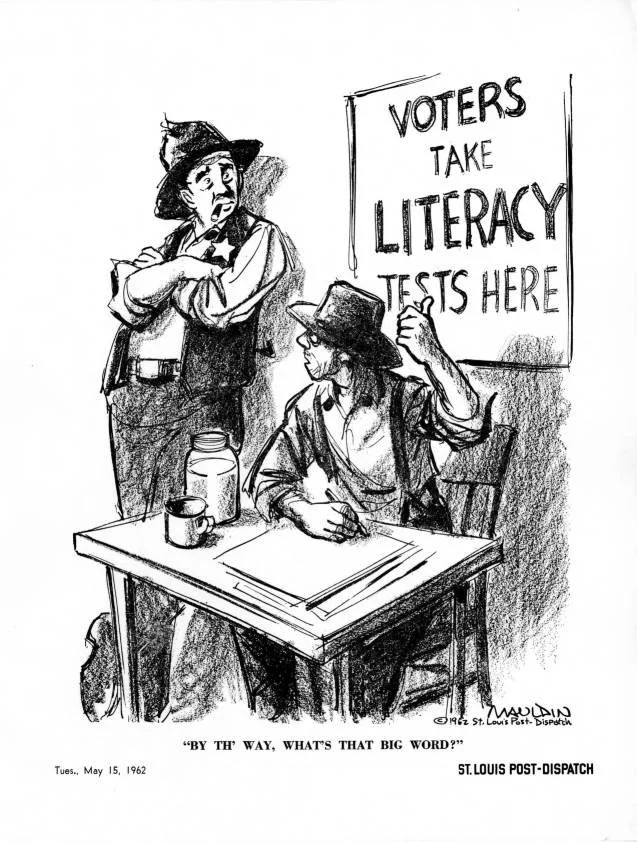
Louisiana has a long history of restricting Black political power. After Reconstruction, Black Louisianans briefly held elected office. White lawmakers quickly dismantled that progress. In 1898, leaders promised to “purify the electorate.” They imposed poll taxes, literacy tests, and the “understanding clause.” These tools slashed Black voter registration. They spared most white voters.
The Voting Rights Act of 1965 dismantled many of those barriers. However, modern tactics can achieve similar outcomes without explicit racial language. Today, documentation requirements may function like yesterday’s poll taxes.
Related: Louisiana Voting Rights Under Attack
Jeff Landry and the Broader Agenda
Governor Jeff Landry has aligned himself with Trump’s broader priorities.
In 2025, he supported constitutional changes that expanded the ability to charge minors as adults. Louisiana already ranks among the most incarcerated states in the nation. Felony convictions carry voting restrictions. Black Louisianans make up a disproportionate share of those incarcerated. Policies that expand felony pathways also expand disenfranchisement.
The connection is direct. Criminal justice policy and voting rights intersect.
Economic Disparities and Political Power
Black residents make up 32.6 percent of Louisiana’s population. Yet the median income for Black Louisianans remains under $40,000. Economic instability limits flexibility. It reduces time, money, and access to documentation. When policies add paperwork and fees, they burden communities already under strain.
Voter suppression rarely announces itself loudly. It often hides inside administrative requirements.
What Can Be Done
Black voters are not powerless.
First, stay informed. Monitor legislative developments closely.
Second, update personal documentation early. Secure certified copies where necessary.
Third, assist elders and neighbors with bureaucratic steps.
Fourth, support local civil rights organizations engaged in voter protection.
Finally, vote consistently. Do not limit participation to presidential cycles.
Democracy depends on turnout in local races, constitutional amendments, and judicial elections.
Vigilance Remains Necessary
The right to vote in Louisiana has always required vigilance. Previous generations fought poll taxes and literacy tests. Today’s fight involves paperwork and policy language.
The strategy may change. The objective does not. Full participation in democracy requires awareness and action. Black Louisianans must treat voting rights as an ongoing responsibility.
History shows what happens when vigilance fades.
Julienne Louis-Anderson is a Black Louisianan, Public Voices Fellow of the OpEd Project in Partnership with the National Black Child Development Institute. She writes about the intersection of culture and politics with education and human development
