

Let’s clear something up before the noise takes over.
American politics has entered an era where emotion moves faster than analysis. And that’s a problem.
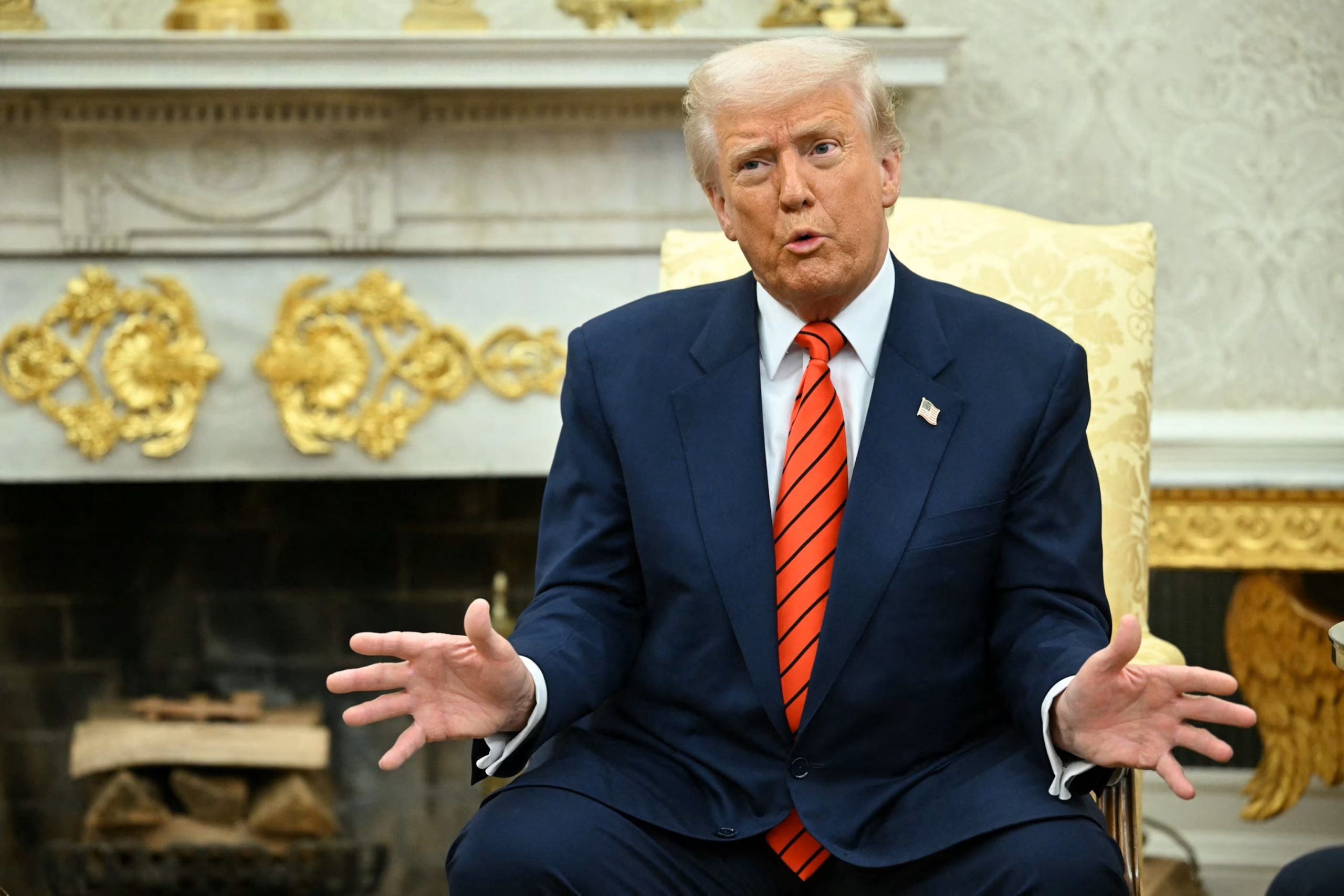
Almost every day, I hear people say things like, “Trump is crazy,” or “That orange man in the White House is doing crazy things.” Others say, “We’re slipping backward with everything Trump is implementing,” or “We just have to survive this Trump madness.”
At the same time, across town, you hear the opposite. “Thank God for Trump.” “The president is saving our country.” “He’s the only one telling the truth.”
In both cases, what you are seeing is not careful thought. It is reflex.
Some people reject everything connected to Trump before hearing the details. Others defend everything automatically. Blind rejection on one side. Blind allegiance on the other.
That may feel like engagement, but it is not strategy.
Reaction vs. Analysis
The times we live in require more than emotional reflexes. They require analysis. They require the discipline to slow down, separate personality from policy, and ask, “What is actually happening here?”
Trump is not simply all good or all bad. No president is. When politics becomes emotional, people stop evaluating policies on their own merits. They stop looking for where something might help, where something might hurt, and where influence is possible.
Emotion tells us we care.
Analysis determines what we do with that care.
If we stay in reaction mode, we give up leverage. If we move into analysis, we keep options open. In politics, options are power.
Personality Is Loud. Policy Is Quiet.
Donald Trump is brash, confrontational, and unscripted. His style dominates attention. It is designed to.
But American governance does not operate on personality alone. Foreign policy, trade relationships, defense strategy, and global alliances often move along institutional tracks that predate any single president.
Presidents frequently affect tone more than trajectory in those areas.
Where leadership matters more directly is domestic policy. That includes education, civil rights frameworks, history in classrooms, and enforcement priorities. Those policies shape daily life.
When personality overwhelms the conversation, people can miss where the real leverage points are.
The Risk of Total Political Framing
When people judge every issue based only on who is saying it, instead of what the issue actually is, they lose the ability to think clearly. When every issue is filtered through one political figure, flexibility disappears.
Total framing creates hard lines.
You stop thinking issue by issue
A policy might help you in one area and hurt you in another. But total framing blocks you from even looking.
You lose leverage
If leaders know you will support or oppose them no matter what, they have no reason to listen to your concerns on specific issues.
You miss opportunities
Sometimes something useful comes from someone you don’t like. Total framing makes people ignore it automatically.
You become predictable
In politics, predictable groups get managed, not negotiated with.
History shows that communities have often worked within systems they did not fully trust in order to secure gains. The Civil Rights Movement led by Martin Luther King and Malcolm X are prime examples. Engagement has never meant agreement. It has meant understanding where pressure could be applied effectively.
Related: The Strategy Behind Trump’s Approach to Greenland
Protest, Power, and the Changing Landscape
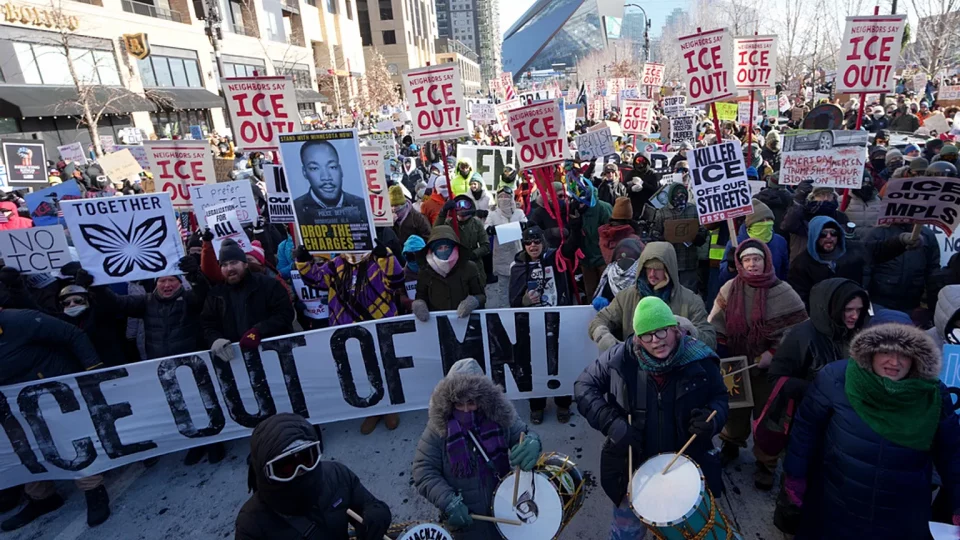
The civil rights movement showed the power of discipline, moral clarity, and economic leverage. Protest was one tool among many.
Legal strategy mattered. Economic pressure mattered. Media strategy mattered. Organization mattered.
Today, many people sense that traditional forms of protest operate in a different environment. Laws are structured differently. Enforcement responses differ. Public attention moves faster.
That raises a larger question. When one form of leverage becomes harder to use, what other forms become more important?
History suggests that economic choices, institutional engagement, and long-term organization often outlast moments of public confrontation.
Chaos and the Attention Economy
Modern politics also contains noise. Rapid cycles of controversy, speculation, and competing narratives scatter attention.
When attention scatters, analysis declines. Emotional reflex becomes easier. Strategy becomes harder.
But strategy is what produces durable outcomes.
What This Conversation Is Really About
This is not about defending any political figure. It is not about excusing policies people oppose. It is not about minimizing disagreements over issues like education, history, or enforcement.
But it is about recognizing that emotional reflex alone is not a political plan.
Communities have always had to navigate power structures that did not align perfectly with their interests. The question has never been whether to feel strongly. The question has been how to translate feeling into leverage.
That requires analysis. It requires patience. It requires the ability to examine issues individually instead of letting personality dictate every conclusion.
The Bottom Line
Emotion signals that something matters.
Strategy determines what happens next.
When politics becomes only reaction, power flows elsewhere.
When politics includes analysis, options remain open.
History suggests durable progress has rarely come from reflex alone.
TL;DR — The Perspective
- Emotional reaction is not the same as political strategy
- Personality often overshadows policy
- Total political framing reduces flexibility
- Protest has always been one tool among many
- Analysis preserves leverage in complex systems