

Every generation faces a moment when it must decide what it will protect.
For Black Americans, that moment is now.
Across the country, DEI programs are being rolled back. History lessons are being softened. Cultural conversations are being shut down. Meanwhile, powerful institutions are pretending this shift is neutral.
It is not.
Instead, it is about erasure. Erasure of Black excellence. Erasure of Black success. Erasure of Black contributions. Erasure of Black culture.
That is exactly why Kwanzaa matters more this year than it has in a long time.
Kwanzaa Is a Cultural Anchor
Kwanzaa is not a replacement for any other holiday.
It is not symbolic filler.
It is not optional.
Rather, Kwanzaa is a cultural anchor. It was created to help Black people stay grounded during periods of political pressure and social retreat.
Dr. Maulana Karenga introduced Kwanzaa in 1966 during a time of unrest, resistance, and change. The goal was simple. Black people needed shared values rooted in African tradition to guide future generations.
Today, the need is just as urgent.
Why This Moment Is Different
Right now, many forces want Black history treated as inconvenient.
At the same time, they want Black success disconnected from its roots.
As a result, younger generations risk growing up without context. Without that context, identity weakens. Then memory fades. Eventually, culture disappears.
Kwanzaa interrupts that process.
It reminds us that our history matters. It also reminds our children that they belong to something larger than themselves.
The Seven Days of Kwanzaa
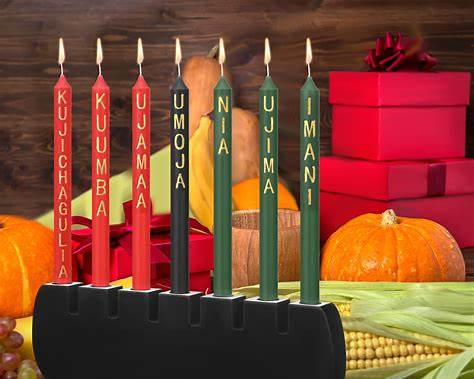
Kwanzaa runs from December 26 through January 1. Each day focuses on one of the Nguzo Saba, or seven principles. Together, they form a blueprint for survival and growth.
Day 1 – Umoja (Unity)
Unity strengthens families and communities. Without it, progress collapses. Therefore, unity remains essential.
Day 2 – Kujichagulia (Self-Determination)
Self-determination means defining ourselves. Importantly, it means refusing to let others tell our story for us.
Day 3 – Ujima (Collective Work and Responsibility)
No one builds alone. Because of that, shared responsibility has always powered Black advancement.
Day 4 – Ujamaa (Cooperative Economics)
Economic strength protects independence. As opportunities shrink, ownership becomes even more important.
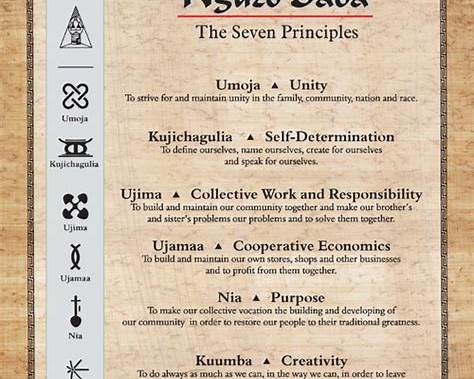
Day 5 – Nia (Purpose)
Purpose connects generations. It also reminds us that survival alone is not enough.
Day 6 – Kuumba (Creativity)
Creativity has always been our answer to pressure. Even now, it remains a tool of resistance.
Day 7 – Imani (Faith)
Faith sustains us when systems fail. More importantly, it fuels belief in our future.
Related: Kwanzaa-A Blueprint for Strong Black Communities
Why Kwanzaa Is Essential Right Now
DEI rollbacks are not just about jobs or policies.
They are about controlling memory.
When institutions stop acknowledging Black contributions, they quietly signal that our story does not matter. Kwanzaa pushes back against that lie.
It teaches children pride.
It teaches families continuity.
And it teaches communities responsibility.
Because of that, Kwanzaa protects more than tradition. It protects identity.
Preserving Culture Is an Act of Resistance
Cultures that stop telling their stories disappear.
Cultures that keep teaching survive.
This year, celebrating Kwanzaa is not about nostalgia. It is about preparation. It is about making sure the next generation understands where it comes from and why that matters.
So light the candles.
Explain the principles.
Invite the conversation.
Kwanzaa is not about exclusion.
It is about preservation.
And right now, preservation is power.