

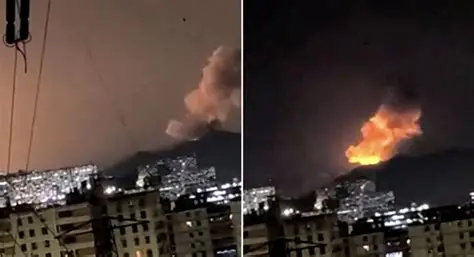
Let me be clear from the jump: Nicolás Maduro is no hero. His regime oversaw one of the worst economic collapses in modern history. Millions of Venezuelans fled. Political prisoners filled his jails. The humanitarian crisis was real.
But those facts do not explain the sudden push for U.S. military action against Venezuela. And if you believe this moment is about democracy, drug trafficking, or gang violence, you may be missing the incentives hiding in plain sight—oil, critical minerals, and the dollar’s grip on energy markets.
This is about oil. This is about lithium. And this is about rare earth minerals. Moreover, this is about stopping China’s dominance in the resources that power every smartphone, every electric vehicle, every weapons system of the 21st century. But most critically, this is about protecting the U.S. dollar’s control over global oil trade—a system that Venezuela and the BRICS nations were actively dismantling. Trump has been unusually candid about the economic motivations. Consequently, we need to stop pretending this is something noble.
The Petrodollar: America’s Real Power Source
Before we talk about Venezuela, you need to understand the petrodollar system. In 1974, President Richard Nixon and Secretary of State Henry Kissinger made a deal with Saudi Arabia: the Saudis would sell their oil only in U.S. dollars, and in exchange, America would provide military protection. This arrangement became a cornerstone of American economic power for the next 50 years.
Here’s why it matters: According to financial analysts, the US dollar accounts for approximately 89 percent of all currency trading. Traditionally, the vast majority of oil trading was conducted in US dollars. When most countries need dollars to buy oil, the U.S. gains significant advantages in global finance. Furthermore, this system has helped fund America’s military, its deficit spending, and its global influence.
But that dominance is showing cracks. In 2023, estimates suggest one-fifth of oil trades were made using non-US dollar currencies. Additionally, the USD’s share of global foreign exchange reserves reportedly dropped from approximately 85% in the 1970s to 58% by 2022. This shift presents a significant challenge to American economic power.
Enter BRICS: The Dollar’s Real Challenger
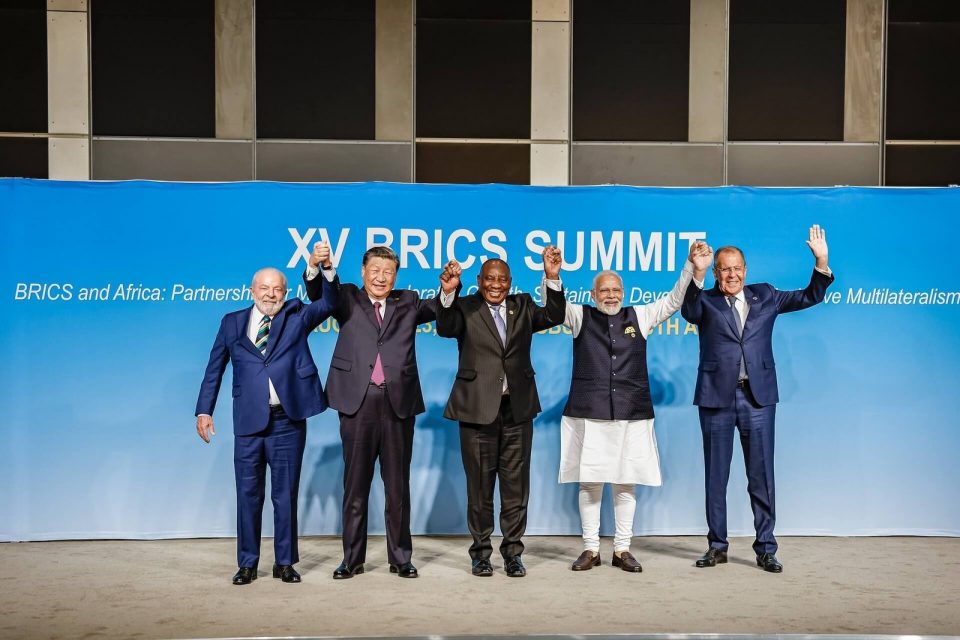
BRICS originally stood for Brazil, Russia, India, China, and South Africa—five major emerging economies. However, the group has now expanded to include Egypt, Ethiopia, Indonesia, Iran, the United Arab Emirates, Thailand and Malaysia as well. Together, BRICS now represents over 45% of the world’s population and a growing share of global GDP.
But BRICS isn’t just about population or economics. It’s about challenging dollar dominance. Specifically, in October 2025, BRICS launched a gold-backed digital currency designed to bypass the dollar entirely.. This digital trade currency is designed to let every country in the word trade without using U.S. dollars or the SWIFT banking system.
The implications are significant. The addition of new BRICS members increases the bloc’s share of global oil production substantially. Moreover, reports indicate BRICS conducted 85-90% of intra-trade in local currencies by 2025. For oil specifically, estimates suggest BRICS handled roughly 30% of its annual trades outside dollars.
Russia trades oil in rubles and yuan. Iran abandoned the dollar years ago. Saudi Arabia, America’s longtime petrodollar partner, is now discussing yuan settlements and joined BRICS. The system that has helped maintain American economic advantages for half a century faces serious challenges.
Venezuela’s Unforgivable Sin
Now we get to Venezuela’s real problem from Washington’s perspective. From 2018, Caracas began selling oil in Chinese yuan, as well as accepting euros and rubles, openly declaring its intention to “abandon the dollar”. Furthermore, Venezuela submitted an application to join BRICS and created direct payment channels with China, bypassing the SWIFT system.
Venezuela wasn’t just talking about de-dollarization—the country was actively implementing it. With what’s reported as the world’s largest oil reserves (estimated at 303 billion barrels), Venezuela’s move to sell oil in yuan represented a significant threat to dollar-based oil trading.
History offers a troubling pattern. In 2000, Saddam Hussein announced Iraq would sell oil in euros instead of dollars. The U.S. invaded in 2003. In 2009, Muammar Gaddafi proposed a gold-backed African currency for oil trade. NATO intervened in 2011. Both leaders are dead. Both countries switched back to dollar-based oil sales.
Now it appears to be Maduro’s turn. Not necessarily because he’s uniquely evil—though he presided over documented corruption and human rights abuses—but because Venezuela challenged the dollar’s role in oil markets while possessing resources too valuable to ignore. In fact, America was willing to live with and buy oli from Venezuela and Maduro as long as he traded in US dollars. As soon as that stopped, the bombings and accusations started. And in true Trump fashion, the President let you know just what he was doing.
Trump’s Unusually Candid Rhetoric
Unlike past administrations that emphasized humanitarian or democratic justifications, Trump is telling it like it is. He is remarkably direct about US economic interests in Venezuela. He has talked frankly about bringing in big U.S. oil companies to “regain their former assets.” Furthermore, he is bragging about using revenues from Venezuelan oil sales to pay for operations in the country. Notably, he stated, “We’re going to be taking out a tremendous amount of wealth out of the ground.”
U.S. Homeland Security Advisor Stephen Miller framed it in historical terms: “American sweat, ingenuity and toil created the oil industry in Venezuela. Its tyrannical expropriation was the largest recorded theft of American wealth and property.” The implication is clear: Venezuela’s oil resources remain tied to American interests regardless of nationalization decades ago.
Then, when asked about supporting María Corina Machado, the Venezuelan opposition leader who won the Nobel Peace Prize for her democracy work and has approximately 72% approval among Venezuelans, Trump suggested it would be “very tough for her to be the leader.” Additionally, he claimed that “she doesn’t have the support.”
Read that again. The woman Venezuelans actually chose, who fought Maduro for years, who represents their democratic will doesn’t have enough support? Trump dismissed her democratic strength. This suggests this intervention’s priorities may center on American control of Venezuelan resources and bringing Venezuela back into dollar-based oil markets, rather than empowering Venezuela’s own democratic movement.
The Drug Trafficking Justification
Yes, there are serious questions about corruption and drug ties to Maduro’s regime. Federal indictments detail specific allegations. However, the public justification for military action raises serious questions.
Trump claimed Maduro sent members of the Tren de Aragua gang to terrorize American communities. It sounds like a clear security threat. Except U.S. intelligence itself contradicted this narrative. Specifically, a National Intelligence Council report stated the Maduro regime “probably does not have a policy of cooperating with” the gang and “is not directing” its movement to the U.S.
In other words, the Trump administration’s own intelligence agencies reportedly challenged the gang threat narrative. Nevertheless, the mainstream media ran with this narrative. And predictably, it generated public fear and support. And fear has historically been useful when justifying interventions.
The drug angle is familiar. Indeed, it’s been used for interventions in Latin America for decades. Remember Manuel Noriega? But if this were primarily about drugs, the calculus for intervention would look very different across many countries. Instead, this appears focused on something more strategically valuable: protecting dollar-based oil markets.

What Venezuela Really Has: The 21st Century Resource Base
Venezuela sits on what experts consider the largest oil reserves in the world. But that’s just the beginning. The country’s Guayana Shield reportedly contains substantial deposits of lithium, rare earth elements, coltan, nickel, copper, titanium, and gold. Furthermore, these aren’t just valuable—they’re essential for modern technology. Venezuela’s salt flats are estimated to hold approximately 3-5 million tons of lithium carbonate equivalent—potentially enough to supply global battery manufacturing for several years.
Industry analysts estimate development of these resources could generate $20-25 billion annually in export revenues within a decade. And here’s the critical context: China currently dominates the global supply chain for critical minerals. In addition, the International Energy Agency projects demand for these materials will increase by 300-500% by 2040 to meet climate goals. As a result, the U.S. has strong incentives to challenge China’s control over resources that power everything from consumer electronics to military systems.
Venezuela represents an opportunity to reshape an entire supply chain AND potentially pull the country back into dollar-denominated oil sales. Therefore, this appears to be about both economic and strategic power, not primarily about democratic rescue.
The Uncomfortable Truth About Maduro
This is where we have to be honest about something uncomfortable. Maduro being a brutal, corrupt leader doesn’t automatically make this intervention justified or wise. In reality, two things can be true at once: First, Maduro presided over a catastrophe that destroyed Venezuela and hurt millions. Second, this U.S. military action appears primarily motivated by protecting dollar supremacy and seizing control of resources, not saving Venezuelans.
The humanitarian crisis was documented and severe. Specifically, approximately 7.9 million Venezuelans needed humanitarian assistance. Over 6.8 million people fled the country. Similarly, the economy contracted by more than 80%. Meanwhile, hundreds of political prisoners sat in Maduro’s jails. These are verified facts. But this has been going on for years. And America never saw the need to intervene until Maduro decided to no longer deal in dollars.
Typically, the United States doesn’t invade countries solely because they have humanitarian crises. If that were the standard, interventions would look very different globally. Likewise, corruption alone doesn’t trigger military action. If it did, the list of interventions would be far longer.
Interventions tend to happen when strategic interests align. And what appears at stake in Venezuela is both what’s in the ground—and what currency it’s sold in.
The Historical Pattern
How many times have we seen this pattern? Iraq was accused of possessing weapons of mass destruction. That claim collapsed, but Iraq had abandoned the dollar for euro-based oil sales—and returned to dollars after invasion. Similarly, Libya needed saving from Gaddafi’s regime, and while the country descended into chaos, Western companies gained access to its resources. Likewise, Syria became a target for regime change, and it sits on strategic pipeline routes.
The pattern is remarkably consistent. First, identify a problematic leader. Next, amplify the threat they pose. Then, frame military action in humanitarian or security terms. After that, intervene militarily. Finally, gain control of strategic resources and reintegrate them into dollar-based markets. And when outcomes don’t match promises years later, claim the intelligence was flawed or local leaders failed to build democracy.
Venezuela follows this script with a notable difference: Trump has been unusually explicit about resource and economic motivations. He has discussed extracting wealth. He has talked about oil company access. Moreover, he has dismissed the democratic opposition that Venezuelans actually support, suggesting priorities beyond democratic empowerment.
The pattern speaks for itself.
What This Means for Black Americans
Some might ask why Black Americans should care about Venezuela and the petrodollar system. Here’s why: every dollar spent maintaining empire abroad is a dollar not invested at home. Similarly, every trillion poured into foreign military operations is a trillion that could rebuild infrastructure, fund schools, provide healthcare, and address the racial wealth gap. Reparations? I digress.
And let’s be direct about something else. When America talks about spreading democracy, history shows this has rarely meant genuine democracy for Black and brown people. In fact, the history of U.S. intervention in Latin America includes decades of supporting dictators who protected American business interests. Conversely, it also includes overthrowing democratically elected leaders who challenged corporate access or dollar dominance.
We’ve seen this pattern for over a century. Consider the United Fruit Company’s influence in Guatemala. Think about oil company interests in Venezuela under Chávez. Examine mining interests across the continent. In each case, American corporations sought access. American presidents facilitated it. And regular people, especially Black and brown people, bore the costs.
Moreover, if the petrodollar system faces serious challenges, working people—disproportionately Black and brown Americans—will likely face the economic consequences most directly. But instead of adapting to changing global economic realities, this approach uses military force to maintain a system under pressure. Those are tax dollars funding international intervention instead of investing in communities.
The International Response
Mexico, Colombia, and Brazil have condemned the reported U.S. military intervention. Russia and Cuba also strongly criticized it. Meanwhile, the UN expressed deep alarm and warned the action could violate international law.
These aren’t fringe positions. Rather, these are responses from countries that understand the historical trajectory of U.S. military interventions. They’ve observed the patterns before. Consequently, they recognize how these situations typically develop. Many of these countries are themselves exploring alternatives to dollar dependence precisely because they’ve watched what happens to nations that challenge American economic interests.
But in much of American media, these concerns get dismissed as anti-American sentiment or support for authoritarianism. That’s a familiar dynamic. Question the intervention, and you’re accused of supporting the dictator. There’s little room for a third position: Maduro’s regime was repressive AND this intervention raises serious questions AND it appears driven by resource and currency concerns rather than democratic principles.
The Real Question
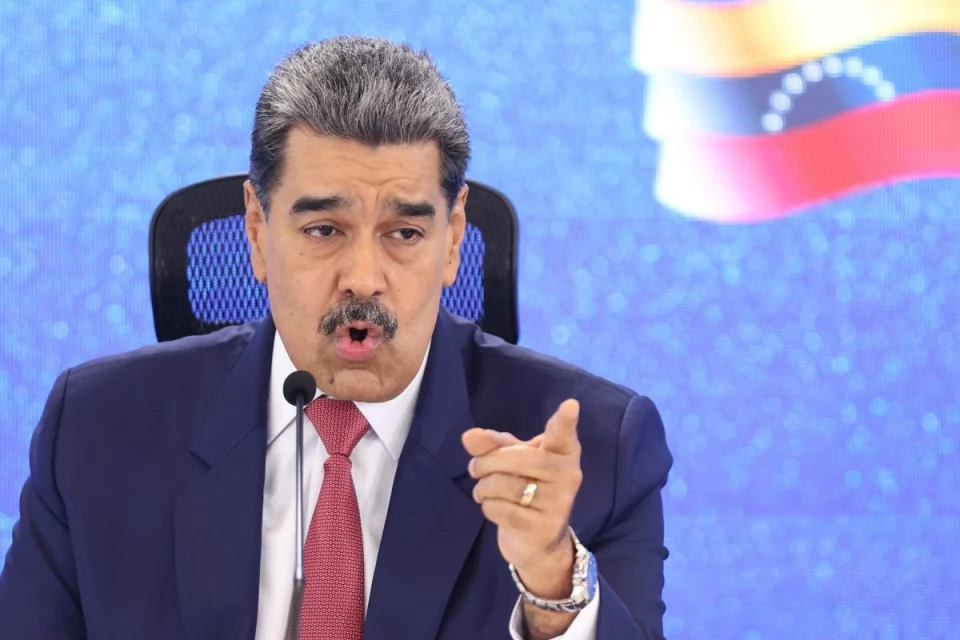
The real question isn’t whether Maduro was bad. He clearly presided over disaster and repression. Instead, the question is whether the United States should use military force to seize sovereign nations’ resources and compel their participation in dollar-based markets whenever their leadership proves uncooperative.
Because if that’s the operating principle, there’s effectively no limit to potential interventions. Any country with resources becomes a potential target. Furthermore, any leader who doesn’t cooperate with U.S. corporate interests or who trades outside the dollar becomes a security threat. Additionally, any resistance to American economic influence becomes justification for regime change.
That’s not democracy. That’s empire. And it’s an empire working to maintain a financial system facing significant challenges.
When Trump speaks openly about extracting Venezuela’s wealth, when he dismisses the democratic opposition that Venezuelans actually support, when his own intelligence agencies reportedly contradicted his gang threat narrative, we should name what appears to be happening.
This looks like a petrodollar protection operation. The goal appears to be controlling oil and lithium and rare earth minerals, yes. But more fundamentally, it seems designed to force Venezuela back into selling its substantial oil reserves in U.S. dollars. It appears intended to send a message to countries in BRICS: challenge dollar dominance and risk American military intervention.
Maduro’s corruption doesn’t change that analysis. Venezuelans’ suffering doesn’t change it. Similarly, the humanitarian crisis doesn’t change it.
This intervention doesn’t appear to be primarily about saving Venezuela. Rather, it appears to be about controlling Venezuela’s resources and protecting the petrodollar system that has underwritten American economic advantages for decades. And the sooner Americans grapple with that reality, the sooner we can have an honest conversation about what our country is doing in the world, and whether that reflects our values.
What Comes Next
History suggests this won’t proceed smoothly. Military occupations rarely produce stable democracies. Similarly, resource extraction under foreign control rarely benefits local populations significantly. In fact, the people who may celebrate initially could be protesting in those same streets within months or years.
But here’s what likely won’t change: China will probably not abandon alternative payment systems. BRICS will likely continue developing. Non-Western settlement systems will probably keep evolving. This intervention may temporarily bring Venezuelan oil back into dollar markets, but it also sends a signal to every nation considering alternatives: the U.S. may use force to maintain dollar hegemony.
Ironically, this could accelerate the trend it aims to stop. As some analysts have noted, the lesson may be that diversification is safest when pursued collectively rather than individually. That insulation, not confrontation, becomes the path to autonomy.
And when outcomes don’t match promises, when Venezuela potentially becomes another case study in intervention’s unintended consequences, familiar patterns will likely repeat. Politicians who championed this action may claim they were misled. They may say intelligence was incomplete. Furthermore, they may blame local leaders for not building democracy quickly enough.
Related: US Venezuela Crisis Heats Up
But the underlying dynamics were visible from the start. Trump discussed resource extraction openly. The pattern matched historical precedents clearly. We simply have to be willing to see it.
The intervention in Venezuela doesn’t appear to be primarily about drugs or gangs or democracy. Instead, it looks centered on oil, lithium, and rare earth minerals. It appears aimed at disrupting China’s supply chain advantages. Moreover, it seems designed to restore American corporate access to resources nationalized decades ago. But most critically, it appears intended to protect the petrodollar system—the arrangement that has allowed America significant economic advantages while that system faces serious challenges from alternative trading systems.
Maduro was a corrupt leader who presided over his country’s collapse and hurt his own people. And this U.S. intervention still raises profound questions about justification, legality, and long-term consequences. Both of these things can be true. And we should be honest enough to say it.
Lol! These guys are straight out of a comic book! Everyone knew this U.S. intervention was never about Democracy. So it seems we’re replacing one Dictator with another! It’s clear the current Administration has to repay the billionaire supporters for helping put him in power.
The scary part is that today it’s Venezuela, who is it tomorrow? Who’s next? These are trying times. Buckle in, it’s going to be a crazy two and a half years.