

U.S.–Venezuela Tensions Escalate as Sanctions, Oil Seizure and Immigration Policy Become 2025 Election Flashpoints
Recent developments in U.S.–Venezuela relations reflect an accelerated pressure campaign with significant implications for the Venezuelan diaspora in the United States and for domestic politics as the 2025 election cycle reaches a critical stage.
U.S. Steps Up Pressure on Maduro Regime
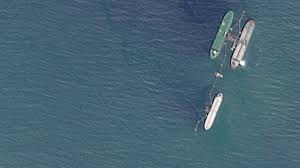
Earlier this month, the U.S. seized a large oil tanker, the Skipper, off the Venezuelan coast — a sanctioned vessel the Biden Treasury says was linked to illicit oil shipments involving Iran and other actors. The operation involved U.S. law-enforcement and military forces acting under existing sanction authorities, and Venezuela decried the action as “international piracy.” (Wikipedia)
In parallel, the U.S. Treasury’s Office of Foreign Assets Control (OFAC) announced fresh sanctions targeting relatives of Venezuelan President Nicolás Maduro, Venezuelan business associates and vessels tied to the nation’s oil sector. This latest sanctions package is part of a broader campaign described by U.S. officials as an effort to cut financing for corruption and narco-trafficking networks linked to Maduro’s rule. (U.S. Department of the Treasury)
The tightened sanctions and strategic asset seizures underscore a shift away from earlier, more limited engagement toward a more punitive stance — a shift that U.S. policymakers and international observers are watching closely.

Impact on Venezuelan Diaspora in the U.S.
The political consequences of U.S. policy reach far beyond Caracas. In the U.S., Venezuelan immigrants have become a politically salient community, particularly in swing states like Florida, where their votes can be influential in tight elections.
A recently released documentary highlights the precarious situation of Venezuelans living in the United States. Hundreds of thousands who entered legally under humanitarian programs now face legal uncertainty after changes to immigration policy rendered many of their residency statuses vulnerable. The film follows a family in South Florida fighting to remain united amid these shifts, capturing the human toll of policy fluctuations. (WLRN)
These immigration changes have become part of broader debates over border policy and refugee protection, including a controversial pause on immigration processing that includes Venezuelans along with other nationalities — a decision criticized by some lawmakers as unfair and politically motivated. (EL PAÍS English)
U.S. Politics and the 2025 Election
The Venezuelan issue has emerged as a wedge in domestic electoral politics.
Supporters of the Trump administration’s harder line on Venezuela — including expanded sanctions and maritime enforcement — argue that tough action against authoritarian governments resonates with voters concerned about national security and hemispheric stability.
At the same time, immigration advocates and some Democrats in Congress are pushing back. They are calling for greater transparency on the administration’s Venezuela strategy and highlighting the plight of Venezuelan families whose legal status in the U.S. is now in jeopardy. In a sign of this divide, top Senate Democrats have sought more information from the White House about its objectives in the region. (ABC News)
For the Venezuelan diaspora — one of the fastest-growing immigrant groups in the country — these policies intersect directly with their daily lives: access to work, freedom from deportation, and the ability to participate in U.S. civic life.
Related: Venezuela and New Orleans
Geopolitical Stakes Remain High
Analysts note that Washington’s wider strategy in the Caribbean — including naval deployments and sanction enforcement — reflects not only pressure on Maduro but broader strategic competition in the Western Hemisphere. Some experts suggest that the concentration of U.S. military assets and sanctions pressure could signal long-term policy objectives aimed at limiting the influence of adversarial powers in the region. (Real Instituto Elcano)
What This Means
- For Venezuelans in the U.S.: Legal protections and immigration status remain in flux, affecting hundreds of thousands and driving political engagement within the diaspora.
- For U.S. elections: Tough policies toward Venezuela may energize both conservative voters who favor strong posture on authoritarian regimes and immigrant communities who see these measures as punitive.
- For global geopolitics: The Skipper seizure and sanctions escalation crystalize a moment in which U.S.–Venezuela relations are no longer background noise, but an active front in regional politics.