

This state has beaten voter suppression before. It can do it again. But only if Black voters, attorneys, and elected officials move now — not in November.
The SAVE Act is now law.
President Trump signed it. Congress passed it. And Louisiana — a state that has been fighting its own Black voters since Reconstruction — is sitting at the center of where this law will do the most damage.
Let’s not pretend this is complicated.
TL;DR — KEY POINTS
The SAVE Act Is Voter Suppression With a New Name. Here’s How Black Louisiana Fights Back.
- →The SAVE Act requires documentary proof of citizenship to register — birth certificates or passports — documents millions of Black Louisianans lack access to.
- →Louisiana driver’s licenses do not list citizenship status, making them insufficient under the new law.
- →Black women who have changed their names face automatic mismatches between their birth certificates and voter registration records.
- →Legal strategy: challenge under the 24th Amendment (poll tax equivalent) and VRA Section 2 (disparate impact).
- →Document assistance drives must begin now. Every major Black church should become a document resource center.
- →Louisiana has beaten poll taxes, literacy tests, and the Grandfather Clause. The SAVE Act is the same fight with new paperwork.
The SAVE Act requires documentary proof of citizenship to register to vote. Not a driver’s license. Not a Social Security card. A birth certificate or a passport — documents that millions of working-class Black Louisianans either don’t have, can’t afford to replace, or were never issued in the first place.
This is not accidental.
But Louisiana has been here before. And every single time, Black voters, Black attorneys, Black organizers, and Black elected officials found a way through.
They can do it again.
But only if the response starts now — not in October, not after the next election cycle, not once the damage is already done.
Related: 7 Shocking Ways the SAVE Act Hurts Louisianans
The Historical Record
Louisiana didn’t inherit voter suppression. It built it
The White Line massacres of the 1870s. The Grandfather Clause. Literacy tests designed to fail every Black applicant regardless of actual literacy. Poll taxes calibrated precisely to the Black working-class wage. Separate registration books that mysteriously disappeared. Election commissioners who simply refused to accept Black registrations.
Each tool was used, challenged, fought, and eventually dismantled.
Not because the people enforcing suppression became reasonable.
Because Black Louisiana organized, litigated, mobilized, and refused to disappear.
Fannie Lou Hamer didn’t win because she waited. Charles Evers didn’t win because he waited. The Voting Rights Act of 1965 didn’t happen because someone was patient.
It happened because people built sustained, relentless, coordinated pressure until the system cracked.
The SAVE Act is the new version of the old game.
The response has to be the same as it always was: organized, strategic, and immediate.
What the SAVE Act Actually Does
Understanding the threat requires understanding the mechanism.
The SAVE Act mandates that anyone registering to vote — or re-registering after any address change — must present documentary proof of U.S. citizenship. A driver’s license alone is not sufficient unless it was issued by a state that verifies citizenship during the licensing process. Louisiana’s current driver’s license process does not.
That means a Louisiana resident who moves from Baton Rouge to New Orleans, who has voted for twenty years, who has a driver’s license, a Social Security card, a utility bill — that person cannot re-register under the SAVE Act without producing a birth certificate or passport.
Now consider who that affects most.
Black Louisianans are statistically more likely to have been born in rural parishes during the era of midwife and home births, when birth certificates were often not filed, filed incorrectly, or filed under different names. Black families in Louisiana are statistically more likely to lack a passport — a document that costs over $150 and requires a birth certificate to obtain.
The SAVE Act doesn’t say ‘prevent Black people from voting.’
It doesn’t have to. The architecture does the work automatically.
The Battle Plan
Here is what a coordinated response looks like. Not theory. Action.
Step One: Document Collection Drives — Now
The most urgent immediate need is getting birth certificates and vital records into the hands of eligible voters who lack them.
Louisiana’s Secretary of State office issues certified copies of birth certificates. Organizations like the Louisiana NAACP, Power Coalition for Equity and Justice, and the New Orleans Workers’ Center for Racial Justice have existing infrastructure that can be redirected immediately toward document assistance.
Faith communities — Black churches in particular — remain the most trusted and most accessible points of community organizing in Louisiana. Every major Black church in the state should become a document resource center. Not a political event. Not a voter registration drive. A service: we help you get your documents.
That service is not partisan. It is civic infrastructure. And it needs to start this month.
Step Two: Legal Challenge — Immediate Filing
The SAVE Act is vulnerable to constitutional challenge on multiple grounds.
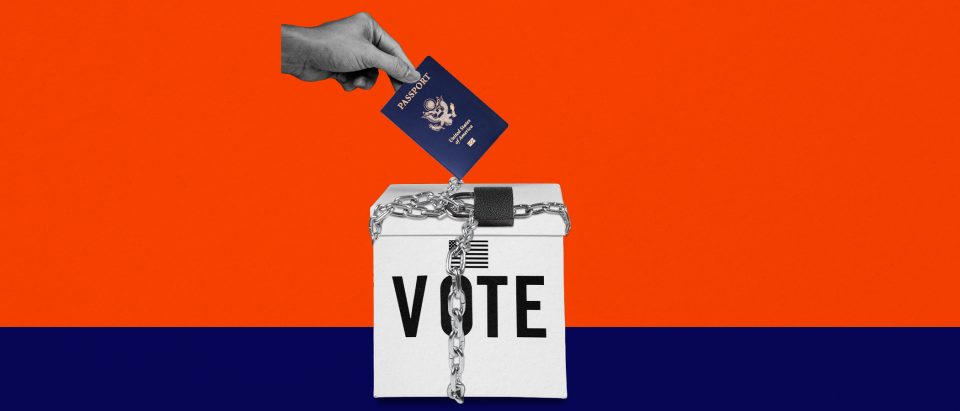
The 24th Amendment prohibits poll taxes. Requiring a document that costs money to obtain as a precondition for voting registration is, at minimum, a structural equivalent. That argument needs to be in federal court before the 2026 midterm registration window opens.
The Voting Rights Act, while weakened by Shelby County v. Holder, still provides Section 2 protections against practices that result in minority voters having less opportunity to participate. A facially neutral law with a demonstrably disparate impact on Black Louisiana voters — documentable through census data and historical records — is a Section 2 violation.
The Southern University Law Center. The Loyola University New Orleans College of Law. The NAACP Legal Defense Fund. The ACLU of Louisiana. These are the institutions that need to be coordinating a unified legal strategy right now, not independently drafting separate complaints.
Legal fragmentation loses. Legal coordination wins.
Step Three: Legislative Counter-Pressure
Louisiana’s Black Legislative Caucus needs to be on offense.
Every committee hearing on election law. Every budget line for the Secretary of State’s office. And every appropriation that touches voter registration infrastructure. These are leverage points.
Introduce state legislation requiring Louisiana to fund free birth certificate replacement for any eligible voter who needs one to comply with the SAVE Act. Force a recorded vote. Make every legislator go on record.
That vote becomes a document.
That document becomes a campaign.
Step Four: Public Education That Reaches Everyone
The single biggest danger of the SAVE Act is not the law itself.
It is confusion.
When voters don’t understand what they need, when they encounter unexpected requirements at the registration office, when their registration is rejected for a missing document they didn’t know they needed — many won’t try again. Suppression often works not through active denial but through discouragement.
Black media — radio stations, newspapers, digital platforms, community newsletters — has a specific responsibility here. Not to editorialize. To inform. Clearly. Repeatedly. In every format and frequency that reaches Black Louisiana.
WBOK. The Louisiana Weekly. The Advocate’s Black community reporters. The Drum. Black Source Media. Every outlet that serves Black Louisiana readers needs to be running voter document education consistently, now, through every registration cycle.
Step Five: The Diaspora Connection
Louisiana’s Black population is spread across more than just Louisiana.
The post-Katrina diaspora placed large numbers of Black New Orleanians in Houston, Atlanta, Dallas, Memphis, and cities across the South. Many remain registered or eligible in Louisiana. Many still have family here. And many still vote here.
Outreach cannot stop at the state line.
National Black political organizations need to treat Louisiana as a priority state — not because of its electoral vote count, but because the suppression playbook being run here will be replicated in every state where Republicans control the election apparatus.
Louisiana is the test case.
What gets built here, what gets litigated here, what gets organized here — becomes the template for everywhere else.
What Cannot Happen
There are responses that will guarantee failure.
Waiting until registration deadlines approach to begin document assistance. By then, the people who need help most will already be in crisis.
Treating this as a partisan issue rather than a citizenship issue. The people most affected by the SAVE Act are not all Democrats. Many are registered independents, first-time registrants, or people who have voted across party lines. The framing has to be: this is about whether Black Louisianans can vote at all — not which party they support.
Filing legal challenges individually rather than as a coordinated coalition. Fragmented litigation loses faster and costs more.
Assuming this gets fixed in Washington. It won’t. Not this Congress. Not with this administration. Louisiana has to solve Louisiana’s problem with Louisiana’s institutions.
And finally: despair.
Despair is the goal of suppression.
Every tool that has ever been used to stop Black Louisiana from voting has eventually failed. The White Line failed. The Grandfather Clause failed. Literacy tests failed. Poll taxes failed.
Not because they were weak.
Because the people they were aimed at refused to stop.
The Moment Calls for Movement
Louisiana has a documented, demonstrable tradition of beating the odds on voting rights.
The people who organized in the 1960s did not have more resources than we have now. They did not have legal infrastructure as sophisticated as what exists today. They did not have digital tools, social media, or the ability to move information in seconds.
But, they had discipline. Coordination. Refusal.
And they won.
The SAVE Act is the latest version of a century-old strategy: make it harder, more complicated, more expensive, more humiliating to vote Black in Louisiana.
The response is the same as it has always been.
You build the infrastructure. You file the lawsuits. Yes you train the organizers. You fund the document drives. And you inform the community. You show up at every hearing, every commission meeting, every legislative session.
And you do not stop.
The ballot is not a privilege.
In Louisiana, it never has been.
And the people who built this state — who have been building it for four hundred years — are not going to let a 2026 law reverse what Fannie Lou Hamer and countless others died to secure.
The battle plan is not complicated.
The battle plan is: move.
Langston Price is a political analyst and columnist for Black Source Media. His work focuses on Black political power, civic infrastructure, and electoral strategy in Louisiana and the South.