
TL;DR
Jeff Landry did not just win an election. He systematically rewired how power flows in Louisiana — courts, legislature, revenue sources, and narrative. New Orleans is operating under the old rules in a new game. Understanding the structural shift is the first step to surviving it.
Key Points
- Landry’s power consolidation is structural, not just political — he has aligned courts, legislature, AG, and revenue development into a single governing apparatus.
- The old New Orleans leverage — largest population, largest tax base — has been deliberately eroded through targeted economic development in other regions.
- Data centers, industrial recruitment, and north Louisiana investment are not just economic policy — they are political strategy to reduce dependence on New Orleans.
- The Moreno-Landry conflict is a symptom of a deeper structural rebalancing that has been underway for years and accelerated under Landry.
- New Orleans’ path forward runs through the business community and through a new economic development strategy — not through public letter exchanges with the governor.
- Louisiana still needs New Orleans. The question is whether New Orleans makes that case effectively before it loses the leverage to make it at all.
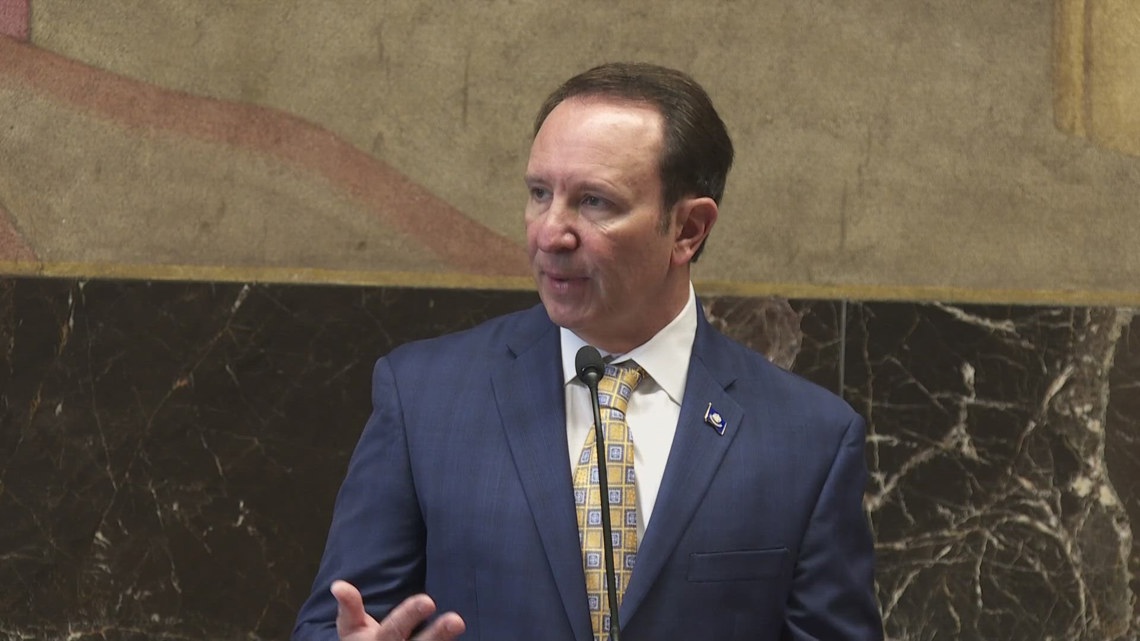
To understand what is happening between Jeff Landry and Helena Moreno, you have to stop thinking about it as a political argument and start thinking about it as a structural transformation.
Landry did not just win an election. He won a reconfiguration of how Louisiana works. And New Orleans — still operating under the assumptions of a political order that no longer exists — keeps losing arguments it should be winning, because it is playing the old game in a new arena.
How Power Used to Work
For most of Louisiana’s modern political history, New Orleans held a structural advantage that no other part of the state could match. It had the largest population. It generated the largest share of state tax revenue. When the legislature allocated resources, the math favored New Orleans. When governors needed to win statewide, they had to compete for New Orleans votes. When businesses looked at Louisiana, they looked at New Orleans first.
That structural advantage translated into political deference. Not affection — Louisiana politics has never been particularly warm toward New Orleans. But arithmetic. You do not ignore the largest city in the state if you want to govern it effectively.
Landry studied that arithmetic and decided to change it.
The New Architecture of Louisiana Power
What Landry has built is not simply a political majority. It is a governing architecture designed to make New Orleans’ leverage structurally irrelevant. There are four pillars.
The first is legislative control. Landry does not just have a majority in the legislature — he has a working majority that moves when he pushes. The 2026 session demonstrated this clearly. New Orleans lost judgeships. It lost the criminal clerk of court. It lost congressional representation. These were not accidents of a legislature that disagreed with the city. They were deliberate acts of a legislature that answers to a governor who has made reducing New Orleans’ institutional weight a policy priority.
The second pillar is judicial control. The Louisiana Supreme Court’s decision to work late on a holiday weekend to provide Liz Murrill with immediate cover after she sent threatening letters to New Orleans elected officials was not a coincidence. It was a signal. The courts in this state are aligned. When New Orleans looks for judicial relief from executive overreach, it should not expect to find it quickly.
The third pillar is the attorney general. Murrill’s letters to New Orleans officials — threatening removal from office for decisions made within their legal authority — were aggressive enough that legal scholars debated whether they crossed into criminal territory. They did not produce criminal consequences. They produced a Supreme Court ruling that validated them. That tells you everything about the current alignment of Louisiana’s legal apparatus.
The fourth pillar — and the most consequential long-term — is revenue diversification. Landry is investing heavily in data centers, particularly in Monroe, and in industrial development across north and central Louisiana. His explicit argument is that Louisiana no longer needs to rely on New Orleans’ economic output to fund state government. If he succeeds in building a diversified revenue base, the arithmetic that once protected New Orleans disappears permanently.
The Racial Subtext That Everyone Sees
There is a dimension to this conflict that state leaders rarely acknowledge directly but that shapes every decision: New Orleans is a majority-Black city, and it is viewed as a Black political stronghold.
The effort to reduce New Orleans’ institutional power is inseparable from the effort to reduce Black political power in Louisiana. Eliminating judgeships reduces Black judicial representation. Eliminating the clerk of court eliminates a Black-held office. Redistricting reduces Black congressional representation. These are not coincidental outcomes of neutral policy — they are the predictable results of a political strategy that targets the institutions where Black political power in Louisiana is concentrated.
Landry cannot say that publicly. But the pattern is visible to anyone willing to look at it without flinching.
What New Orleans Still Has
The structural shift is real. But it is not complete, and it is not irreversible. New Orleans retains assets that Landry cannot eliminate through legislation.
It is still the largest metropolitan area in Louisiana. The Port of New Orleans is still one of the most significant ports in the United States. The tourism economy — the hotels, the restaurants, the music culture, the convention business — still generates revenue that the state depends on and cannot replicate in Monroe or Shreveport. The major energy, legal, and financial institutions that still call New Orleans home represent economic weight that even a consolidated Republican majority cannot simply wish away.
The question is whether New Orleans activates those assets strategically — or continues to fight the battle of public opinion while Landry quietly completes the structural changes that make public opinion irrelevant.
The Path Forward Is Not Through the Governor’s Inbox
Every letter Mayor Moreno writes to Governor Landry feeds his political narrative. Every press conference that frames this as New Orleans versus the state gives him material for his fundraising and his base mobilization. The public argument is a trap, and New Orleans keeps walking into it.
The path forward runs through two channels that have been largely unused.
The first is the business community. The owners of major New Orleans businesses — the French Quarter properties, the hospitality conglomerates, the energy sector executives, the port-adjacent industries — have relationships with Landry that the mayor does not have. They have economic leverage that translates into political influence. And they have a direct financial interest in a functioning New Orleans that is more concrete than any political calculation. Their silence has been the most costly feature of this conflict.
The second channel is economic development. If Landry’s strategy is to make New Orleans less essential by building revenue elsewhere, New Orleans’ counter-strategy should be to demonstrate its indispensability through new economic activity that the state cannot ignore. That means aggressive pursuit of port expansion, technology sector recruitment, and the kind of major corporate relocations that generate the tax revenue Landry is trying to build elsewhere.
Landry is playing a long game. He is sober about the strategy even if he is drunk on the power. New Orleans needs to get equally serious about the game being played — and stop expecting that being right about the argument will be enough to win it.
Black Source Media — Policy Analysis for Black Louisiana
Subscribe for weekly analysis of Louisiana politics, policy, and power — from an independent Black perspective.
Subscribe Free →Langston Price
Langston Price covers Louisiana policy, economics, and political power for Black Source Media. His analysis focuses on the structural forces that shape outcomes for Black communities in Louisiana and across the South.
