

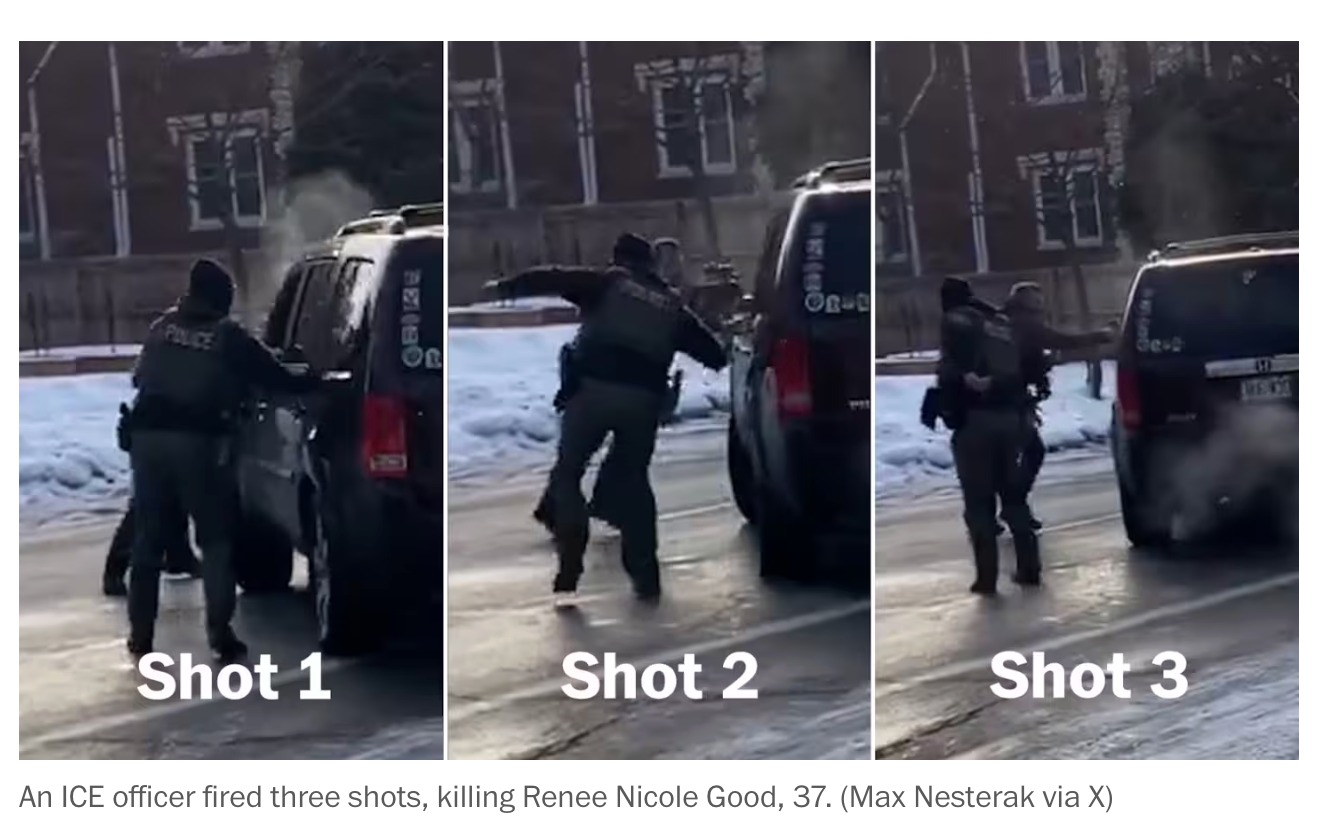
These were not the first shootings involving federal immigration agents. Over the past two years, there have been multiple use-of-force incidents during immigration operations. Some ended in death. Many ended in injury. Yet those cases didn’t produce sustained national demonstrations.
But now we see protests. Vigils. National headlines. Politicians demanding answers. The kind of public outcry we’ve seen before — but never quite like this.
Video footage changed everything. Initial statements from federal officials suggested agents were under threat. Then the public saw what actually unfolded: a woman driving away, shot in the head. In another incident a few days later, a man trying to help another woman was restrained, disarmed, and executed with multiple shots at close range. The gap between the official version and what people witnessed ignited the outrage.
But here’s the uncomfortable question many people are whispering: Why now?
The Pattern People Can No Longer Ignore
These were not the first shootings involving federal immigration agents. There have been multiple use-of-force incidents in the last couple of years during immigration operations. Some ended in death. Many ended in injury. Yet those cases didn’t produce sustained national demonstrations.
So what changed?
When violence is isolated, people process it as tragedy. When violence looks like a pattern, people process it as power.
What Minnesota exposed wasn’t just two deaths. It was a broader fear: If this can happen here, to people who look like us, in places we live, then this threatens everyone’s rights. That’s when public tolerance shifts.
For years, immigration enforcement was framed as something happening to ‘others.’ Minnesota erased that distance.
For years, immigration enforcement has been framed as something happening to “others.” Different communities. Different neighborhoods. Different languages. And different zip codes.
That distance allowed many Americans to see it as policy, not personal risk. Minnesota erased that distance.
This Is About Constitutional Rights — Not Politics
The national conversation is missing a crucial legal point.
Deadly force by the government isn’t just a tragedy issue. It’s a constitutional issue. The Fourth Amendment protects people from unreasonable seizures. Courts have long held that deadly force must be objectively reasonable under the circumstances. That standard doesn’t disappear because the officer works for a federal immigration agency instead of a city police department.
The legal standards are clear:
- Driving away is not grounds for lethal force
- Being present at a protest is not a death sentence
- Possessing a legal firearm is not an automatic forfeiture of life
These are legal questions, not partisan ones. And Americans are starting to recognize that.
Why This Feels Different
History shows a pattern: public outrage tends to expand when several factors converge.
- People see themselves in the victims
- Incidents happen in familiar settings — suburban streets, not border zones
- Video contradicts official narratives
- The force appears grossly disproportionate
That doesn’t mean earlier cases were less serious. It means public awareness often lags until events break through existing narratives. Reform movements rarely begin with the first incident. They begin when a moment pierces public denial.
Minnesota was that moment.
Related: Louisiana’s ICE Campaign Runs on a Dangerous Lie
Beyond Outrage: The Practical Questions
Another reason the national mood is shifting is practical. Communities across the country are reporting tangible disruption:
- Businesses losing critical workers overnight
- Construction projects stalled indefinitely
- Families torn apart with no clear process or timeline
- Local tax bases shrinking as economic activity contracts
Meanwhile, many Americans still face crushing costs of living. They’re asking whether large-scale enforcement spending is producing proportional public safety gains — or just creating new problems.
People want clarity:
- How many deportations involved serious violent offenders versus students, workers, or long-time residents?
- What measurable impact has enforcement had on actual crime rates?
- What is the cost-benefit analysis for communities?
Transparency matters. Policy without data breeds distrust. And right now, trust is in short supply.
Will Policy Actually Change?
Leadership shuffles inside enforcement agencies may signal recalibration, but they don’t automatically equal reform. Public confidence depends on concrete actions:
- Clear, published use-of-force standards that match civilian law enforcement
- Independent investigations with teeth, not internal reviews
- Regular public reporting on enforcement actions and outcomes
- Genuine community engagement, not PR campaigns
Without these elements, perception becomes reality. And the perception right now is that force expanded faster than oversight.
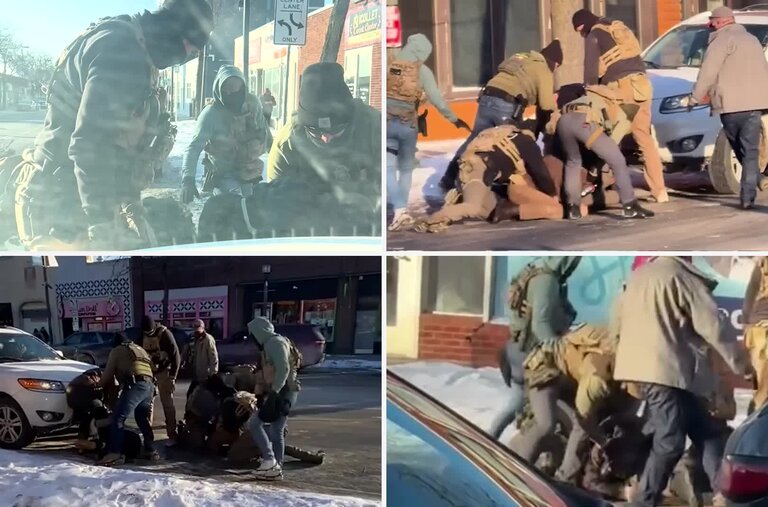
The Real Question We’re Not Asking
This moment may represent a turning point — not because the victims were different, but because Americans are starting to see immigration enforcement through a civil liberties lens instead of a purely political one.
When people believe their own constitutional protections could be implicated, engagement rises. When they see force used against people who remind them of their neighbors, their coworkers, their communities, the abstract becomes concrete.
The deeper issue isn’t left versus right. It’s this: How much power should the government have to use lethal force inside communities, and under what standards?
That debate is long overdue. And it can’t be dismissed as partisan when the Bill of Rights applies to everyone.
Bottom Line
Outrage doesn’t follow a straight line. It builds, layer by layer, incident by incident, until something breaks through.
Minnesota didn’t start the concern. It crystallized it.
The path forward requires facts, transparency, and constitutional accountability — not slogans, not spin, and not silence.
Because when public trust breaks, enforcement doesn’t just become controversial. It becomes unstable. And no community benefits from that.
The question now is whether leadership will rise to meet this moment — or whether we’ll keep pretending these are isolated incidents until the next video surfaces.
White p[eople don’t see it until its them in the crosshairs