
TL;DR — The Short Version
A careful reading of Act 15 reveals a genuinely unsettled legal dispute — not a clear victory for any side. The council’s theory is not frivolous. Neither is Napoleon’s. What is also clear: Chelsey Richard Napoleon did not write this law, did not ask for it, and was placed into an institutional trap she did not build. Baton Rouge engineered a structure in which conflict between two Black elected officials became unavoidable — and then watched from a distance.
Key Points
- Act 15’s text describes a transfer of functions into an existing office — but the council argues the result is so materially different it constitutes a new office requiring a new election. Both readings have legal basis.
- The council majority believed it had a legal obligation to act — but that obligation only exists if Act 15 created a genuine vacancy, which is itself the contested question.
- The vote was part legal interpretation, part political calculation, part institutional self-defense — not the execution of a clear legal duty.
- Napoleon did not author Act 15, did not vote for it, and was placed into an impossible institutional position by people in Baton Rouge who will face none of the consequences.
- The real constitutional vulnerability of Act 15 is whether abolishing the criminal clerk’s position hours before Duncan’s inauguration — timed deliberately — violated his vested election rights.
- This fight sets a precedent for local governance everywhere: can a legislative majority restructure elected offices to neutralize elections it doesn’t like?
Act 15 Legal Analysis: What the Statute Actually Says — and Why Nobody’s Position Is as Clear as They Claim
By Jeff Thomas | Black Source Media
The New Orleans City Council voted 5-2 on May 11 to appoint a retired judge as interim clerk of court and call a November special election. Council President Morrell said the council was legally required to act. Attorney General Murrill said it was acting illegally. Chelsey Richard Napoleon said it was creating chaos where none existed. Calvin Duncan’s team said the election code was “abundantly clear.”
Everybody is certain. Nobody agrees.
A respected local attorney has argued the council misread the law — that Act 15 describes a merger into an existing office, not the creation of a new one, and that the council’s action rests on a foundation that may not survive scrutiny. We read Act 15 in its entirety, read the relevant constitutional provisions, and examined prior Louisiana consolidation precedents. What we found is a genuinely contested legal dispute. The public deserves to understand what the statute actually says and why the council’s May 11 vote was a judgment call under uncertainty — not a clear legal duty.
What the Statute Says — and Where the Two Legal Theories Diverge
Act 15’s operative language is in Section 4. The criminal clerk’s office “shall be abolished at the end of May 3, 2026,” and all its authority, functions, records, and property “shall be transferred and owned, possessed, controlled, and used by the clerk of the civil district court for the parish of Orleans, who shall thereafter be referred to as the clerk of court for the parish of Orleans.” Section 5 directs that any future legal reference to the criminal clerk “shall be deemed to apply” to Napoleon’s office.
Read on its face, the act transfers functions into Napoleon’s existing position, renames it, and abolishes the criminal clerk’s office. There is no sentence reading “there is hereby created a new office.” That plain reading is more consistent with the merger theory than the new-office theory.
But the council’s counter-argument is not frivolous. Courts have sometimes looked past a legislature’s label and examined what a restructuring actually produced. The combined office now oversees both civil and criminal court records, criminal court evidence, voting machine custody, campaign finance reporting, and a unified judicial expense fund that never existed before. Napoleon was elected to manage civil records. She was not elected to manage criminal court evidence or the combined budgetary structure Act 15 creates. The 38,000 voters who chose Duncan never had the chance to vote on a unified position at all. When a merged position exercises powers no voter ever approved in a single officeholder, democratic legitimacy concerns are real — and courts have sometimes enforced them.
The council’s theory may ultimately not prevail. The statute’s text more readily supports merger than creation. But the council majority was working with a contested, arguable legal position — not manufacturing authority from thin air.
The Louisiana Constitution — and the Council’s Circular Argument
Article V, Section 32 of the Louisiana Constitution governs Orleans Parish courts and is explicit on two points. First, the court structure is “subject to change by law” — the legislature has genuine constitutional authority to restructure Orleans Parish offices, including which officers exist. Second, that authority is carved out with a critical exception: “except for provisions relating to terms of office.” The legislature can change what offices exist. It cannot shorten a sitting officeholder’s term.
On vacancies, Article V, Section 30 says a clerk vacancy is filled by the chief deputy — not by the city council appointing an interim. Whether “governing authority” elsewhere in the vacancy code means the city council specifically is not a settled question.
More fundamentally, the council’s legal reasoning contained a structural problem: the 20-day window they were racing against only opens if Act 15 created a genuine vacancy. If Act 15 is unconstitutional — as one federal judge already found — there is no vacancy, no clock, and no basis for the council to act. Supporters argued the council risked surrendering appointment authority to Landry if it failed to act. That describes the political stakes accurately. It is not the same as saying the council was legally required to act. The council was making a judgment call under genuine uncertainty, not executing a clear legal duty.
Chelsey Richard Napoleon May Be Trapped Too
This is where the story demands more honesty than it has received.
Napoleon did not author Act 15. She did not vote for it or lobby for it. She was serving as civil clerk — a position she has held since 2018, running unopposed in 2021 and 2025 — when a law written in West Monroe, passed over unanimous local objection, and signed by a governor whose office directed its timing placed her in charge of a unified parishwide office she never sought.
Once Act 15 transferred authority to her office, she faced a trap with no clean exit. If she accepted the expanded authority and defended it — which she did — she risked being characterized as a beneficiary of Duncan’s removal and politically aligned with Baton Rouge. Some have made exactly those characterizations. They are understandable. They are not entirely fair.
But what was the alternative? If Napoleon had declined to exercise her authority, she could have been accused of abandoning her legal duties as a court officer, surrendering institutional control over records both courthouses depend on to function, and making an implicit legal concession that she had no valid claim to the office. With a primary election scheduled May 16, an operational vacuum was not a theoretical risk.
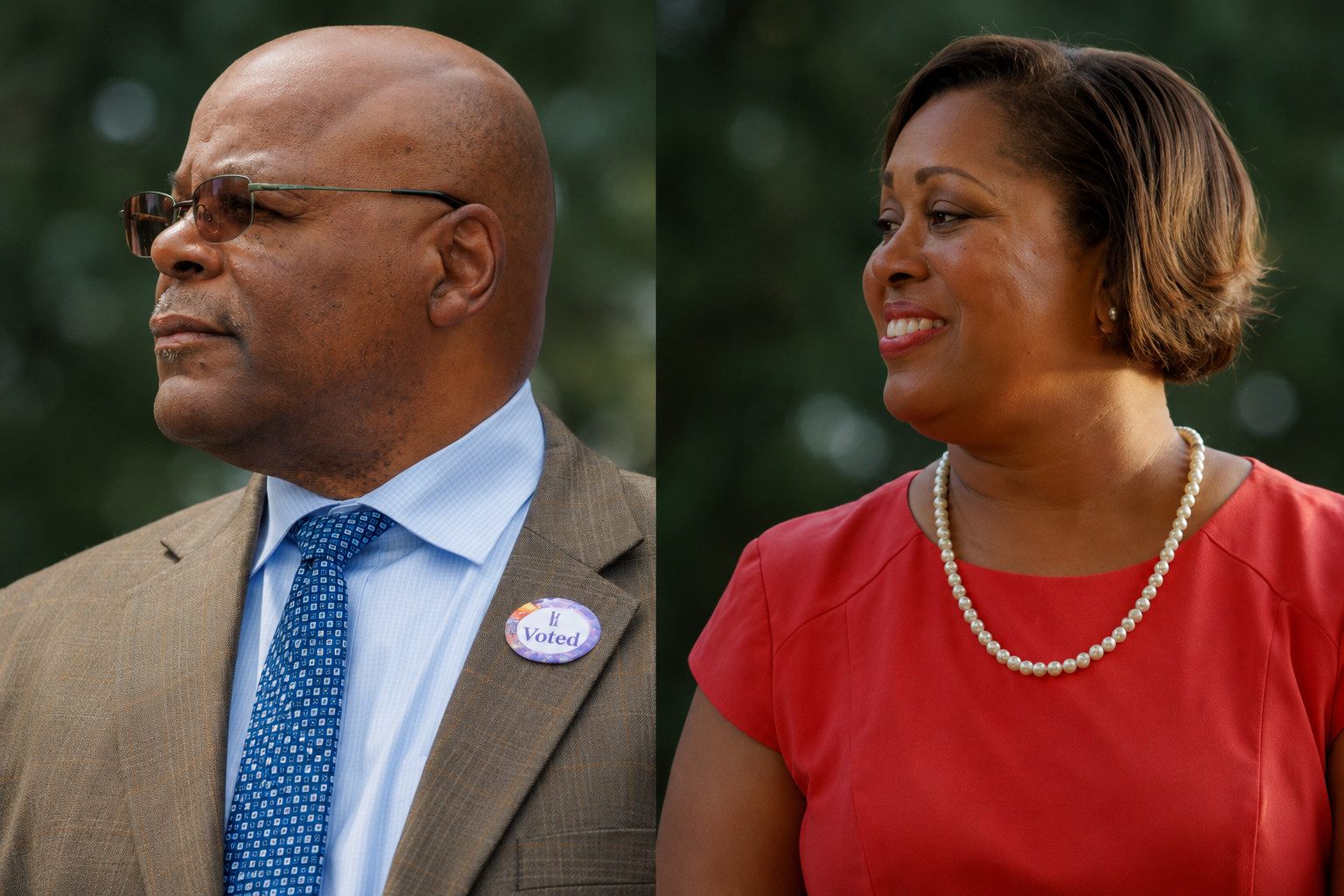
This is the trap Baton Rouge built — not Napoleon. The legislature engineered a structure in which one Black elected official survives only if another’s position is erased, then placed the surviving official in a position where defending that structure or walking away from her own authority were the only options. Councilmember Lesli Harris saw this clearly: the council’s special election, by pushing Napoleon and Duncan toward a race against each other, was doing Baton Rouge’s work for it. But Napoleon’s trap existed before the council voted. Act 15 created it.
Some residents view Napoleon as a political beneficiary of Duncan’s removal. Others view her as an officeholder exercising authority a law — however unjust its origins — placed in her hands. Both perspectives capture something real. What neither captures fully is that Napoleon, like Duncan, was put here by people in Baton Rouge who will never face the consequences of what they created.
The deepest truth of this story is not Napoleon versus Duncan. Baton Rouge engineered a structure in which their conflict became unavoidable — and then watched from a distance as it consumed New Orleans.
The Real Constitutional Fight — and Why It Matters Everywhere
Act 15’s most textually grounded constitutional problem is not whether it created a new office. It is whether deliberately abolishing the criminal clerk’s position hours before Duncan’s inauguration — timed, by the bill sponsor’s own admission, to prevent Duncan specifically from taking office — violated his vested election rights and the rights of the voters who chose him.
Federal Judge deGravelles answered yes, finding the state’s justifications “likely pretextual” and the law unconstitutional. The 5th Circuit issued an emergency stay — but a stay is not a ruling on the merits. That question remains open.
Sen. Duplessis raised a concern the council did not fully address: by calling a special election for the combined position, the council implicitly accepted that Act 15 validly restructured that office. That acceptance may complicate Duncan’s federal case, which argues the entire act is unconstitutional.
Beyond New Orleans, the precedent question is stark. If courts uphold Act 15, any legislative majority can restructure elected offices to neutralize local elections it dislikes — as long as it frames the move as administrative efficiency. Every local jurisdiction with a Democratic majority in a Republican-controlled state is potentially vulnerable to the same maneuver. If courts strike it down, it affirms a meaningful limit: the authority to restructure offices cannot be weaponized against the specific people voters just elected to fill them. That protection would benefit elected officials of every party in every parish.
This is why the federal case deserves attention far beyond Orleans Parish. What happens here answers a question every American local government has a stake in.
The Bottom Line
The law is genuinely unsettled. The council’s theory is arguable but faces significant textual challenges. The constitutional vacancy procedure does not obviously point to the city council as the body with authority to act. The council’s vote was part legal interpretation, part political calculation, part institutional self-defense — and the distinction between believing you must act and being legally required to act matters, both for the litigation and for the public record.
Thirty-eight thousand people voted for Calvin Duncan. Chelsey Richard Napoleon served her constituents faithfully for years before this law made her the face of a fight she did not choose. Both of those things are true simultaneously. The question worth watching is whether any court can ultimately honor both — or whether Baton Rouge has already succeeded in making that impossible.
Sources & Statutory References
- Louisiana Act 15 of 2026 (enrolled SB 256) — full text, legis.la.gov
- Louisiana Constitution, Article V, §28 (Orleans Parish exempted), §30 (Vacancies), §31 (Salaries), §32 (Orleans Parish Courts)
- Duncan v. Landry — U.S. District Court, Middle District of Louisiana, May 3, 2026 (deGravelles, J.)
- U.S. 5th Circuit Court of Appeals — Emergency stay order, May 4, 2026
- Napoleon v. Morrell et al. — 19th Judicial District, Baton Rouge, filed May 12, 2026
- Louisiana SB 645 — prior Orleans Parish consolidation legislation (41st Judicial District, archived)
- Louisiana Senate floor debate — SB 256, Sen. Jay Morris on effective date and governor’s request
- New Orleans City Council resolutions R-26-194 and R-26-195, May 11, 2026
- NOLA.com, WWL-TV, The Lens, Verite News — reported coverage, April–May 2026
Jeff Thomas
Jeff Thomas is a New Orleans-based civic affairs journalist, real estate professional, and entrepreneur. He publishes opinion and analysis at Black Source Media (blacksourcemedia.com), covering Louisiana politics, insurance discrimination, economic development, and the issues shaping Black New Orleans. He is not an attorney. This piece reflects his reading of publicly available statutory and constitutional text and does not constitute legal advice.

Great breakdown !
Part 2 “Liz vs. CCONO”
Thank you for this important and critical analysis!
Very thorough and accurate analysis, Jeff. Personally, I abhor the backlash and unsubstantiated accusations that have targeted Ms Napoleon as if she participated in creating this chaos. What would those silly fools expect Ms Napoleon to do once this passed the legislature and Landry signed it? Was she supposed to say “I don’t want the additional responsibilities that have been thrust upon me! Let’s have a special election”? What elected official already in office would easily give it up because of what happened to another elected official? For any reason? Ms Napoleon is as much of a victim in this as Mr Duncan.